I
have the real distinct memory that I saw the Russian film based on this
book back in 1972. I mostly remember being confused a lot, which
is to be expected. I just purchased the film on
blu-ray and watching it hasn't struck any familiar chords.
Still, I wanted to read the source novel and came to find out that the
original Polish wasn't translated into English until just a couple of
years ago... read more
I don't know how this book came to my
attention, but it has been a fantastic read so far. The author
isn't an economist but he thinks like one! If we are going to rid
ourselves of oil, gas, et al., then Epstein asks, "What have these
fossil fuels done for us?" Of course, the answer is "Plenty!"
He cites lots of interesting data showing how much better life ... read more
~
Jeffrey Friedman's "Capitalism
without Romance" is a bit uneven. But, his synopsis of why we
had the financial crisis (the first half of his essay) is right on target.
~
Want to put a lot of things into perspective? Read Peter Huber's
excellent essay titled, "Germs
and the City," posted up over at Town
Hall. It is long, but you'll never worry about global warming
again!
But,
What if I
the Grand Canyon
Escalade Project?- The news that
the Navajo Nation is once again considering the Grand Canyon
Escalade project has stirred the passions of many, especially in
opposition, and I have become inundated with this. I am much more
open to this project and while that may brand me with a scarlet
letter (although my "A" would not stand for the same thing as Hester
Prynne's "A") I would like to offer some comments on the matter that
I hope will strike readers as not unreasonable...
The
Trouble with Trump- Donald Trump has really
made history with his cavalier run for the White House. But,
the trouble with Trump is that he really isn't, in his heart,
interested in changing America from the course it is currently
following. Instead, like Barak Obama, surprisingly (or not),
he suffers from a very fatal flaw - he really, really, really wants
to be President. Of course, he (and his advisors) can easily
talk themselves into believing that he can win and, quite frankly, I
think he has a good chance, but only if he figures out how to run a
winning campaign and if he decides to spend at least one of his
billions of dollars.
But, I don't
think he will do those things and when he loses that will be a
shame. And, that is because Trump has it in his power to
achieve all of the things he wants - the wall, new trade deals, and
maybe even a non-interventionist foreign policy, if he would just
decide not to run. What??? Yes, it seems
odd, but hear me out. Trump can ride into the GOP convention,
make a bunch of super speeches and then, in an unprecedented act of
humility, withdraw from the race and throw his support to a
candidate of his choosing that can kick Hillary's you-know-what.
Who would that
candidate be? Well, there are some choices. Scott Walker
might have been a good pick until he encouraged delegates to vote "their
conscience" instead of following the rules. Nix him.
Most of the GOP candidates this year were awful, IMHO, even if there
were seventeen of them. Marco Rubio would be an interesting
pick, but would he sign off on Trump's agenda? I think not.
But, how about Bobby Jindal? He'd be a super candidate.
And, why not also pick a Veep,
say
Carly Fiorina? Get them to sign on with Trump's agenda and the
Donald can go back to making more billions. And, if they
disappoint, he would crush them during the next election cycle.
Well, that's
all good and fine except for one thing. I think Trump really,
really, really wants to be President. His ego won't release
its hold on him to do the right thing. Of course, that
character trait is pretty much what it takes to become a
billionaire. Still, the point is that if he felt strongly
about the issues that he talks about, he has it within his power to
practically guarantee success, but I wouldn't hold my breath.
For years I
have told my students that I envied Donald Trump's money, but not
what he had to do to get it. I'm quite satisfied with the life
I've been able to live, which would have been impossible if I were
busy amassing billions. As I tell my students, I'm pretty sure
that Trump has never seen even an entire episode of
Battlestar Galatica,
much less the whole series, much less three times. And, don't
get me started on
Lost. The point being that I have some balance in my life
and take the economist's notion of maximizing my utility seriously.
If I was pursuing billions of dollars there is no way that I could
take nearly
350 separate hikes into the Grand Canyon. As it turns out,
that is very important to me. [I must admit that I am assuming
that you "can't take it with you;" if you can, then all bets
are off.]
The
Grand Canyon Photo Blog- I was reviewing my hiking
records, which I keep in an excel file. I have now been hiking
in the Grand Canyon on 747 separate days. I began to wonder
whether I was close to having hiked on every single day of the year.
Well, I did more than wonder. I copied my records onto another
sheet, sorted them by month and day (and had to edit how multi-day
hikes were recorded). And, the answer is, "No." That is,
I wouldn't say that I am close. I have hiked on 261 of the 366
days of the year (including leap day, which I have hiked on).
It is a lot, but I am doubtful that I will get the other 105
calendar days. There are 34 of those days during July and
August. It's darn hot then, and the hiking is not pleasant.
I'm almost sure that if I am to try and get these days (and I could,
given my work schedule), they would have to be day hikes.
Another 37 days are in February, April and September, which reflects
the fact that my teaching schedule is likely to be an ongoing
obstacle to getting these days. I also have 11 days left in
December, mostly in the first two weeks, which also conflict with my
teaching duties. Still I have only 6 days left in June, 5 days
in May, 4 days in March and in November, 3 days in January and ...
only 1 day left in
October;
the 29th, which this year falls on a Saturday!
I thought it
would be interesting to post up a photo each day of the year (well,
for each of 261 days) for each hike. And so I have added a new
section to the Kaibab Journal - The Grand
Canyon Photo Blog. It has a banner above that links
to that page. I am hoping to add photos every day (or, at
least every week) over the course of the next year. Then I
will add others if I add new days to my records. On the banner
I am using the photo shown to the right. It is Seal Head Rock
- or, at least so named by George Wharton James at/about the turn of
the last century. It is along the route out in the South Bass
area of the canyon that leads to Mystic Springs, which is barely a
damp spot on the ground.
The
False Promise of Transparency- On November 8, the Daily
Sun ran an editorial on the subject of so-called
dark money. The main point was that any contribution to a
political cause (or candidate) must be made a matter of public
record. The notion that one should be allowed some anonymity
was dismissed, in part with justification from Supreme Court Justice
Antonin Scalia. Of course, this hardly means that the editor
has some new-found appreciation for anything else that Scalia says.
The bottom line here is that there may be some ballot initiative
next year that deals with these issues.
I penned a
letter in response and submitted it via the web four days after the
editorial ran. I thought that since this was a topical issue
that my letter would run relatively quickly. But, days passes
by and then weeks. Not seeing anything show up by this past
Friday (Dec. 4th), I sent a note to the editor about it. He
said he didn't see it and so he placed it at the front of the queue.
It ran in
today's paper and appears below. This is not the first
time that one of my letters has disappeared. Should I suspect
a conspiracy? I don't know. But, the Sunday edition
after I sent my letter was full of all liberal nonsense letters with
no balance whatsoever.
To the editor:
With all due respect to
Justice Scalia, the notion that one must reveal to whom they
have given money for political purposes goes against the
spirit of the founding principles of this country. The
requirement that you must stand up and be scrutinized,
harassed and intimidated for such contributions is part and
parcel of the establishment of a one-party state.
My views on this changed
when I heard a presentation some years ago by FEC Chairman
Bradley Smith (appointed by President Clinton). He read off
names of contributors and the amounts they gave before an
audience of some many hundred and asked whether that seemed
fair to do. Then he told the story of how many in the
Johnson Administration, frustrated by the President’s
support for the war in Vietnam, secretly gave money to his
opponents in 1968, primarily Eugene McCarthy. It was
McCarthy’s success in New Hampshire (he lost but got 42
percent of the vote) that led to Johnson bowing out of the
race. The so-called “clean elections” rules we have today
would have suppressed those voices, and we would have been
the worse for that.
The “problem” of money in
politics isn’t money; it’s politics. As the government
extends its reach over more and more of the economy anyone
with a vested economic interest has a compelling motivation
to influence the outcome, either for good (get government to
leave you alone) or for bad (get government to support and
subsidize you). The real solution is to reduce the size of
government, as Rand Paul recently said, “so small [that] you
can barely see it.”
I don't remember the exact date of the
event I mentioned in the letter. It was a lunch sponsored by
the Goldwater Institute and I want to say it was at, or near, the
Biltmore Hotel. Going in I was definitely in the
"transparency" camp, although opposed to limits on donations.
But, as Smith started rattling off names and amounts, I changed my
mind and ever since I have been against any of these rule. Of
course, as I noted, the problem really isn't the money, it is that
government has too broad a reach. You can find his book,
Unfree Speech, at Amazon and a review of the book
here.
Facts
Checked? Not!!- Following the first GOP
candidates debate in August, the Associated Press (AP) ran an
article of the "fact check" nature titled
Candidates veer from the truth. The idea is fine with me
since politicians have an incentive to lie given that they only need
to win once (well, per election). Contrast that with a
business that needs to win customers every day - start lying to them
and you'll soon be out of business. But, for a fact check to
be useful, one must first start with facts. That's not what
this writer (Josh Lederman) did. Instead he brought his own
biases to the table and tried to pass off his opinions as fact
checks. Here they are, in order:
Trump on illegal immigration. Trump
said that if it wasn't for him, the press (and others) would be
ignoring this problem. Is there anything more obvious than
that? I can't imagine that there is. Yet Lederman "fact
checks" this by noting that it has been the subject of discussion
for thirty years. And, that proves what? Nothing!
Indeed, it is the kind of statement that cannot be fact-checked
because we don't know what the prevailing discussion would be in the
campaign if Trump had decided not to run.
Bush on
4% annual growth in the economy. This
is the one that really got me, for obvious reasons. Of course
the economy can grow this much, and in the past it was quite the
norm. But the government has done so much to stymie economic
growth that it seems we have become used to the lousy performance of
the last five years. Yes, it has been ten years since we've
had a year-over-year growth of 4%, but Lederman's proof is that such
growth is viewed as "unlikely" by "most economists." Yeech.
Bush on
replacing ObamaCare. Bush
argues that we can find a better way that won't kill jobs.
Lederman's "facts" here are that the unemployment rate has fallen
since the ACA was signed into law. OMG! Does he not know
the difference between correlation and causation? That alone
doesn't prove anything about Bush's comment on ObamaCare.
Indeed, with so many people dropping out of the labor force over the
last five years, the unemployment rate is not especially useful as a
jobs measure anyway.
Christie
on balancing his state budget without tax increases. This
one is especially awful. Lederman notes that Christie cut the
earned income tax credit in his first term but later raised it to a
higher level later. Is that proof that he didn't raise taxes?
It hardly seems so. Then he goes on to note that Christie has
delayed implementing another tax credit. Well, that still
isn't a tax increase. And, that he tried to raise taxes on
e-cigarettes, but failed to do so. The only actual tax
increase cited is a sales tax on internet purchases. While I
think that is a horrible idea, it still doesn't really disprove
Christie's claim - either this sales tax is rather trivial, or other
taxes have fallen to offset them. I don't really know the
answer here, but I presume that if this statement really was false,
then Lederman could have looked up the actual tax revenue generated
in New Jersey. If he really cared.
Trump on
his net worth. Trump
claims he is worth $10 billion. And, Lederman starts off by
noting nobody knows what Trump is worth. Yikes!! How can
you fact-check this if you don't have any facts??? He says
that there is some documentation that shows his wealth may be $8.7
billion while other sources contend it might be a mere $2.9 billion.
Absolutely ridiculous issue, and why should it even be considered an
issue? He's rich. Move on.
Bush on
job creation. Bush
claims that while governor 1.3 million jobs were created in Florida.
And, what is Lederman's research show about this claim? That
is it true!!!! But, Lederman notes, most of those jobs were
lost during the recession (after Bush was governor). OMG times
100!!!!!
Carson on the Air Force. Claiming
that the Air Force is the smallest it has been since 1940, Lederman
jumps on that claim by noting that the Air Force was created in
1947. Aha, finally a fact to be checked! I wonder if
Lederman also checked the fact of whether there really are 57 states
as then-candidate Barak
Obama said
back in 2008? Of course Obama knows how many states there are.
It was just a mistake and while it was funny, it wasn't telling in
any way. Nor is the actual date that the Air Force was
created.
The
Ben Carson Gambit- Who wouldn't want to see
Dr. Ben Carson as our next
president? The soft-spoken neurosurgeon who sees the world
pretty much the same way I do rocketed into the national spotlight
with his
schooling of President Obama on health care (and other topics)
at the National Prayer Breakfast a couple of years ago. As
someone outside the political process it is automatically assumed
that he can't make it. But, wait. We have Donald Trump
stirring up the pot and taking up the bulk of all political
reporting and that may be just the ingredient that is needed to
propel Carson to the Republican nomination. Putting on my
speculative glasses, here's how ...
Trump continues
to poll at around 25%. Carson and Fiorina are almost at 20%
between the two and I expect that to continue rising. This
leaves all of the "political" candidates scrambling for a share of
what remains. With many local favorites, this makes it very
hard for anyone to even crack the 10% mark. Everyone seems to
agree that the main group of these contenders would include Bush,
Walker, Cruz and Rubio. Barring some terrible blunder it is
hard to see how any of these candidates can catch fire and bounce to
the top of the charts. If it was just between the four of
them, then I would predict a long and exciting primary season.
But, I am quite sure that none of them really wants Trump to be the
eventual nominee. So, as we get closer to primary time, it is
going to be decision time for these candidates - do they wage war on
Trump (which so far hasn't been successful) or do they drop out and
support another candidate?
I can't see any
of the politicos eager to support one of their own, both because it
goes against the grain of their being and because that candidate
would still probably fall short of being viable against Trump.
But, if they turned their support to Carson, that would change
everything. Trump can't bad-mouth Carson the way he does Bush,
et al. And as long as Carson looks viable, he can easily drain
away supporters from Trump. The first step has to come from
Bush. As of now, he looks to be repeating
John Connolly's performance in the 1980 election - raising
boatloads of money and having little/nothing to show for it.
If Bush can't beat Trump, and I think he'll come to that decision
eventually (after all, he can't outspend him!), he can step down and
swing his support to Carson. Perhaps, in return, Carson will
accept Bush as the VP candidate, giving Jeb a strong voice in a
Carson Administration.
The other
candidates will then have to weigh their option to keep fighting a
losing battle or to join this bandwagon. Those who do so
earlier will likely negotiate better quid pro quos than those that
come aboard later. Some may hold out because they are content
with their current status as governor (Walker and Kasich; maybe
Jindal) or as senator (Rubio and Paul). I think Cruz will stay
in for the long haul as will Christie, although if the latter is
tired of being the governor of New Jersey, he might try to parlay
his support into a cabinet seat. All the other "semi-serious"
candidates ("the 1%ers" as I like to call them - insert
smiley face here)
- Huckabee, Santorum, Perry, Pataki - are unlikely to have any
relevance no matter what they decide to do. That leaves only
Fiorina. She will be a huge asset on the campaign trail next
fall, as a foil against Hillary. I think she should stay in
the race to the end even if she is just polling in the low double
digits. And, I'm sure a place can be found for her in a Carson
Administration as well.
The
Mismeasure of Man- [With apologies to
Steven J. Gould] When it comes to economic measurement,
there are awful measurements (like
GDP, for instance) and then there are absolutely meaningless
measurements. By and away the worst of these are rankings.
For example, a study was
reported on in the local paper not too long ago with regard to
the performance of public schools in Arizona. The headline
read, "Study ranks Arizona public schools 4th worst in U.S."
As if it wasn't bad enough that such a ranking is valueless, that
it's headline classifies this as "4th worst" is truly inane.
We can start
with the obvious - there is no definition of "worst" except to mean
"least" or "lowest." That is, Arizona ranks 46th out of 50
states. One cannot possibly describe anything below the median
(i.e., the 25th ranked state) as worse, nor any above as better,
because there is no meaning to the words "better" or "worse," unlike
the words "highest" and "lowest." The point that always gets my
goat (except that I've never had a goat) is that everyone seems to
be clueless that there will always be a lowest ranked state.
Or a 4th lowest. It is in the nature of the measurement.
Suppose that the highest per pupil spending was $20,000 per year and
that the lowest was $19,950. Would we really discern any
meaningful difference, even though some state is ranked last?
Of course not.
What if the
difference between the highest and lowest was $10,000? That
is, the highest amount is $20,000 while the lowest is $10,000.
Would that prove anything? No. Different places have
different costs of living and this averaging out does nothing to
illuminate that difference. And, it still doesn't prove that
$10,000 is too low, yet that is invariably the interpretation given
in these types of "studies." Perhaps it is the case that
$20,000 is too high? Indeed, in the article, it is noted that
Arizona ranks 27th in average SAT test scores. Given we are
46th in spending, it seems that our spending is generally quite
effective.
This raises
another critical point here - there is no way to measure the value
to the consumer of public education. We can only measure
inputs (like spending and classroom size) and try to correlate them
to measures of output (like SAT scores and
graduation
rates) that poorly represent consumer value. Of course, if we
left this all to the private sector,
we wouldn't need to measure any of
this!!
Still, the
point is made over and over again that in a ranking of 50 states (or
any other number of political units), there is something
wrong/bad/inefficient about being at the lower end of the ranking
even though there must always be a lower end. I guess you
could say this was just a special case of the
Lake Woebegon
syndrome. I am reminded of John Kenneth
Galbraith's description of a squirrel running on his wheel as a
suitable model for some economic behavior. I don't agree with
how he used it, for something he called the "dependence effect," but
it certainly seems appropriate when it comes to the drumbeat for
government action to keep us from being ranked low on the scale of
____ (fill in the blank).
Private
H20 at GC?- For some time I
was thinking about writing a letter to the local newspaper and
floating the idea of privatizing the water pumping and distribution
system at the Grand Canyon. But, before I got around to doing
it, they ran a
front page story about the water woes there and the cost of
fixing the system - incredibly some $200 million!! So, I
decided that a longer comment would be in order and that it would be
well-received by the editor. It was and
it ran on Thursday, May 22. I was out of town the week
prior to the Memorial Day weekend, so I didn't realize it had
appeared until some days later. The photo, to the right, is of
Roaring Springs, located up the Bright Angel Canyon towards the
North Rim. This is the source of water for the South Rim -
water is pumped from here down to and across the Colorado River and
up to Indian Garden and then up to the South Rim, covering probably
more than ten miles. [Click to see a larger view.]
Privatizing Water at Grand
Canyon
By Dennis Foster
A recent
article in the Daily Sun highlighted problems with the water
distribution system at the Grand Canyon and the Park
Service’s contention that it will take some $200 million to
fix these problems. Hardly a year goes by that we don’t
hear about pipes bursting and water service along the
corridor trails and on the rims being interrupted or shut
down during repairs. While it may seem like quite the
dilemma, there is a rather simple solution, although getting
the NPS to recognize it may take some work.
The
solution, which I proffered to the Deputy Superintendent
just a few weeks ago, is to privatize the pumping,
collection, distribution and pricing of water. I did not
get the sense that she was going to warm up to this idea,
but given the magnitude of this problem, it is worthwhile
considering this solution more carefully. I’ll briefly
outline four main arguments in favor of this proposition and
consider some likely objections, including one raised by the
Deputy Superintendent.
First,
this would properly align incentives. That is the nature of
the market. If a business can’t supply water to its
customers, then it loses revenue and profit. It has an
incentive to insure that the system is functioning properly
and doesn’t get shut down. Also, given that such a business
can sell stock and/or bonds to raise money necessary for
investment, it isn’t subject to the budgeting process of the
Park Service and it can make improvements and repairs in a
more efficient and cost-effective manner.
Second,
the market pricing of water will do more to encourage
conservation than any program instituted by the Park
Service. If users pay for water, they’ll have to weigh the
benefits and cost of that use. The concessionaires will be
more likely to look for ways to conserve water used by
visitors to their hotels, restaurants and gift shops. And,
the residents of Grand Canyon (Park Service employees
included) will have to consider their use if they also have
to pay for water. In some ways, the gateway community of
Tusayan serves as a model for this, as they must pay for the
water they pump from deep wells.
Third,
in regards to Tusayan, there have been some critics of their
use of these deep wells, and some concern about how this
will increase with the ambitious development plans being
considered there. I would suggest that a privatized “Grand
Canyon Water Company” be allowed to sell water to Tusayan,
which would lessen these concerns. This will also create a
larger market for this water, which will make it easier to
raise the resources necessary to provide a high quality
system.
Fourth,
this proposal relieves the Park Service of an unnecessary
burden. It isn’t at all clear why the Park Service needs to
be involved in the provision of this basic necessity. It
seems to me that their time, energy and efforts are better
spent interfacing with visitors and contenting themselves to
overall management issues. Imagine what the Park Service
could do with $200 million at the Grand Canyon if it didn’t
have to use it on the water system!
So,
what’s wrong with this proposal? Some may argue that such
an entity would be a monopoly and subject to a host of
inefficiencies. But, that’s the way it is now, and our
government-run monopoly is almost certainly even more
inefficient because there aren’t good incentives to produce
a good product and to do so at a reasonable cost. But
beyond that, under this proposal there will be competition
in this new private market – the water sources in Tusayan as
well as water hauled up from Valle or Williams, or brought
in on the railroad.
Perhaps
the most obvious counter argument is that we would be
“giving up public lands to private firms for their own
private gain.” Well, yes, that would be true. But, the NPS
doesn’t have to give this resource away. They could auction
off these rights, earning some additional revenue in the
exchange. Additionally, all the really great infrastructure
of the park was developed by private firms and/or
individuals – the El Tovar, the Watchtower, the Grandview
Trail, the Bright Angel Trail, Phantom Ranch, the Grand
Canyon Lodge, the Hermit Trail, and others. The Park
Service doesn’t provide mule rides into the canyon, nor do
they feed hungry hikers and quench the thirst of river
runners at Phantom Ranch. Xanterra does this. Likewise,
when it comes to water, the private sector can do a much
better job than can the Park Service.
Dennis Foster has a Ph.D. in Economics, has taught at the
university level for over twenty-five years and has authored
many analyses of Grand Canyon issues. His most recent
paper, “The Colorado River Experience: Assessing the Value
of Motorized Rafting” has been accepted for publication in
the Journal of Business Case Studies.
I am
quite sure that the Park Service won't give this a fair hearing, but
at least it provided me a chance to make the case. So, if
there is any longer term problem with the water, and/or if it really
does cost $200 million to fix, perhaps then someone will take this
idea seriously.
A
Cry for Help?- Earlier this month the
National Park Service released a "study"
detailing the adverse economic impacts the government shutdown last
October had on "gateway communities" near federal parklands.
Really? Thank goodness they were able to go back to work and
expend time, energy, effort and money on this project. The
"study" was widely circulated and picked up all across the country
showing these effects in
Utah,
Maine,
Colorado,
Montana, and in the areas around
Yellowstone and the
Great Smokies. Of course, the Grand Canyon figured
prominently in this issue and the local paper ran a story put out by
the AP. [I haven't seen it posted on the Daily Sun web site,
but here is essentially the
same story from the AZ Republic.] So, I penned a letter to
the editor, and they ran it on
March 19:
The government’s closure of
the Grand Canyon this past October was costly? Didn’t
we already know that? Of course the need to “close”
public lands was nonsensical and I think most of us
realized that at the time. So I was puzzled about why
the Park Service would take the time to calculate the
actual dollar value of the harm they caused and issue a
report.
But, now I get it. This report is really a desperate
cry for help. Officials at the Park Service must feel
tormented by the pain and suffering they have caused.
In their typically awkward way, they are asking for our
forgiveness. Upon reading this report I think any
reasonable person would come away recognizing that the
NPS is also asking us to find ways to insure that
visitor services are beyond the reach of park officials
so that we can avoid this problem in the future.
Indeed, this report reads like a subtle request for the
crafting of a new compact between the NPS and the
public. I think we can all agree that the park
service’s mission begins below the rim. I think that
the NPS might even embrace a proposal to restore all the
land on the rim to state control. Or, dare we dream,
even to private control. That would be the truly
sustainable option.
As it
happened, I was on the North Rim at the time the park was shut down.
The morning of the 1st (of October) I sat on the balcony of the
Grand Canyon Lodge and watched the sunrise, along with a few other
visitors. We pondered what it really meant to "close" the
park. After all, the park isn't going anywhere. The
views are still here, and that's what most people come for.
Additionally, the services are mostly provided by private companies
(lodging, meals, grocery, gas,
showers),
and they were unaffected by government budget problems.
Someone did post a sign in the window of the Visitor's Center
announcing that it was closed (see photo above). That makes
sense - close the government offices, but why would you close the
park?
Well, we all
know why. It was to make a political point. The GOP took
a hit in this, but the blame lies squarely on the President and the
Secretary of the Interior. They didn't need to literally close
access to the park. Indeed, the NPS let lodge guests stay for
many more days, and they didn't pull hikers out of the canyon, nor
rafters off the river. But, they wouldn't let anyone else
start those activities. [Including me, as I had a hiking
permit for the first week in October that got scrubbed.] When
I left the park at about noon it was eerie to see the increasingly
empty facilities.
And, so, we
have this report from the park service showing how much damage
closing the parks did to the local economy. That wasn't news.
And, the point of the report seems to be to further a partisan
agenda against the GOP. Sadly, nobody is holding the NPS to
blame for this. So, as I ask in the letter, why not just pull
these places out of the park? Make the South Rim Village,
Desert View and the North Rim lodge areas subject to state/county
jurisdiction. Then, when the feds squabble, any shutdown
wouldn't affect them - visitors could still come and see the Grand
Canyon. My letter got a number of comments on-line and I wrote
replies that may help keep this issue alive. [Or, not!]
A
Weak Will- The big hullaballoo
recently was Arizona’s SB 1062, passed by the state legislature,
that affirmed a business owner’s right to refuse anyone service
based on their “sincerely
held” religious belief. The issue is yet another example
of our inability to see first principles and our willingness to live
with contradictory beliefs. Of course, anyone should be able
to decide with whom and how to associate. We do this all the
time with regard to our friends and lovers. Yet, there is this
view that somehow that doesn't apply to business owners, and it just
doesn't make any sense.
Presumably we
have private property rights. If I don't want to work for you,
I don't have to. If I don't want to let you into my house, I
don't have to. If I don't want to stand beside you in line at
the McDonald's, then I don't have to. But, when it comes to
business, the state compels me to serve you. Is there any
greater example today of how tenuous our property rights are?
Now, that's not
to say that smart business owners do discriminate, nor that they
would in the absence of the law. It's just bad business to
turn away any potential customers, and it seems to me that most
businesses - large and small - can ill afford to do this.
Indeed, when people jump up and down and claim that SB 1062 harkens
back to the days of Jim Crow, they must certainly be joking.
Jim Crow is
the term that applied to state-required discrimination. But,
the state shouldn't do either - require discrimination nor prohibit
it.
I first
encountered the notion that the state shouldn't interfere in these
matters when I read Milton Friedman's
Capitalism and Freedom. He noted that
"the development of
capitalism has been accompanied by a major reduction in the extent
to which particular religious, racial, or social groups have
operated under special handicaps in respect of their economic
activities." The person who engages in discrimination
pays a price - a real price. They pay more for the goods and
services they acquire and receive less for what they sell. In
a free society, "the
appropriate recourse is for me to seek to persuade them that their
tastes are bad and that they should change their views and their
behavior, not to use coercive power to enforce my tastes and my
attitudes on others." For example, the famous
sit-ins
at a segregated Woolworth lunch counter in 1960 showed of the power
of peaceful protest. The chain (and others) bowed to the
pressure of the protests and boycotts and ended their policies of
discrimination. It didn't take a law.
This issue came
up due to a
recent case in New Mexico where a photographer refused to take
on a job of photographing a same-sex marriage ceremony. The
potential client sued and the New Mexico Supreme Court ruled against
the photographer. And, so the Arizona legislature sought to
prevent a similar case from occurring here with the passage of SB
1062. And, then it was a national discussion, or, rather, a
national outrage.
Which finally brings me to the point of my story. This past
Sunday,
George Will was talking about this issue and, rightly, lambasted
the LGBT community as "sore winners." That is, they are
winning the PR campaign, so what is the point of suing the
photographer. Just go and find someone else. But, then
he said, "fifty years ago
this year, in one of surely the great legislative achievements in
American history, we passed the 'public accommodations' section of
the Civil Rights Act, saying, 'If you open your doors to business in
the United States, you open it to everybody."
In other words, your right to free association ends when you take
steps to earn a living, feed your family and provide for your
children.
He just doesn't
get it. We can all agree that discrimination is bad, but why
use the power of the state to impinge on private property rights?
Indeed, Will's attitude is akin to saying that it is the state that
has granted us the right to life, to liberty, to the pursuit of
happiness and to run a business. It's not a god-given right,
nor a natural right, although that is my understanding of what
Jefferson meant when he wrote the
Declaration of Independence. I have my students take a
look at the Arizona sales tax law to see that it is actually called
the "Transaction
Privilege Tax." How does it make any sense that if one
does business in the state of Arizona (or, any state) it is a
privilege? Why isn't it a natural right to produce goods and
services and trade them with others? Of course, it is.
But, the state has usurped these natural rights and made them their
own. In the bad old days you could only do business at the
sufferance of the king. Now it is at the pleasure of the
state. So, how far have we come, really? To further the
cause of liberty, we need people with strong backbones, not ones
with weak wills.
Where
ya' from?- I stumbled
across this web site where you are quizzed about your word usage and
pronunciation. For each question, a small map will pop up
showing you what sections of the country are most closely associated
with your reply, shown in red. [Those "least" close, if that's
the right way to put it are shown in blue.] At the end, you
get a map that shows where you're from based on your replies.
My map is shown to the right (click on it to see a bigger image).
It zeros in on three cities. For me it was Denver,
Aurora and Colorado Springs, all in Colorado. Wow. I'm
impressed. I was mostly raised in Denver (1st grade through
the end of high school), so that makes sense to me. I wondered
how I would fare given that I was born back east, but didn't likely
pick up on any particular word usage, and spent more that a decade
in Hawaii while on the slow track in graduate school, where I must
have already been set in my ways. Anyway, you can find out for
yourself at the
U.S. Dialect Map.
The
Gutfeld Plan- Lovable
late night talk show host Greg Gutfeld, if that’s his real name,
came up with an audacious plan that kills two birds with one stone.
Not literally, of course, as that is quite hard to do. Hit two
birds with one stone that is. Unless, the stone is enormous, like
the size of a house. And, lifting it up in the air is certainly
going to take all the pool boys you can round up. Knowing Greg, he
probably can round up a lot.
While his plan is
audacious, it is also quite simple. Well, we are talking about Greg
Gutfeld after all, and not the president of the Red Eye fan club
(that would be
John Bolton). Indeed, if the plan was any simpler,
Bill Schulz
would have come up with it.
OK, OK, so here’s
the plan – let all the illegal immigrants in the U.S. stay here
(and more are welcome to come) if they move to Detroit! We can
give them some property and let them work hard to turn that awful
nest
of socialism into a paragon of capitalism. I would suspect that
within just a generation the per capita income there would rank
among the highest in the U.S. [It probably wouldn’t top the suburbs
of Washington D.C. where crony capitalism and corruption flourish.]
In fact, I would extend
this plan to include any area declared a “national disaster.” Like
New Orleans back during the days of
Hurricane
Katrina. Then, we can be more relaxed on whether or not to let
some local official (a governor, I guess) declare such an
emergency. That is, now there are costs as well as benefits. Under
the current system there really isn’t any downside to asking for
such a designation. [Our own governor of Arizona was recently
turned down for such a request following the wildfire in the
Prescott area that killed 19 firefighters.]
Maybe we can call my
plan, “Gutfeld Plus” although I might be talked into "Gutfeld Extra
Strength."
Ballots
& Bullets- Earlier
this summer the Supreme Court
struck down certain provisions of the Voting Rights Act.
This lead to immediate breast-beating by liberals that we were
regressing into an era of rampant discrimination.
Nonsense,
of course. The Supremes ruled that the 9 states that had been
required to get federal approval before changing voting laws (and
redistricting) no longer needed to do so, unless the Congress comes
up with
suitable measures showing that the problem still exists.
And, despite the hue and cry from the left, all this does is make
these states (Arizona included) just like the other 41, which is how
it should be.
This is some of
the backstory behind the efforts of various states to pass so-called
voter I.D. laws. Of course, it isn't just these nine
states affected by the Voting Rights Act. The governor of
North Carolina recently signed into law new rules that require
photo ID for voting, reduce the early balloting from 17 to 10 days
and eliminate same day registration. It seems to me that this
is all quite reasonable, and I totally buy into the argument about
trying to reduce voter fraud. [Critics claim there is no
evidence, but I think that is just in the nature of how corrupt the
system really is; the potential is enormous and I tend to think this
goes all the way up to the top, for example the
presidential election of 1960.]
But, let's back
off this issue a bit. On Fox's Special Report, commentator
Juan Williams
said, "[V]oting is a
constitutional right and that you shouldn't have any impediment to
pursue your constitutional rights ... This really is an effort to
suppress the vote." Now, Williams seems like a
reasonable guy and I'm willing to listen to reasonable criticism.
But, this fails the smell test. There are three logical flaws
in his argument:
Suppression has no meaning
If reducing the early balloting days from 17 to 10 is "voter
suppression," then it must be true that 17 days is suppression
relative to 18 days. And, 19 days. And, 20 days.
And on and on. There is no solution to such a "suppression"
problem!! Therefore, it has no meaning.
We live
in a world of scarcity
In the real world, resources are scarce and we have to find ways to
best use them to maximize our well-being. We can extend the
criticism of the suppression argument to include the fact that it
ignores scarcity. Getting every single person of voting
eligibility registered and having them vote is not worth the
resources. Indeed, some have argued (and, I think,
persuasively) that voting shouldn't be easy. The easier it is,
the more uninformed voters will be. That's a law of human
nature.
Apply
this reasoning to other constitutional rights
What got me started down this path was the lack of consistency in
this argument relative to other constitutional rights. If
requiring a voter to have a photo ID (which the state will do for
free) is an unconstitutional burden, then let's revisit the
second amendment. In part it reads, "[T]he right of the
people to keep and bear Arms, shall not be infringed." Seems
like a pretty definitive statement. So, why do we tolerate gun
laws? Why do we require gun
registration?
Why do we even tax gun sales? It seems to me that taxing guns
suppresses our ability to exercise our constitutional rights.
Can we get libs to sign a petition that asks for the government to
roll back voter ID laws and gun laws? Well, of course not!
One of the real
good voices on the issue of voter fraud is John Fund. His
book,
Stealing Elections, is a great read. Well, OK, it is a
terrible read!! Because the system is so corrupt. I read
the first edition when it came out and couldn't put it down.
If you want to look at something more recent, check out these two
articles of his:
The Reality of Voter Fraud (5/2/2012)
The Voter Fraud That ‘Never Happens’ Keeps Coming Back
(2/8/2013)
Signs
of the Times III- Yes,
I still do collect these odd displays of life on earth and it's
about time I got around to adding in another group on my web site.
To wit...
What the
public wants.
While on a trip back east I spent my first night in Weatherford,
Oklahoma. I got gas at the Conoco station right near the hotel
and on their big road sign read the message, "Our fuel has no
ethanol." What a great way to poke their finger into the eye
of the government! Unfortunately, I often had to buy gas with
ethanol in other states on my trip. [Click on photo to see a
larger image with a bigger view.]
The price of all beer!
In April I drove a couple of buddies up to a Grand Canyon trailhead
on the north side of the canyon and we stopped at the Vermilion
Cliffs establishment for lunch. On the menu was this blurb
extolling the virtues of their Happy Hour. It seems like deal
that is too good to be true - you can get all Mexican beers for a
measly $2. I'm sure I couldn't drink but maybe three or four,
but that still would only work out to fifty cents a glass!
The New Deal.
Also in the cafe at the Vermilion Cliffs was this old timey sign
from the NRA. Now, most people will think of the National
Rifle Association in this regard, but it stands for the National
Reconstruction Act (or, Administration). This was a license
plate used by truckers to show that they complied with the
industry's code of conduct. I had never seen one before.
I like Texas!
On my way back from traveling back east, I decided to visit an old
school chum who lives near Houston and to visit Carlsbad Caverns as
my final stop before reaching home in Flagstaff. Driving
through west Texas was quite charming as you can tell from the
posted speed limits in the interstate highway. I felt . . .
free!
How to cut costs!
Earlier in the year I was visiting my sister in Kingman, AZ and we
went to lunch in nearby Laughlin. Across the street from where
we stopped was the "old" Ramada Express Hotel & Casino. But,
now it is the Tropicana Express. We noticed that the signage
looked funny and Sue nailed it - they saved all the old letters that
they could and all the brighter letters were the new ones they had
to buy. That is, the R, A, A are from Ramada and EXPRESS is
the same, while the T, O, P, I C, and N are new!! LOL.
And, since the name is now longer it looks like they jammed the
letters closer to one another. I'll have to dig though some
old photos to see if this is the case. I visited Laughlin
often in the early 1990s when they were going through their major
building boom.
The past as prologue.
I recently re-watched the entire Prisoner series. That
probably sounds like a big deal, but it only ran for one season,
back in the 1960s. Starring the late Patrick McGoohan, it is
something of a cult classic and one of my all time
favorites.
One of the episodes featured a "speed learning" program that the
villagers were all taking. It just cracked me up because so
many in the education establishment say similarly silly (or, stupid)
things with a straight face. In this scene, there is a poster
advertising for this program. It reads: "our aim
one hundred per cent entry
one hundred per cent pass" - the general
speed learn
a three year course in three minutes
it can be done.
trust me - the professor
If you track the trajectory of our system of education, in the
future this will be exactly what we will be promised!
Snow(den)
Job- I just
happened to catch Dick Cheney on Chris Wallace's Fox Sunday
show a couple of weeks ago and I just cringed. He said
that Edward Snowden, leaker of NSA secrets, was a traitor. As
a general rule I like Cheney. But, on this score he was
absolutely out in left field, or right field, depending on your
tastes and preferences.
So far as I can
tell, Snowden hasn't really said anything that we didn't already
know or suspect. And, certainly, nothing new that our
adversaries didn't know or suspect. What's the big deal?
The Guardian
reports that the NSA (National Security Agency) holds phone
records for possible use in later investigations. I am opposed
but I am not shocked. Does anyone besides me watch
24, or
Person of Interest? I pretty much assume that the
capabilities depicted on those shows are being used by every
government.
But, this story
baffles me. I hear
General Alexander, director of the NSA, claim that Snowden's
leaking has compromised our security and endangered American lives.
How? Nobody seems willing to explain this point. Perhaps
it would reveal too much to actually prove this. Anyway, I'm
not buying it. We have heard that Snowden took off with loads
of documents. So far, it isn't clear that anyone has seen
them. Maybe the reporter for The Guardian, but even then it is
unlikely that he has copies. We got the news of the NSA spying
in early June and Snowden was revealed about a week later. It
strikes me that the NSA had plenty of time to figure out what
happened, how serious it was and take steps to prevent exactly what
they claim is the result. That is, for example, if Snowden
knew of a safe house in Istanbul (which seems doubtful), then
shouldn't the NSA have already shut it down?
And, what
exactly does Snowden know? His claim, made in the famous
interview,
that he could listen in on anyone's phone calls, or monitor their
computer usage (and read their e-mails, I think), has been denied by
General Alexander. Well, if Snowden can't do those things -
or, couldn't do them in his job - then why all the fuss? Is
Snowden claiming he has more information than he really does?
Of course, right now most people seem to be believing Snowden and
think that our public officials are just lying to us, or as James
Clapper said, telling us what is the "least
untruthful."
I have three
scenarios that might be playing out here, at least until I learn
something new:
Snowden doesn't know very
much. Everyone
seems surprised to learn that Snowden had such wide-ranging access
to secret material given his sparse background. So, maybe he
didn't. Maybe he just knew some of the broad outlines and then
puffed up the story to help get him some attention in this matter.
Snowden
is playing out an NSA long game. Ala
John le Carre and his
fictional spy George Smiley. Maybe Snowden is just doing the rounds,
plying his so-called secrets to see who will bite and by how much.
As I've mentioned, there can't be anything that we have learned that
is news to foreign intelligence agencies. And, some have
puzzled over his leaving a well-paying job, in Hawaii, with a
beautiful
girlfriend. The prospect of spending the rest of his life
in Cuba, or Ecuador, or Venezuela seems like a poor alternative.
Does
Snowden really exist? I
started to realize that we suddenly knew a great deal about very
little. Virtually every photo we see of Snowden is from the
interview. He can't be found in Hong Kong. He was
missed, as best as I can tell, on his route to Moscow. And,
then there was the famous
empty seat on the plane bound for Cuba. His father spoke
to Eric Bolling on Fox, if that really was his father. We
haven't heard from the girlfriend, except for some Facebook
postings. While I was searching for more on this, I came
across a nicely-written
commentary on this point on the Washington Post blog site.
Although a bit tongue-in-cheek, it is an interesting notion.
The question is, "Why?" The conspiracy theory inside me says
that the reason is to raise the level of uncertainty among our
adversaries about what our intelligence capabilities actually can
do. That is, if low-level analyst Snowden found these secrets,
just think of all the secrets he didn't find! Well, it will be
cool to see the movie - I'm rooting for Brad Pitt in the starring
role, despite the age difference.
Justice
Roberts - Crazy Genius?- Last year,
when the Supreme Court
upheld the ObamaCare legislation I was quite dismayed. The
ruling hinged on the surprising vote of the Chief Justice, John
Roberts. How could one of the staunchest of conservatives on
the court agree to enforce the individual mandate? It just
went against his whole nature and character. Indeed, at the
time there were stories circulating that he was voting the other way
and
changed his mind at the last minute, to the enmity of others on
the court. It has also been pointed out that the various
written opinions read as if the case actually went the
other way.
As the dust
settled, the prevailing view that emerged was that Roberts was
trying to protect the court's reputation from a political
controversy that would ensue if the law was ruled unconstitutional.
Never mind that the whole purpose of this exercise is to determine
the law's constitutionality; i.e., that is their whole purpose for
being. To make the Supreme Court just one more strategic
piece in the game of governance/politics seemed unworthy of the
Chief Justice.
OK, that view
is naive. I get it. The history of the Supreme Court is
not one of careful and cautious decision-making by learned men and
women bearing witness to their
oaths to uphold the constitution of the United States. My
formal introduction to this problem goes back to a talk I heard by
Robert Levy about his book,
The Dirty Dozen, about which I
blogged some years ago. The Supreme Court makes bad
decisions all the time. And, to add to the problem, the list
of supposedly conservative justices that waffled in their decisions,
or switched sides entirely, is
long. Perhaps Roberts was just the latest example.
Is Justice
Roberts just a clone of Earl Warren, Harry Blackmun and David
Souter? I hope not. And, with the growing list of
scandals and controversies enmeshing the Obama Administration, I am
starting to see some wisdom in Roberts decision. For starters,
consider what would have happened if the Supremes had overturned
ObamaCare. The left would have had a strongly dogmatic
rallying cry for the 2012 election. Mitt Romney would
certainly have gotten totally creamed in the election and there is a
more than 50% chance that the Dems would have retaken the House of
Representatives.
Then, during
this second term, not only would we have gotten a rewritten health
care reform law, ObamaCare II, but we would have gotten deluged with
tons of other progressive legislation that would further erode our
individual liberties, for who knows how many generations to come.
But, that didn't happen. Obama won, but doesn't control the
Congress. With scandals falling like manna from heaven, I
think that the GOP has a better than even chance to retake the
Senate in 2014, and certainly will see little/no change in the
House. All because of Roberts' ruling.
Now, some have
argued that Roberts did rule with the majority in rejecting the
premise that the government can force us to buy stuff. What he
did was to argue that the "individual mandate" was, in fact, a tax.
[Never mind that the Obama Administration vehemently rejected this
idea!!] That notion rang more than a little hollow to me, as
it seems that the government can do absolutely anything it wants as
long as it calls it a tax. Maybe that makes it harder for the
government to do things, but I'm not holding my breath on that one.
Which brings us
back to the current political situation. The
IRS scandals have a lot of folks reluctant to give enforcement
powers to them for ObamaCare. The mini-scandal of the
Secretary of HHS
soliciting funds to promote ObamaCare from firms that she
regulates is likely to grow. And, the plan is so
overwhelmingly complex that even those that championed this
legislation now say it is headed for
disaster.
Taking a step
back, can we see that ObamaCare just couldn't be sustained?
The way in which it was constructed shoved implementation off into
the future (which we are fast approaching), thus staving off
criticisms that it wouldn't work. Instead, we were arguing
about whether it should be done, not about whether it could be done.
Now we are beginning to see that it cannot be done. Did
Justice Roberts see this last year? Did he reason that
upholding this controversial legislation on narrow tax grounds was
the best way to kill it? Did he recognize that this awful
policy had to fail in the political arena and not in the judicial
one? Is Chief Justice Roberts a crazy genius? Hmm ...
Monkey
Wrench the IRS?- Last week
I gave a presentation to the Flagstaff Republican Women's group
during their monthly luncheon. My topic was title, "Limited
Government: An Economics Perspective." I told them that I was
going to call it, "Why we need a limited government," but that such
a provocative title might attract undue attention from the IRS.
Funny, and, of course, sadly true. The IRS scandal is all over
the news right now. It centers around how they targeted
conservative groups applying for tax-exempt status for closer
scrutiny. Well, presumably. Since the net effect was to
keep these groups from achieving tax-exempt status for up to two
years, maybe it wasn't about scrutiny at all. Yesterday, there
was a semi-organized series of protests at IRS offices around the
country. Maybe that will continue. This leads me to
three observations...
Can we "monkey wrench"
the IRS? I
started wondering whether there was something we could do, in the
spirit of non-violent protest, that would have an effect on the IRS
and the politics of this. And, I came up with an idea that
would seem to fit the bill. What if people just didn't file
tax returns? Not that we wouldn't pay our taxes, but just that
we wouldn't fill out the forms. In my case, I'd want to boost
my deductions so that less tax is taken out of my paycheck since I
always get a refund and I'd just as soon not give that up. The
IRS gets some 230 million returns a year. If 10% of those
dropped off, then I suspect that their prosecution of miscreants
would be "taxing" to them. And, if such a movement gained
adherents over time, then it may be enough to bring down the whole
mess. Of course, then we'd have to rely on Congress to fix
this mess, which is another problem.
The only way to "fix" the
problem is to end the IRS. As
usual, politicians are braying about "finding out why" so that we
can "fix" this problem. I think one of the advantages of
growing older is that such arguments hold absolutely no water for
me. I know from experience that government doesn't solve
problems. It doesn't fix anything. They aren't magically
going to "get things right" now that we have exposed this particular
problem. The only solution is to eliminate the IRS entirely.
But, that doesn't mean we have to eliminate taxes, although I wish
it did.
A universal flat tax is a start. How
can we have taxes without an IRS? Simply make it a flat tax.
It might be on income or it might be on purchases (i.e., a sales
tax). We could have states administer the collection on top of
the tax they currently collect, noting that some states don't have
income taxes and some don't have sales taxes. Still, it would
seem a relatively simple procedure. The huge advantage is that
everyone pays, giving everyone an incentive to vote for the rate
that best balances our wants for government. As I told my
audience last week, it just boggles my mind that nobody seems
bothered by the inherent conflict of interest when someone who
doesn't pay taxes votes for an official, or a bond proposition, that
will raise taxes on others. A universal flat tax would go a
long way toward remedying this conflict.
In digging around, I find that the
origin of
"monkey wrench" is older than I thought; I associate it with
Edward
Abbey.
Survival
Overload- Yesterday
I took my first hike of the season on nearby Mt. Elden, with my dog
Scout. Last year we were hiking to the top and back in about 3
hours, covering some 4.6 miles and 3000 feet in elevation. I
decided to take it easy on this first hike, so we did the "Fatman's
Loop," which is about 3 miles long. As we descended along this
rocky trail we came to a spot where an elderly Navajo woman had
slipped and fallen, apparently tumbling in the process. I had
seen her, and her companion, earlier - they had hiked up the
relatively more gentle slope on the north/east side of this loop and
were hiking back down the same way, avoiding the steeper part of
this trail. There are a lot of exposed boulders to hike over,
and if there is some grit on them it is very easy to take a fall.
A young Latino couple that were ahead of me arrived at the accident
site first and the young woman was making a 911 call. Because
the elderly woman had hit her head, it was thought to be prudent to
seek some assistance; she had also banged her knee which was
starting to swell. After the call was made, I volunteered to
stay with the two women awaiting help and the young couple continued
on down to the trailhead, hopefully to meet up with the paramedics.
The two women -
Rose, who had fallen, and Eloise, her friend - were taking a hike
after work in preparation of an upcoming hike at the Grand Canyon.
So, we chatted about the canyon and hiking. Rose had fallen a
year, or so, ago and had a metal plate in her wrist. She had
consciously avoided using her hands to stop her fall and that seemed
to work out well, at least for her wrist. We waited for about
45 minutes (5:25 pm to 6:10 pm) and decided to try and walk down the
trail. Rose had a bump on her head, but no bleeding and no
problems seeing. I lent her my hiking pole and off we went.
Within just a few minutes we came upon two paramedics from the fire
department, who quickly assessed Rose's condition and then
accompanied her down the trail.
So, what is
interesting about this story is what followed. Within another
15-20 minutes we had an entourage of at least a dozen SAR folks,
most from the fire department, but some were from elsewhere (I think
volunteers). They had brought a stretcher, with a wheel
attached, just in case. And, at the parking area there were
two ambulances, a fire truck and at least four other vehicles
associated with this group of folks.
Why so many?
Well, clearly it is because this is mostly a government effort and
allocating resources is not their strong suit. I imagine that
in a more market-friendly setting, one person, properly equipped,
would make contact and then call/radio for the appropriate amount of
resources to respond to the situation. I am quite satisfied
that the young woman who made the 911 call, despite repeating
herself about a dozen times on every point, made clear the nature of
the "emergency." Even with some uncertainty on the other end
of the call, this response sure seemed to me to be a case of
"survival overload."
I suppose one
could argue that these resources are available because the situation
may warrant such a response. As such, if they aren't
already doing something else, it is relatively costless to respond
to this call. And, it provides some training - the folks
maneuvering the stretcher around (it had a wheel under the middle of
it) on this trail treated this as an exercise of sorts. But,
then I thought about the "market" type of outcome. This is one
of the most popular trails in Flagstaff - indeed, when I arrived at
4:45 pm the parking lot was jam-packed. Why isn't there an
emergency responder in the area? Why would you centralize
these people in buildings around town when you know that this trail
gets quite a number of these kinds of calls? Even at the Grand
Canyon, not known for being market-friendly, rangers generally make
a late day sweep of the popular So. Kaibab and Bright Angel trails
to deal with anyone having problems. [Noting that cell phone
service is unavailable as of now over most of these trails.]
Power
Disconnect- This
week I received my 2012 annual account summary from the electric
company, Arizona Public Service (APS). I like to get these
summaries as I use them to make casual assessments of my power usage
and associated costs. But, on the front page of the summary, I
read this:
Congratulations!
... [Y]ou used less energy in 2012 than in 2011.
We encourage you to continue your efforts since even
small reductions in energy use can add up to noticeable
savings.
This makes me scratch my head. Why would the
power company congratulate me for using less of their product?
I don't get notes from REI or Amazon or Mobil or Safeway saluting my
efforts to spend less money with them. In fact, they are
always trying to get me to spend more!
So, let's sort
this out. As a consumer with a limited income, I expend time,
energy and effort to try and use my funds to maximize my
satisfaction through my many purchases. So, I do want to track
my purchases and expenditures. Well, I don't want to spend too
much time, energy and effort, but I am willing to spend some.
And, so I do review my bank account statements, my credit card
statements and my various utility bills. So far, so good.
Now, what is
going on with APS? Unlike the other businesses I mentioned,
they are heavily regulated by the government, especially with regard
to their prices. There isn't any real competition. If
there was competition, then I would expect the APS to be honestly
trying to find ways for me to save money, since that would win my
business. [Sort of like DirecTV versus Dish.] But, they
don't have competition. Their praise for me must be just a sop
to the regulators, which tells me that their cost structure is
bloated. Guess who pays for that?!
There is also
some hypocrisy here. Since APS is regulated, one of the
consequences of this is that they are guaranteed a profit. So,
what would happen if all their customers used less electricity?
The regulators would allow them to raise their rates! I saw
this very thing happen back in the 1970s when living in Denver.
At the time, the effects of a recession reduced consumer use of
electricity and the state regulators allowed rates to rise to
compensate! Real, competitive, businesses can't do this.
Finally,
consider this - our power consumption is a pretty good proxy for our
overall standard of living. The higher, the better. Now,
I'd like my power to come cheaply, and without pollution. But,
as a general rule, we should celebrate higher power usage, not lower
usage!
Passing
of a Giant- Last
week, on January 9, Economics Nobel Laureate James Buchanan passed
away. I came across a pretty good
commentary from Robert Higgs which was also posted up on the
Mises site.
I had the pleasure and
privilege of meeting Professor Buchanan shortly after he won the
Nobel prize. He was invited to make numerous presentations at the
University of Hawaii, where I was a graduate student. He gave a
couple of public presentations, spoke to an econ undergrad class,
gave a seminar, had a dinner with the faculty, and had breakfast
with graduate students in the econ program (including me). I
especially remember the public presentation at the
East-West Center on
campus. After his remarks, he took questions and one student
made a critical remark about how low wages were destroying American
jobs. Buchanan replied something like this: "You clearly don't
understand the fundamentals of comparative advantage since your
question is meaningless." I think he also said something to
the effect of not asking questions unless he knew what he was
talking about.
At our
breakfast, he regaled us with stories of his post-doctorate research
that lead him to the field of public choice. I found it
interesting enough to find a book on the topic. I'm pretty
sure it was Dennis Mueller's
book, but I can't be sure. At the time I had been working
on my dissertation about user costs and urban mass transit.
Following this new interest, I decided to completely put all of my
work aside and retool my dissertation into a public choice analysis
of urban transit policy. I capped off my work with a seminar
that was well-attended by both students and faculty. But,
there wasn't really much excitement about my new direction, so I
went back to my original work, eventually published as "Congestion
and Bus Frequency."
I went to his
presentation to a principles class and afterward asked him about the
Keynesian policy of running budget deficits during a recession in
order to mute the effects on unemployment and production.
Buchanan argued
that it didn't matter if Keynes was right or not - run deficits
during depressions and surpluses during a boom. He argued that you
just couldn't rely on politicians to actually balance the
government's budget over the course of a business cycle. That's
really at the heart of Public Choice - incentives in the political
arena, and their effects. When politicians waste millions of
dollars building a
bridge
to nowhere, we may be appalled, but we shouldn't be surprised.
At the time I thought he was a bit too cynical in his views about
politicians. Now, of course, I think he was being too charitable.
I am pretty sure
that this marked the beginning of my own questioning of the
Keynesian viewpoint.
When I first arrived at
Northern Arizona University, I lobbied for a public choice class.
But the staffing was pretty tight, with probably 80% (or, more!!) of
our teaching load devoted to core business classes (micro, macro,
stats). There are a couple of upper division classes that are
always offered, that have broader appeal than to just econ students.
[For example, my Money and Banking classes are overwhelmingly made
up of Finance majors, because it is a required course for them.]
So, the upper division class offerings were thin, and tenured
faculty had first crack at these. Indeed, the retirement of a
senior faculty member put their class in limbo. When our
Public Finance guy retired, so did his course. Well, twenty
years after I arrived, I finally got my shot. When a faculty
member who taught "Comparative Economic Systems," i.e. socialism,
retired, it opened the door for me to insert a Public Choice class
into our curriculum. It has been offered three times in the
last two years and I have thoroughly enjoyed the experience, as have
the students that have taken the course. In fact, I assign
them to watch this short
video of Walter Williams interviewing Professor Buchanan.
[Both were on the faculty at George Mason University.]
As one final
note, one of my former students choose to apply to George Mason
University for grad school (in economics). I was happy to
write a letter of recommendation for him and he ended up in their
program. I visited with him in the summer of 2011 he mentioned
that Professor Buchanan was still active in helping to select their
doctoral students. Engaged to the end!
Begging,
Inc. or LLC?
- I traveled to Denver for the
Christmas holiday and had a few experiences with beggars that I
thought worth commenting on. The first was a guy trying to bum
some gas off me at the Love's station in Gallup, NM. This is
the third time I have encountered such a scam, for it cannot be
anything else. He had a story, kind of convoluted and, I
think, too well rehearsed. He lost his wallet, needed gas to
go back down the road to find it, blah, blah, blah. I politely
listened and then said no. The ploy seems to me outdated.
Who could possibly believe any such nonsense? Now, if someone
had lost their wallet, and, say, their phone, and wanted me to call
up their mother, brother, friend, then I'd be inclined to think
about helping them. But, the plea for gas money is just pure
theater. More on this later.
Then, while in
Denver, I was visiting up in Boulder, which is the preeminent
"college town." Up and down the main mall there were people
panhandling for "bus money," or "lunch money," or just plain "help."
The temperature was in the mid 20s, and I thought that this must
just be their jobs. Otherwise, who in their right mind would
be out on such a cold day? And, I remarked to my
brother-in-law, it must earn a decent return. Could any of
these people be in real need? I absolutely think not.
Now, that is
not to say that I haven't seen people that are homeless and in
somewhat dire straits. I've seen them here in Flagstaff.
But, their situation is not without recourse. There is public
(ugh) and private (yeah) assistance available to these people.
They choose not to seek it out, or accept it, or whatever.
[Indeed, here in Flagstaff we have the unbelievable rationale that
public assistance needs to be provided not because the private
assistance is insufficient, but because it's too
religiously-oriented. Bleech.]
And, while in
downtown Denver for dinner a couple of nights later, there were
still beggars trolling the streets. Some people call them
transients. I think Greg Gutfeld prefers to call them "hobos,"
but I think that seems too dignified. They are more like
parasites. And I mean that in a bad way. They not only
feed off the productive members of our society, they feed off of the
good will that people have. Helping one of these beggars
probably means someone who really needs help doesn't get our time
and attention (and money). I see them here in Flagstaff,
especially in the summer. Funny how they manage to travel here
during the pleasant season.
Back to the guy
in New Mexico. So, I'm coming back to Flagstaff exactly a week
later. And, I stop for gas at the Pilot station about ten
miles east of Gallup. While I'm filling up, a guy drives by
trying to bum some gas off me. It was the same guy!!!! I
knew it was a business! He probably lives in the area and I
can't help but wonder if he doesn't get away without buying any gas
all year long. Alms for a poor ex-leper?
Ode
to a Second Term- The
flurry of activity this fall, a bout of bronchitis and an unusually
heavy harvest of tomatoes and hot peppers (the latter of which
require time to turn into jelly) have left me unable to adequately
keep up with my blog, but finally I can do so.
The race for
the presidency was, of course, the issue of the year. Before
election day I was asked to participate in a post-election panel
discussion, basically to provide a debrief type of commentary.
I was asked to provide some economic content in what would otherwise
be an exercise in political perspectives. [There were six
panelists - four professors and two students.] My economic
analysis was pretty straight-forward - we're in big trouble and it
didn't matter who was elected.
Then, I took
the liberty of offering up some political commentary, making the
following observations:
It's hard to beat an
incumbent. While
I think there was great hope that Romney could win (including
my own overoptimistic prognostication),
a cursory look at
elections since WWII shows how hard it is to beat a sitting
president. It has only happened twice - to Jimmy Carter and to
George H. W. Bush. And, both had one common feature - a strong
challenger other than the winning opponent (i.e., other than Reagan
and Clinton). In 1980, Carter faced Ted Kennedy in the
primaries, which is almost unheard of for an incumbent.
Indeed, Kennedy didn't give up his quest to usurp Carter until the
Democratic Convention! In 1992,
H. Ross Perot
mounted a very strong third party effort which I am quite sure took
away more votes from Bush than from Clinton. Perot took almost
19% of the popular vote (and, much less in 1996). Incumbents
may look vulnerable (e.g., Truman and the second Bush), but without
a strong third challenger, it is hard to beat them.
Second
terms are problematic. Incumbents
that win a second term seem to be especially cursed. Except
for Eisenhower, you'd be hard pressed to find a successful second
term in the bunch (besides Ike, they are Nixon, Reagan, Clinton, and
Bush).
Every other one had impeachment hearings against them in the House
of Representatives -
Nixon and
Clinton. President Reagan suffered greatly from the
Iran-Contra scandal, but avoided impeachment. President
Bush was the most "successful" of the bunch, but he started his
second term with a bold proposal to privatize Social Security, which
went nowhere, and he lost Republican control of both houses of
Congress during the next mid-term election.
If you like Obama,
celebrate now. I
don't think history will be any kinder to Obama then it has been to
earlier presidents. The "Fast and Furious" scandal has yet to
fully play out. The debacle in Benghazi can, I believe, lead
to impeachment hearings (especially since Republicans still control
the House of Representatives). There still may be fall out
from the many failed loans to so-called "green" businesses.
And, the fiscal cliff problems, which could lead to another
recession, would seal the deal. Even if the fiscal cliff is
avoided, the debt issue is so enormous that I think it will continue
to gnaw at the reputation of Obama's tenure.
The panel discussion was interesting. The other profs were all
left-leaning, and as the time passed, they tended to wear their
opinions on their sleeves and our interactions got more ... lively.
The two student reps, leaders of the campus Dems and GOP, were
probably less strident than the rest of us!
Nixon
v. Reagan v. Romney
- As the election fast
approaches I am starting to think about whether a President Romney
would more closely resemble President Nixon or President Reagan.
The former would be mostly awful while the latter would at least
hold out the hope for a path to a better future. And, here is
my reasoning.
President Nixon
was quite the compromiser in my opinion and did not seem rooted in
any particular political philosophy, much less in a conservative
one. He is famously
quoted as saying, "I am now a Keynesian in economics," which
means that we can't trust markets, government is responsible for
boosting employment and that activist policies will be the norm.
He took us off the last vestiges of the gold standard, made a mess
of extricating ourselves from bloody foreign conflict and nearly
propelled us into a nationalized health care system, not to mention
establishing the EPA and signing off on
banning DDT, which has since cost millions of lives around the
world. A spotty record, to be sure.
President
Reagan championed smaller government, lower taxes and less
regulation. His record is also spotty, but at least he had a
set of well-defined principles and I think did his best to "nudge"
the country in a new direction. Awful deficits and an
unwillingness to cut defense (of course, quite the contrary) were
some of the consequences we still are living with. Also, a
timidness (and, failure) in dealing with Social Security and
Medicare continue to haunt us.
So, what kind
of president would Romney make? So far he strikes me as having
few (if any) bedrock political beliefs. His willingness to
compromise is disturbing and his record of creating a state-run
health care system in Massachusetts continues to be more than a
little problematic. [Sure, he was the governor of a very blue
state, but still it makes me think he is not serious in his embrace
of conservative principles.] He seems to talk more like Reagan
than Nixon, but I have no confidence that he wouldn't be willing
follow a path more like the latter than the former.
Still, armed
with a Republican House, and hopefully (keeping all my fingers
crossed) making Supreme Court appointments that look more like
Alito than
Sotomayor,
wouldn't Romney still be preferred to a second Obama term? It
is a good question. If the GOP holds onto the House, then
another Obama term may lead to the emergence of a Republican
candidate in 2016 that is more in the spirit of Reagan, which may
have better consequences for us in the long run. [Hmm . . .
would Rand Paul be ready to take on this challenge? I am
already anxious to see a
Paul/Rubio
ticket sweep into the White House!] The Supreme Court aside
and counting on the House to put up roadblocks to ObamaCare, we may
well be better served by extending Obama's presidency.
Conclusions?
Well, maybe I will vote for
Gary Johnson
after all!
dem
bones- An
announcement appeared in the local paper from the Smithsonian
Institution about the repatriation of human remains to the nearby Hopi
Tribe. [Here
it is in the publication Indian Country Today.] This
raises an interesting issue - is it the
case that our ethnicity determines who owns our bones after we die?
That seems rather farfetched. And it begs the question of which
ethnicity should count - I descend from English, Scottish, French,
Welsh and even Native American blood lines. Who owns my
bones? I would say that it would be whoever wants to maintain
them, or to whoever has acquired the appropriate property rights (to
the ground, I suppose). How else could it be? If Native
Americans want to maintain ongoing custody, and the tribal members are
fine with that, then so be it. But, as you move further away in
time, a break in the chain of custody would seem to invalidate any
claim to "ownership."
And, that is pretty much what we have here. The Smithsonian has
determined that the "human remains ... have been found by a
preponderance of evidence to be culturally affiliated with the Hopi
Tribe." The remains come from the nearby Elden
Pueblo site and were gathered up in 1925. They date back
about a thousand years. And, they are "owned" by the
Hopi Tribe? I can't imagine that is the case. Maybe these
people were outcasts from the tribe. Or, maybe they despised the
tribal leaders. We have no clue. Or, maybe they were cannibals.
Or, maybe not. But, apparently, your DNA will determine the fate
of your remains.
Consider an extension of this case involving remains from Canyon
de Chelly, in northeastern Arizona and within the Navajo
Reservation. The Navajo tribal government seeks
to obtain the remains found here, even though they mostly predate
the arrival of the Navajo. Well, isn't this the slippery slope
that we started down with all this? The further in time apart
are the human remains from our current time, the less clear it seems
to me that they "belong" to anyone. If scientists find
them and want to study them, then that is fine with me. But, it
also is fine with me if they decide to bestow these remains to someone
else, be it a museum or a tribe.
Consider the even more bizarre case of the Kennewick
Man, pictured above. These remains were found in an eroding
riverbank in 1996, and despite being dated to between 5,000 and 10,000
years old, are being claimed by a host of native tribes. The
ensuing legal wrangling pitted the scientific community against these
various tribes. The court eventually ruled in favor of the
scientists, but I doubt that this case is really resolved.
[Indeed, the reconstruction shown above leads me to think that the bones
should be returned to Ben
Kingsley for disposition!]
The law
as it currently exists means, simply, that the state owns your
remains. It is, perhaps, the ultimate indignity. The
libertarian homesteading
principle would seem to apply as I have outlined above. And,
if not, then let's take this repatriation nonsense to its logical
conclusion. If
you accept the theory that native Americans arrived here from Asia via
a land
bridge to Alaska, then the bones belong to some Asian
communities. And, if you accept that humans originated
in Africa, then I suppose that the bones must go back there somewhere
- perhaps the Great
Rift Valley in Kenya. [Like our president, in the final
analysis, it seems
that we are all Kenyans!]
Incentives
matter ... even in badminton- This
week scandal rocks the Olympics as we learn that certain doubles teams
in women's badminton purposely sought
to lose their matches. The horror! But,
wait.
Let's think about this one for more than just a knee-jerk
minute. These players weren't trying to lose out on the gold,
silver and bronze metals, were they? Of course not. They
were, in fact, employing a strategy that they felt best gave them a
chance to win these coveted symbols of excellence. They weren't
trying to throw a game for money, like you sometimes hear about in boxing,
baseball
or even football.
They were, in fact, employing a perfectly sound strategy to maximize
their chances of winning the gold medal. And for that, they were
disqualified.
Why? Well, the rules
for the competition were such that good teams early on would get
matched up against each other in elimination matches in the middle
rounds, threatening their ability to advance to the final round.
Consequently, players tried to lose early matches so that they would
have a better chance to advance through these middle rounds.
Their incentives seem to be exactly what we'd like them to be - try to
win the gold. But, the organizers have set up the rules so that
player strategy is at odds with what we would like to see - hard
fought games every step of the way.
Notice how this doesn't happen, for example, in the NCAA basketball
tournament. There, teams are ranked according to their play over
the season. The best teams are seeded
in the tournament so they they are most likely to meet each other in
the finals. Their incentives are aligned with our desire to see
good play throughout the tourney. Indeed, recall a few years ago
when fans dreaded the onset of the "4-corner"
offense, when players of the leading team would try to stall out the
game, hoping time would run out while they were still ahead.
Were they cheating? Of course not. But, the rules changed
in response to fan dissatisfaction, and the shot clock was introduced
to prohibit the extreme of this kind of play. [Even so, a team
that is leading in the final minutes will still employ this tactic
using up precious seconds or getting fouled and likely scoring free
throws to maintain their lead.]
Or, consider perhaps the greatest football game ever played - Super
Bowl XXXII. Between Green Bay and Denver. OK, as an
ardent Broncos fan, I admit to a boatload of bias here! In the
closing minutes of that game, Denver was driving to the goal
line. With only 1:47 left in the game, and the Broncos with a
first-and-goal on the one yard line, Green Bay put up token
opposition, letting Terrell Davis pretty much walk into the end
zone. The Packers' coach felt that they had a better chance of
winning by letting Denver score and then come back and score
themselves. If, instead, they had put up a stiff defense, they
would likely have run out of time, Denver would have scored a field
goal and still won the game.
OK, the bottom line here is that incentives matter. In the case
of the badminton teams, they were using a strategy to try and win the
gold medal. To make a rule that states, "You must try
hard" means that incentives are poorly aligned. But,
badminton is not a complicated game. Extend this problem to how
government functions to regulate the economy. Do you think that
they ever get incentives properly aligned? [Hint - Fannie
Mae and Freddie Mac buy up mortgages, bundle them together and
sell off MBS - mortgage-backed securities.]
It's
Retarded- A
couple of months ago a front page article in the local paper was
titled, "No
more R-word." The accompanying photo showed a couple of
high school girls addressing a middle school assembly. Well, I
was definitely puzzled by this and at a loss to figure out what the
"R-word" was. It must be such a hateful and despised
word to have elicited such attention, and yet I am clueless. It
turns out that this venal word is "retarded." Say,
what?? This is going to fall into the same league as the
"N-word" and the "F-word?" What's
next? Will we eventually have such a prohibition for every
letter in the alphabet? It makes you wonder whatever the
"J-word" will be!
So, I was immediately remembering how, as a child, my mother used to
drill into us the phrase, "Sticks and stones can break my bones,
but words can never hurt me." I took it for granted that
everyone knew that. But, am I the only one? Well, me and
my sisters. The idea of some kind of word prohibition not only
infers the intent of some speaker/s, it also gives it even greater
weight! That would seem to be self-defeating, at best. Why
can't I say that someone is retarded in a purely objective,
value-free, manner? Apparently, I can't. And, so, I began
to think that this whole issue - of "banning" words - is
totally bogus. I am quite accepting of societal norms in this
regard, and notions of polite behavior, but it can't be important
enough to get this much attention.
Just think about it. The uttering of particular sounds through
our vocal cords can constitute some kind of hate crime? Is that
the issue? And, of course, it isn't a hate crime to those that
don't speak the language. To them, it is just so much
gibberish. I can't think of a better definition of insanity than
a proscription against particular sounds. Indeed, the whole
point of that childhood rhyme is to ignore the absurdity of words (or,
sounds) in favor of focusing on actions. That is, if someone
does attack me physically, that is cause for legal involvement, not if
someone's words offend me.
I was also reminded of an incident in college. During one of the
many false fire alarms we had to put up with, the Resident Assistant
for my dorm got into a bit of a verbal dust-up with one of the
residents. I don't recall the exact nature of the argument, but
the student resident was "charged" with some violation and
"tried" before a university judicial council (made up in
part, if not in whole,
by students as I recall). Well, during the "hearings"
the RA claimed that he was being assaulted by this student. When
asked how that was so, he replied, "He verbally assaulted
me." That sounded ridiculously absurd at the time, and
still does. Yet, that is exactly the same mind-set that this
"R-word" issue rests on.
Recently, I was watching a comedy special featuring Louis
CK, who can be rolling-on-the-floor funny. He was expressing
his distain for people who use the phrase, "the
N-word." That is, he said (Google it on your own to find
it), because we are all saying the actual word in our heads!
Exactly! Either we know what it means - so why use the euphemism
- or, we don't - so, why do it at all?
Maybe what we really need to do is force people to say these words
every day, so that they will lose their negative connotations?
Or, maybe we should just repeat the childhood rhyme about sticks and
stones. Otherwise, this whole debate is . . . well, retarded.
Retooling
the KJ- Over
the last week I have been doing some fix up work on the Kaibab
Journal. That includes a new format for the Grand
Canyon Hiking home page, with trip blogs now arranged by area of
the canyon. I have also taken some of the blogs that appeared
just in the main section of the Kaibab Journal (usually, the newspaper
stories I sometimes write) that were about my hiking trips and put
them in the Hiking section. Short blurbs still appear in the KJ,
with links to their new web pages in the hiking section. You'll
also see some new posting over there, which don't always make it into
my main blog site.
Also, I have finally finished my daily blogs for my Antarctic
Journal. Well, that only took years and years!
Actually, I only had the last two days, spent in Hobart, Tasmania, to
wrap up and I just kept putting it off. Until just
yesterday. So, that story is now wrapped up. Or, is
it? I still have movies I have been meaning to include but . .
.
Lastly, at least for now, I have added a new section, called The
Grand Canyon Essays. This is an index page to all of my
various essays that have to do with the Grand Canyon. Essays of
a political, economic and philosophical nature, that is. All the
essays were already here and many had links to others, but this will
help me better keep track of this major area of interest to me.
I ordered them from newest to oldest, for lack of any better idea in
this regard. The very first entry (i.e., the oldest material) is
actually the paper I wrote for the Goldwater Institute. It is
the only one that doesn't appear in the Kaibab Journal. I have
added a link to this section in the center column. I do have
some other canyon related sections listed there and I may yet retool
some of those pages at a later date.
Dubious
28th- In
late April there was a blurb in the paper about how the city council
was going to have a session to consider a resolution backing a
proposed 28th
Amendment to the U.S. Constitution that would prohibit corporate
contributions to political campaigns. This issue has been
brewing since the Supreme Court's Citizen
United case a couple of years back. At that time, I penned a
letter and a blog (SCOTUS
for free speech) in response to an editorial slamming this
decision. Well, I guess the opponents of this decision have been
busy as I thought that this issue had gone away. I wrote a
letter but it seemed to have fallen through the cracks. The city
council did pass this resolution and I resubmitted my letter, which ran
in the paper last Sunday:
To the editor:
I have
read that the city council has passed a resolution to support
the so-called 28th amendment to curtail free speech.
Funny, I didn’t think that one of the problems our country
faces, much less our city, is an overabundance of free speech.
Apparently, the first Amendment to the U.S. Constitution,
which reads, in part, that “Congress shall make no law …
abridging the freedom of speech” is just too generous and
what we really need is less free speech.
Perhaps
the council will also consider a resolution to make burning
the flag a crime. After all, the members of the council
can’t possibly be for burning the American flag can they?
And, let’s also ban the printing of the names of our fallen
military heroes on t-shirt protesting the war. Who could
possibly be in favor of that speech?
Once they
have finished deciding how much speech we should have, the
city council can move on to religion and assembly, and,
perhaps, work their way through the whole of the Bill of
Rights. Or, they could take on less weighty issues like
finding a way to fix the potholes that are cropping up all
around town.
Another
letter on this subject ran just a couple of days prior and was getting
lots of discussion on the web. Mine ran on a Sunday, but has
elicited only a few comments.
O'Neill
Spring
- Back in 1999
I did a day hike down the Grandview Trail, in the Grand Canyon, in
part to find O'Neill Spring. It was reported to be dried up, but
I found it was full of water. Years have passed since then and I
decided to make a return visit to see if there was still water in
here...
Maintaining
Stupidity - The
city has been kicking around the idea of a property maintenance
ordinance for some years, as a way to force deadbeats into shaping
up. A draft
version got before the city council in recent weeks and it looked
like they were set to approve such a micromanaged monstrosity.
But, some well-organized opposition, especially from Flagstaff's
budding libertarian
community. See Elisha Dorfsmith's excellent blog
on this issue. Lots of people showed up to council meetings and
the issue has been tabled for the time being. Although a bit
late to the debate, I did pen a short letter that appeared
in the local paper:
To the editor:
For years Flagstaff has been
informally described as "poverty with a view." With
the proposed property maintenance ordinance (PMO) perhaps we
can finally shed that slogan and replace it with,
"Flagstaff -- It's not for everybody!" I am hopeful
that the city council will follow this up with a
"personal maintenance ordinance" as well that will
deal with some of the other eyesores that can be seen around
town, especially downtown.
I was thinking about calling my proposal
PMO-2 and even taking a swipe at pets with a PMO-3. But, I think
I made my point.
Electoral
Fools
- It
is the day after April Fools and there is a topic that I have been
been meaning to get to for some time. Back in October (of 2011)
the Daily Sun ran an editorial from the Los Angeles Times titled,
"A
president by popular vote." They claim that Al Gore, in
2000, "won the popular vote" and was "denied
victory" because of the archaic
nature of the Electoral College. Nonsense.
There is no such thing as a "popular vote." There is
only the artifact of adding up the vote totals for each
candidate. But, since the system doesn't work as a popular vote,
the total is meaningless. Neither candidate was striving to win
a "popular vote." They were campaigning in a way to
win the vote of the Electoral College. So, the contention is
false, and yet is repeated ad nauseam.
The editorial goes on to call for the abolition of the Electoral
College so as to make the election "more democratic."
It is perhaps the best example of shallow thinking that I can come up
with right now. All voting schemes suffer from inconsistencies,
paradoxes and inefficiencies. Even majority rule. That's
why we have certain rights that majorities can't take away. Even
if a majority vote to throw you in jail for burning the American flag,
the courts will say that is unconstitutional. So, there are
limits to majority rule.
Which brings me to the reason for my deferred reaction to this
editorial. I had written a letter years ago in response to
another like-minded editorial. I hunted around for both off and
on since last October and have finally found them. In November
of 2000, right after the election, the Daily Sun ran the editorial on
this subject, written by Steven Hill and Rob Richie, titled, "Bush,
Gore should scrap Electoral College."
In that editorial, Hill and Richie pour on absurdity after
absurdity. How "will we explain to young people" that
Gore won more votes but lost? Well, granted that young people
are rather stupid and superficial, you could just try and explain how
the system works. Further, they likened this process to
declaring the loser in the Super Bowl as the winner. Well,
that's what got me onto my computer. In part, here's what I
wrote (published as a letter at/about November 21, 2000, about two
weeks after the Hill and Richie commentary):
A second
mistake the authors made was to claim that this result is akin
to the “loser” in the Super Bowl being declared the
winner. Nothing could be further from the truth.
The election as it now stands is almost exactly like a
football game. The winner of the Super Bowl (presidency)
is not necessarily the team that had the most offensive yards
(“popular vote”), although that team (candidate) is more
likely to have won. Instead, to win the game, a team has
to score points (win states). Sometimes they get a big
score with a touchdown (New York), sometimes a smaller score
with a field goal, safety, or a conversion (Arizona, Maine or
Wyoming).
I think it is funny that people think that sports outcomes are free
from these same deficiencies. They aren't, and as I pointed out,
they often reflect even more complexity than this voting system.
Can you imagine a winner of a chess match that hasn't taken more
pieces than his/her opponent? Or, that a baseball team loses a
game in which it had more base hits? Or, that a player with a
weaker opening hand can win at Texas Hold-Em? Or, that a movie
that is a box office smash doesn't win an Academy Award? [Now,
there is a travesty!] Of course we can! It is the nature
of how we construct rules. And, so, here are a few more
observations about voting:
The
election of senators. The
LA Times editorial made a point of saying that if we can directly
elect senators, we should be able to directly elect the
president. I suppose that is a reasonable comparison, but there
is probably no more
important cause for our out-of-control federal government than the
direct election of senators. The consequence of this
Constitutional Amendment was to take a major party to the federal
compact - the states - and toss them out the window. That's why
the feds can criminalize marijuana, withhold highway money and require
national standards in education. Senators, acting on behalf of
their states, would not have let these powers flow to the federal
government.
Democracy
is overrated. The
point was made above - even majorities can't take away rights that are
constitutionally protected. There are limits to the mob.
Indeed, the founders crafted a system that was quite separate from a
democracy, not that there weren't democratic elements (the direct
election of representatives, for instance). Gordon Tullock, in
discussing the paradoxes that imbue the political system, writes in Government
Failure that "there are few strong positive arguments for
democracy." He doesn't claim there is a better system, but
we shouldn't be blinded in our adoration of such a flawed system.
Who
should vote? It
may seem like a ridiculous question. But, one has to look at
conflicts of interest here. Should people who pay no taxes be
allowed to vote for bond issues that affect taxes? Isn't that a
conflict? If you pay no tax and are asked to vote on an issue
where there are only benefits to you, and no costs, how surprised can
we be that you vote to raise someone else's tax? So, should you
be allowed to vote? Maybe not! I am wondering whether
government employees should be allowed to vote at all. And, I am
one. Don't we have a vested interest in perpetuating our
situation? Of course. A candidate for mayor (here in
Flagstaff) a few years ago said that he couldn't really talk about
cutting the staff of the city government because he'd lose 500-1000
votes (employees plus their family and friends)! There is
something definitely wrong with this picture!
Make
all elections subject to a 50% rule. That
is, no election is decided if less than 50% of the registered voter
base votes in favor. Not just 50% of those voting. So, if
30% don't vote, but are registered, a winner would have to get 71% of
the vote in order to win. Otherwise, the election goes to
nobody. Isn't that really a better reflection of voter attitudes
than to say that these non-voters get no voice? Well, it's an
idea.
History
as a Consumption Good
- I
like history. Well, probably not everything, but you know what I
mean. I especially like reading about Grand Canyon
history. And, my interest has led me to gather information that
is not widely disseminated. In other words, I am something of an
amateur historian.
So, following my presentation at the 3rd
Grand Canyon History Symposium this past month, John Stark,
manager of the local public radio station KNAU, asked me about the
importance of history - i.e., what this symposium is all about.
My answer was, "It's not important."
Got your attention? It may seem a bit suspect, and, of course,
totally politically incorrect. After all, there is Santayana's
well-known phrase about how those who don't learn from history are
doomed to repeat it. Or, my favorite version comes from John
Brunner's book, Stand
on Zanzibar, that the only thing we learn from history is that we
don't learn from history. So, how can I assert that history
isn't important?
Well, it just isn't. It is a consumption good and I like it just
like I like shrimp scampi. Umm . . . I could really go for some
right now! Anyway, the point is that we "do" history
because it interests us, just like all the other things we do.
These activities aren't, per se, important. Not like meeting the
basic needs of providing food, clothing and shelter. My
presentation was on the Charles D. Walcott expedition in the Grand
Canyon over the winter of 1882-1883, about which very little has been
written. I find it fascinating, and you can hear me say so in
Stark's interview
for KNAU (click on the
"Listen" button). I also got a brief shout out from
the Grand
Canyon News. But, if nobody ever heard of Walcott, it
wouldn't really matter would it?
I have encountered this before. I remember watching an archeologist
on the local cable channel doing a presentation on some dig sites
around Flagstaff. He was remarking about how his research was
helping to "answer important questions" about the ancient inhabitants
of this region. At the time I asked myself, "What important
questions?" I couldn't come up with any. Because
there are no "important" questions, only interesting
questions. And, I for one, am interested. But, I don't
pretend that they are "important." But, when your job
depends on getting money to conduct this research, I guess you have to
say that these questions are important. I think the emperor with
no clothes is probably a suitable analogy here.
Indeed, this past week I have been watching a show that details what
the filmmakers call the top ten discoveries of ancient Egypt.
Absolutely fascinating, from Khufu's
ship found next to the big pyramid at Giza to the huge statues
built into the cliffs guarding the temple at Abu
Simbel. But, are they "important?" Of course
not. Well, that is, they aren't important unless Stargate
is real! Then, of course, all bets are off.
So, this brings me to something of a epiphany - that's probably an
overstatement, so whatever word can be used that would mean a
"small epiphany" will suffice. Of late, I have
developed an avid interest in the so-called Austrian School of
Economics, as manifest by Ludwig von Mises, et al., and I spend a lot
of time perusing the Mises.org web
site. I have taken 6 or 7 on-line classes through them and have
started to read some of the major works that are associated with this
school of thought. I haven't yet read Mises' Human
Action, but it has come up in a number of classes. As I
understand Mises' perspective, he argues that we can learn about the
way the world works through the use of our rational faculties
(starting with the axiom that human action is purposeful) and we don't
need to resort to anything else. That is, while there may be
"lessons from history," we don't need history in order to
learn these lessons. Of course! I thought so.
The
Ruins in Bright Angel Wash
- It
is the end of 2011 and the weather has
improved over the last ten days or so. We've had temps in the
50s in Flagstaff and I have been jumping back into some serious
efforts to get into shape. A few days earlier than this hike I
went up to the top of Mt. Elden, here in Flagstaff, which is just a
tick under 9,300 feet in elevation (from 7,000 foot Flagstaff).
It felt good and the trail was fine. So, I decided to do a hike
down the Bright Angel trail. I knew that the trail would be icy,
and I was not disappointed. But, I also knew that it would be a
nice warm day down in the canyon and that there wouldn't be too many
folks on the trail.
Why
Do We Read? - I
was having an interesting conversation with someone about how we just
don't remember the things we read. Especially, the books, et
al., that we read for pleasure. I can often say whether a book
was good or not, but can't ever recall any specifics to back up those
opinions. So, what was the point? Good question.
Yet, I have always liked to read and still do so. I have lots of
books, and plenty of them I will never read despite my best
intentions. Very few have I read more than once. The short
stories of Philip
K. Dick come to mind, and I have read parts of the Lord
of the Rings more than once (but, I've seen the 3 movies more than
that!). But, those are exceptions to the general rule.
However, I
have a hard time giving them up. I always look at them and think
that I might read them again. But, why? Well, because I
don't remember any of the details. And, therein lies the dilemma
I am wrestling with - why do we read?
Years ago I read John Kenneth Galbraith's autobiography, A
Life in Our Times, which I really liked. But, why?
Well, I remember it as being well-written (which is true of his books
anyway) and full of details about being raised in Canada and ending up
at Harvard and working for the price control agency during WWII, as
well as doing a study of the value of our strategic bombing during
WWII (or, was that in another book?) and working for the Kennedy
administration. But, I clearly don't recall any but the barest
of details - the kind you could write out in a paragraph not unlike
the one you are reading! I do remember one specific comment of
his that has stuck with me for years (yes, I read it a long time
ago). Once he finished reading a book he would sit down and
write up a page, or two, of comments and notes about it so that he
wouldn't forget what he had read! To this day, I do the same
with nonfiction books. In fact, I can't read something of
substance without a pen and pencil, pad of paper and sticky notes at
the ready. Consequently, it takes me a long time to read these
books, but I have notes to refer to so that I can recall what I
learned.
For books I use in my teaching that is not the case. Forgetting
what I read, that is. I read them over and over, if not in their
entirety, then at least major sections/chapters. I take
voluminous notes and often have put together PowerPoint slide shows to
draw out the details for my students. Of course, what my
students do is read them once and don't take notes and forget what
they've read pretty much as soon as they put the book down. But,
that's not really their fault, is it? And, clearly, our
educational establishment would never think to require the level of
effort necessary to insure that students actually understood what they
have read. But, that is the topic for another blog.
As I noted in my previous blog (On
Storage), I have a lot of DVDs. And, I watch them.
Frequently and repetitively in some cases. And, I am sure that I
remember more from a movie (even one I have only seen once) then I
have from the most recent novel I have read. And, that got me to
thinking about whether we could have a world without a written
language, or perhaps only one we use infrequently.
For example, the signs on the highway almost always have a picture of
an airplane when the airport exit is coming up. I suppose we
could say that signs posting numbers don't count anyway (speed limits,
highway numbers, etc.). But, in the far off future, we may be
doing everything by voice anyway . . .
Ed stepped
into his car, a new 2075 Phantom. It started up and Ed
detailed his itinerary for the day. "First stop is
at Barton's, my lawyer. Then, I want to go to the
archives at the USGS. After that, lunch at Maroney's."
The afternoon itinerary didn't matter. The computer
voice in the car acknowledged Ed's destinations and asked if
he had any special requirements for the trip other than speed,
which he answered, "No."
As the car
entered the street, Ed flipped through some news channels on
the state-of-the-art entertainment system he had specially
installed. After a few moments he decided to order up a
refined news summary. "Give me a five minute
summary of current financial news that affects the North
American Union going back 24 hours." He leaned back
and listened to the report. At the end, he said,
"Two more minutes on the current unemployment rate data
and implications. Add to that one minute on how the
Democrats and Republicans are likely to interpret this
situation." And, so it went as he traveled to his
lawyer's office to leave a DNA scan on a recording of his
updated will. Since lawyers had to now require all
parties to a dispute or contract to view the contents spoken
to them, a lot of the "party of the first part" rigamarole
was eliminated and - no surprise - people actually understood
what they were agreeing to.
Well, that illustrates the idea. It just seems to me that
written content will become increasingly obsolete. Funny thing
for me to claim, since I like to write! So, from books-on-tape,
to pictures on the McDonald's cash register, I can easily imagine that
the written word will get scarcer and scarcer. When we can just
verbalize our requests for information and get it back in a spoken, or
visual, manner, what will be left to write? And, will we still
read?
On
Storage
- As
I gaze over my rather extensive collection of DVDs, I keep thinking
about the future of storage. I know, it doesn't seem very
interesting, but it is to me. [So is how aluminum is made,
but that will have to wait for a later time.] I can remember the
days before we could tape TV shows and there was no such thing as a
movie rental business. I can still remember wanting to watch a
new show that was called "Star Truck." But, I missed
seeing it because it was either on too late or it didn't command a
sufficient vote to allow watching on our small black and white
TV. It was only years later, when I saw reruns of this show,
that I realized it's title was "Star Trek"! But, with
just four channels (plus or minus), shows appearing as reruns wasn't
all that common. So, if you missed something, you just missed
it. Then, along came video tape.
I missed the Betamax
wave, thank goodness. [I also pretty much missed 8-track tapes,
too.] But, eventually a VHS player/recorder was cheap enough to
buy, as was the tape. Now, you could actually tape shows, and
buy (or, rent) copies of movies. And, thus began my video
collection. I taped mostly movies and mostly I never watched
them! Well, in economics we talk about something called a
"reservation price," which is what you'd pay just on the off
chance you might want to "consume" some good. So it
was with these movies. I didn't do much insofar as TV shows goes
except for the Babylon
5 series. I taped the original airing (at the slowest speed;
6 episodes to a tape!), and then I taped the reruns on TNT when they
picked up the fifth season. Then I taped them all again when the
shows went to the Sci Fi channel and
they were aired in letterbox. Now, I did watch the whole series
a couple of times, but not the Sci Fi version. Of course now I
own the DVDs (and have watched them all the way through at least
twice).
The advent of the Laserdisc
interested me a lot, but was way too expensive for my tastes. I
can remember another student in grad school musing about being able to
buy a multi-disc set of Lawrence
of Arabia. I am pretty sure that was before the restored
movie was re-released to theaters in 1989 (which I saw twice within a
week). And, during a film festival on campus one year that
featured movies by Orson Welles, I caught a session with Roger
Ebert who was using a Laserdisc to go through Citizen
Kane practically frame by frame. Too cool, but still too
pricey.
So, I was quite enthusiastic about the DVD revolution and started to
build quite a library of movies. When blu-ray came along (I
decided to give HD DVD a pass) I was leery of replacing my DVDs.
So far I haven't really done that, with a few exceptions. The
blu-ray player does a good job on DVDs - in fact, if you couldn't play
a DVD on the blu-ray I am sure I would not have moved that way.
Now, I pretty much only buy blu-ray discs to add to my DVD
collection. [If you click on the picture of my videos, above,
you'll see a larger image and can see my copy of the Lost
series on blu-ray next to my DVD copy of Repo
Man.]
But, I wonder why. It seems to me (and, probably everyone else),
that the whole "on-demand" market is just going to get
better and better. Why not just pay $1 every time you want to
see your favorite movie rather than pay $20 to own a copy. I do
like the extra features on the discs, and the on-demand services will
have to find a way to include that if I am going to switch sooner
rather than later. Still, it makes me think that my lifelong
quest to obtain these movies has been for naught. As it is, I
already get sucked into watching a movie on my satellite service even
though I own a copy! Just last night - an hour of Battle:
Los Angeles. I suspect the current generation doesn't feel
as compelled
to acquire and store movies, books, and music. My book
collection is also too large, although I am loathe to give up any of
my really old Grand Canyon tomes. And, while my music collection
isn't that large, there was a time when I had lots of vinyl, and even
45s before that. Now, you just skip out to iTunes
or Google Books and find
everything you could want. Maybe in another 20 years, you won't
find home libraries, or video and music collections. Everyone
will just have electronic access and our days of personal storage will
be over. Sort of like in Fahrenheit
451, but in a nice way. Insert smiley face here.
Post-Thanksgiving
Workout
- A couple of days after Thanksgiving, I did a day hike in the
Grand Canyon with hiking buddies John Eastwood and Bill Ferris.
[The photo to the right shows John and Bill hiking over the Tonto
trail as it leads to Indian Garden. Click to see a larger
image.] I decided to ask the editor of the Daily Sun if he'd be
interested in a story for his weekly Outdoors column, which runs each
Tuesday. He was enthusiastic and I penned something quite
quickly ... Finally, the
story ran on Tuesday, December 20 ...
Random
Fragments
- I should probably do more of these, but so it goes . . .
If
it's not a choice, it's not a problem.I
recently bought a Samsung Galaxy Tab, WiFi only. I got it
because I got my dad the same thing, but with 3G service so he could
connect to the web through something other than his obsolete dial
up modem and laptop with Windows 95! I spent a couple of days
learning how it works and then drove up to Denver and spent a couple
of days with him going over features (he really likes to do on-line
banking). OK, insofar as it goes. But, when I ask him
about it, and he tries to explain what happens when he makes certain
selections, I had trouble following him, even though its Android
system is quite similar to my smart phone. So, I got one for me,
but I don't need the 3G so I just got the WiFi model. Turns out
to be a bit of a mistake. Some operating differences, and, as I
have come to find out, some connection problems. Apparently,
when my wireless router has to make some IP changes, the Samsung won't
figure that out and it gets hung up trying to connect. From what
I have read on the web, I might have to do a factory reset, or I might
have to find some special software that will allow me to detect and
delete the cached file that the Samsung is storing the IP address in,
or something else. Anyway, after reading about this in three, or
four, on-line forums, I went to the Samsung site to see if there was
info out there. Nothing!!?! So, I decided to fill out an
e-mail from their help section. It required me to identify the
type of item, make, and model number. But, when I chose mobile
device and wifi tablet, it wouldn't give me a choice for model number
nor let me enter one. Consequently, it wouldn't take my
e-mail!!! Aargh!!! So, I chose a Sprint smart phone
instead and in my message I wrote that "This is not what I
have!!!! But, you won't let me choose what I have!!!" and
so on. We'll see. Seems like I should be able to do a work
around, but maybe a pain in the . . . Samsung!
NAU
9/11 flag flap.Some
of my students were handing out small American Flags at the University
Union last Friday, in commemoration of 9/11. They had a permit
to set up a table outside for this. Then, it started raining and
they moved inside, staying out the way and continuing with their
activity. Then, the powers that be descended
upon them. The quick-witted organizer filmed it and put it up on
YouTube.
The story was picked up by Drudge and showed up in a Fox News blog as
well as a Townhall
blog. The local paper ran a front
page story on it as well. Much of the local response is both
predictable and inane. This shouldn't even have been an
issue. The school officials should have just found a way to
accommodate this group of students - did I mention that there were 3
of them? Just looking around, there were more students
congregating in ad hoc groups than these three. And, did I
mention that these were small flags that you can hold in your hand, or
maybe tape to your pencil? Clearly, they represented a threat to
the public order. I haven't checked recently, but I thought that
at Tiananmen Square, the rule was to break up groups of five or
more. Perhaps, officials at NAU can relax their standards and
adopt the more liberal Chinese rule? But, that's not how
bureaucrats think. And, certainly that's not how they think when
it comes to conservative students. It's too bad we can't just
have a "Use Common Sense" rule! Later, I was talking
with a student about this issue and was told that in the morning there
are usually 20-40 students lined up in this very space, at the
Starbucks, blocking the doors and congesting the whole area.
Nobody ever comes out to ask for their permit.
Katrina
made me do it!I
was watching John Stossel's most excellent show, Stupid
in America. He raised the point that there are now more
kids in charter schools in New Orleans than in public schools.
The reason? Hurricane Katrina. It wiped out so much
infrastructure that the city was pretty much forced to allow for
competition (i.e., capitalism) in order to meet their education
needs. Hmm . . . quite a lesson here, but nobody else seems to
be talking about it! Indeed, he had one commentator remark about
how we tend to reinvent ourselves after such natural catastrophes, and
he cited the San Francisco earthquake and the Chicago fire as
additional examples. But, of course this is disingenuous.
It misses the point that it takes a natural disaster to finally allow
us to throw off the shackles of corrupt government and give the market
a chance to bloom, reinvigorating our lives. If only we could
learn that lesson without having the natural disasters!!
Hiking
the Gems in GC - I
have hiked the Grand Canyon for over thirty years and covered some
pretty spectacular terrain. Yet, I had never done the so-called
"Gems" hike, which is hiking
along the Tonto Trail between Boucher Canyon and the South Bass
Trail. This past spring break, I got a chance to do this hike,
in no small part due to my continued recovery from an operation to
replace my torn ACL. If you hit this just right, as we did, it
can be a magical and pleasant trek that offers lots of grand scenery,
brushes with history and ample water.
The
Civil War @ 150
- I was visiting family back in the Washington, D.C. area and, as
I am wont to do, I made sure to see some Civil War sites. As
luck would have it, this year marks the beginning of 4 years of events
commemorating 150 years since that time, and the biggest kickoff was
going to be a re-enactment of the Battle of Manassas/Bull Run.
Over 8,000 re-enactors were participating in this event, and I was
able to go. We arrived early -
Click
on any photo to see a larger image.
Early
morning arrivals at the Union Camp.
Dawn breaks
over the Union camp.
a bit after 6 a.m., caught a
shuttle to the grounds (about 2 miles from the actual 1861 battle, but
relatively close to the the site of the 1862 battle). There were
bleachers and standing room areas and the place was packed to the
gills. It was a hot and humid week in the nation's capitol, and
free water was being constantly distributed. Since this was the
real start to many more such commemorative events, I decided to ask
the editor of my local paper if he'd be interested in a story.
He was, and it ran
on Sunday, August 7. Here is the article, along with some of
my photos:
The
Civil War: Let the re-enactments begin
Dennis Foster
In the early afternoon of July 21, 1861, Captains Ricketts and
Griffin marshal their artillery batteries into position to
attack the unsupported flank of Colonel Thomas Jackson’s
brigade. The thunderous roar of the Federal cannon fills
the air. The Confederate cannon respond in kind.
Smoke covers the field as the first major battle of the Civil
War rages on over the plains of Manassas.
Confederate
forces (foreground, left) trade gunfire
with Union troops in the early morning battle.
Confederate
forces are outnumbered and are
soon to retreat from Matthews Hill.
During a scorching week this past July, over eight thousand
participants have come to a small town in Virginia to help
commemorate the 150th anniversary of the Battle of Manassas,
the first large scale conflict of the Civil War. They
have come to re-enact the battle, wearing period clothing,
armed with period weapons and giving the tens of thousands
that have come to watch a brief glimpse of life during that
turbulent time. They are living in camps on the grounds
and spend time practicing battle formations. As we walk
around the encampments in the early morning hours, you can
half close your eyes and feel as if you have been transported
back in time. Some soldiers are starting to get up,
while others stoke small fires. Others are practicing
drills, while a blacksmith is already hard at work.
We marvel at the bravery and courage of men thrust into war.
We know that there are no bullets, and that the cannon fire
blanks, but still we feel some of the realism of the actual
event. We follow the successes and failures of both
sides, as this is a war among ourselves. We can extol
the virtue of men fighting for what they believe in, for a
cause that unites them, even if the reasons for war, as is so
often the case, are flawed.
*****
Earlier in the day Federal forces, commanded by Colonel
Burnside, marched around the Confederate left and crossed the
Bull Run nearly undetected. They were slowed down when
Generals Bee and Bartow rallied their men to make a stand on
Matthews Hill. With the entry of Colonel Sherman’s
brigade, the Confederate lines crumbled and they retreated to
nearby Henry Hill, where Colonel Jackson had just deployed his
men. Jackson’s Virginians stopped the Federal forces,
earning him the famous nickname of “Stonewall” Jackson.
Last
of the Confederate forces engaged in
battle before giving up Matthews Hill.
Following
the Union success at Matthews Hill,
a lull was punctuated by an artillery duel.
Of course the issue of slavery is unrelentingly entwined into
the birth of the Civil War. Clearly, it was the driving
force for secession in the seven states of the deep South that
left the Union before President Lincoln even assumed office.
However, this motivation becomes more complicated for four
other slave states that refused to secede until hostilities
broke out and President Lincoln called for the raising of an
army to quell the rebellion by force. And, even with
one-third of the states in secession, there still remained
four other slave states that remained with the Union.
Likewise, when it comes to the personalities involved, the
issue of slavery was convoluted in a way that today we can
hardly understand. The sitting Vice President under
Lincoln owned slaves at the outset of the war. General
Grant had owned at least one slave in the late 1850s.
Confederate General Longstreet owned no slaves. General
Pickett, who led a futile charge at Gettysburg, not only
didn’t own slaves, but was vocal in his opposition to this
execrable institution.
Indeed, if the Civil War had ended with a Federal victory that
day near Manassas, it isn’t clear that slavery wouldn’t
have persisted for years, or decades, to come, as Lincoln had
no initial intention of challenging slavery in the existing
slave states. It wasn’t until the fall of 1862, with
the issuance of the Emancipation Proclamation that abolishing
slavery became a formal goal of Union efforts in winning the
war.
Today, we have the luxury of knowing how the Civil War turned
out and that the terrible price, paid in blood, bought an end
to slavery. Consequently, we can be more detached and
relive the battles, immerse ourselves in the tactics and
strategies of the two opposing armies, while acknowledging
Robert E. Lee’s famous words, “It is well that war is so
terrible lest we should grow too fond of it.”
*****
The battle seesawed throughout the afternoon, but the arrival
of fresh Confederate troops tipped the balance and broke the
Federal attack. As their lines came apart, the retreat
turned chaotic and Major Stuart led his cavalry in pursuit.
This attack was met by Major Sykes’ U.S. Regular Infantry,
which formed an “infantry square,” a defensive formation
that ended the attack and allowed the Federal forces to
withdraw.
The
battle for Henry Hill with Confederate forces
(under Jackson), on the left, hold off Union
advance.
Union
lines begin to break as fresh Confederate
forces are thrown into battle.
The events commemorating the 150th anniversary of the Civil
War will continue for the next four years. They will
offer innumerable opportunities for us to study and
contemplate this period of our history. And, at the end
of the day, we can recall these words from President
Lincoln’s second inaugural address, “With malice toward
none, and charity for all . . . let us strive on . . . to bind
up the nation’s wounds.”
***** Dennis Foster has lived in
Flagstaff for more than 20 years, but was born in Washington,
D.C. He has maintained a strong interest in the Civil
War and has visited many of its battlefields.
For more information:
The
National Park Service maintains most of the Civil War
battlefields and will be offering many commemorative events.
Find out more on their web page: http://www.nps.gov/civilwar150/
Perhaps
the most notable re-enactment will occur at Gettysburg, in
2013. Keep up with this event through their Visitors’
Bureau:
http://www.gettysburg.travel/
To read
more on the Civil War, James McPherson’s Battle
Cry of Freedom is an excellent place to start.
To learn
about the individual battles of the Civil War, The
Civil War Battlefield Guide, published by The Conservation
Fund is an indispensable resource.
Cavalry on parade.
The 2nd So.
Carolina String Band.
A small unit
of Union infantry do
some early morning drilling
in preparation for the
coming battle.
Hard not to
root for both sides!
Stonewall
Jackson statue.
A few additional comments . . .
Jackson
a general.I
relied on the official program for military rank - Burnsides &
Sherman were both colonels at this time. But, later I read that
Jackson had been promoted to general a month before the battle.
So, I missed that. Also, I identified Bartow as a general,
although he was a colonel at the time of battle. He died shortly
after being wounded during the battle and was the first brigade
commander to die in the Civil War. He was posthumously made a
general, so I thought it fitting to refer to him that way.
Slavery.As
I point out in my article, slavery was an undeniable motive force in
inciting the Civil War. Yet, today Confederate re-enactors, and
those that embrace their southern heritage, would have nothing to do
with slavery. Instead, they focus on other aspects of what is
often referred to as the "War of Northern Aggression."
And, I for one, am glad they do. While some deride Confederate
symbols as synonymous with slavery, others have pointed out that
slavery existed for more years under the "stars and stripes"
than it did under the "stars and bar." Additionally,
if slavery is the one single criteria for judging the moral worth of
the cause of the Confederacy, consider that such a criteria would tend
to make our victory in the Revolutionary War regrettable. After
all, Britain abolished slavery in the 1830s, and if we had lost that
contest in 1776, perhaps slavery would have ended earlier for
us. Food for thought.
Blacks
were in attendance.There
were some blacks at this event, and some even participating in period
costumes. Not in large numbers, to be sure, but I think more
than you would see at a NASCAR race, or at the Grand Canyon. At
the battle re-enactment site, and for the overall commemoration, there
were a number of events that focused on blacks during the Civil War,
whether slave or free. One fascinating story in this regard
involves "Gentleman"
Jim Robinson, a free black man living on his farm at Henry Hill.
The
Loneliness of the Long Distance Commuter
- I
recently returned from a trip to the Washington, D.C. area.
I go every few years to visit family. I usually try to plan some
activity that will take me to some Civil War battlefields and this
trip was no exception. But, more on that later.
While there, I took two metro
trips into town. That's the map to the right. It seems
reasonably efficient and I don't mind riding it. I don't want to
think about how much it cost and whether or not it was worth taxpayer
money. And, I don't want to think about the fact that the
government runs this operation. Indeed, there is a proposal to
add another line - the Purple
Line - and quite a bit of opposition
to it.
But, what I noticed, once again, was how solitary the riders
were. Virtually everyone, especially during the rush hour
commute to work, was a sole rider. And, while the car was jam
packed with people, everyone maintained his/her own distinct eco-vironment
(that's probably not a word, so when it is, remember I coined
it!). That is, people were engaged in their own personal
activities - reading a book, reading a paper, reading a Kindle,
or doing games, reading, or e-mail on their phones. And, kept
their eyes averted from making contact with anyone else. It was
really quite bizarre. Apparently, it is a violation of common
courtesy to look around at people. Which is what I did.
But, not that much. I tended to look out the window a lot.
When you get to the tunnels, that is pretty boring!
So, why is it that in this place of socialization, people do not
socialize? Sure, there must be some unsavory folks here, but I
suspect most are OK people. I guess it is because people feel
like they are forced to socialize because of their need for this
transportation.
You do see a difference during the off-peak hours when there are more
tourists. They are in bigger groups and tend to be much more
chatty. You also see this at the shuttles up at the Grand Canyon
(where everyone on board is a tourist!). So, it must have
something to do with how voluntary the experience is - the less so,
the more one isolates themselves.
Backcountry
Plan 2¢
- The
National Park Service was soliciting comments for their revision of the
backcountry management plan for Grand Canyon. I previously
blogged on the bigger picture here, Wilderness
Bull. But, with the deadline finally arriving (Monday, June
27), I did post off the following comment on-line:
Grand
Canyon Backcountry Management Plan
Comments submitted on 6/27/2011
First and
foremost, the park needs to reassess its wilderness policy.
Rim access to remote parts of the canyon should not be made
more difficult, as has been the case for many years. For
example:
1.
Motorized and non-motorized access to Cape Solitude.
Maybe some parts of the year can be reserved for hiking only,
or for hiking & bikes only, but some accommodation should
be made here. It would be insane to hike out here in the
middle of July, so why not allow vehicles then?
2.
Motorized access along the boundary road. It used to be
open to the public, and getting to it is not especially easy,
so why not leave it open? Paying $25 to drive through
1.5 miles of Havasupai lands is just extortion.
Superintendent Alston told me that the park was considering
clearing the old road from Dodd Tank to Lauzon Tank to Pasture
Wash. That would be an improvement, although the whole
boundary road should be open.
3. Years
ago I got a permit to camp at Francois Matthes Pt., on the
north rim. My dad and I drove out there and had a great
time. Today, you can't drive out there. Why?
You also can't drive out to Tiyo Pt. (so I am told).
Why? What is the point of closing off these roads?
By keeping people away, what have you accomplished?
Explain this! And, don't say you're doing this to
preserve the park for future generations, because it seems
clear that the intent is to close these areas off permanently,
so nobody gets to enjoy them.
The new
plan should do more to create and maintain mid-level use area
in the canyon. A full-fledged campground at Hermits
would be a start, along with some major improvements to
camping sites between there and Indian Garden.
Cottonwood campground is often "sold out" during
popular times and could be easily expanded.
All the
inner canyon campgrounds should be market priced, and probably
the best way to do that is by privatizing their operations
(with different owners!!!!).
Current
party limitations in more remote areas are absurd.
Letting two solo hikers monopolize Nankoweap is untenable.
It would be better to impose and number limit, than a party
limit. This past spring, my 3-person group was permitted
for the same areas along the gems as an 8 party group and
guess what? We were on exactly the same itinerary for 3
days, with all of us camping together in Ruby and Slate (the
third day, we decided to camp atop the Redwall on the Boucher
trail rather than at Boucher creek). I would also allow
people to buy up slots if they really want a solitary
experience (maybe on a rising scale; say $5 for the 1st slot,
$10 for the 2nd, and so on).
Toilet
facilities can be dramatically improved in a lot of sensitive
areas, and that doesn't mean the awful tank toilets.
From Glen Canyon Dam to Lees Ferry there are fantastic
facilities, maintained by the concessionaire. It seems
to me the same could be done in Grand Canyon at many crucial
places - South Canyon, Nankoweap, Little Colorado, Tanner,
Hance, Clear Creek, to name but a few. Given that they
are along the river, those users (and hikers) could have a fee
that goes to their maintenance. Also, for areas away
from the river, or where hikers predominate, charge more for
camping and provide better facilities (Horseshoe Mesa, Hermit,
et al.). The addition of the toilet at the 1.5 Mile
house on the BA Trail many years ago still strikes me as
having taken a remarkably long time to accomplish! The
ones at the 3 mile house and at the river were long overdue,
and make for that much better of an experience.
With
regard to backpacking permits, I would suggest consideration
of a three tiered system, as follows:
Tier 1: Permits for designated camping spots in the
Corridor and Threshold use areas.
Tier 2: Permits for open camping in Primitive areas.
Tier 3: No specific permits necessary for Wild areas.
Require that backpackers file an itinerary with the park
(obtaining whatever permits are needed for Tiers 1 & 2).
If use rises dramatically, a wild area can be changed to a
Primitive area.
Revise the
permitting process. The fact that it has devolved into a
random draw based on fax arrival times is a signal that
something is terribly wrong here!
Finally,
some have suggested the introduction of predators into the
wilderness areas of the Grand Canyon - wolves and bears.
Please, don't do it. Then, I'll have to start hiking
with a gun, and I don't want to have to do that! It is
an example of the "law of unintended consequences."
Thank you
for considering my comments.
Yes,
I do use too many exclamation marks. But, since they mostly ignore
whatever I have to say, I suppose I feel like the added emphasis might
actually pay off. OK, probably not.
Wilderness
Bull
- The National Park Service is beginning the process of revising
its Backcountry
Management Plan for Grand Canyon. They held a
"scoping" session on the campus of NAU and I went to look
over their material. As I was considering their proposals (which
are only tentative as of now), I was struck by how convoluted and
contorted their plans were and I realized that this was all due to one
key issue - most of the land in the park is "proposed" for
wilderness designation in accord with the 1964
Wilderness Act, and the NPS manages those lands accordingly, even
though Congress hasn't made any decision in this regard. So, I
asked the editor of the local paper, the Arizona Daily Sun, if he
would be interested in a guest editorial on the issue of wilderness,
as opposed to me writing something about the backcountry plan
itself. He was, and I did. Surprisingly, I sent it off a
bit after noon on Wednesday, June 8 and he ran
it the very next day, and he used my title, which is
unusual. Here it is:
Is
“Wilderness” Necessary in Grand Canyon?
Dennis Foster
Imagine
biking along the road from the iconic Desert View Watchtower
to Cape Solitude, stopping periodically to soak up the vast
panorama of the Grand Canyon from atop the Palisades of the
Desert.
Imagine
driving along the Boundary Road, west of the Grand Canyon
Village, in order to hike out to Mescalero Point or Piute
Point or to the natural arch at Jicarilla Point.
Imagine
driving out to Francois Matthes Point in order to camp
overnight on the north rim overlooking Cheyava Falls, the
highest waterfall in Grand Canyon.
Imagine
all you want, but none of these activities is permitted at
Grand Canyon National Park. That’s because park
officials want some 94% of the canyon’s 1.2 million acres to
be considered as “wilderness” and managed according to the
requirements set out in the 1964 Wilderness Act.
That
probably sounds pretty benign. After all, who could be
against wilderness? Well, I am. Such a designation
requires an act of Congress. It mandates virtually no
human presence, and certainly nothing permanent. It
prohibits any kind of mechanical conveyance, including
bicycles. And, any changes would require another act of
Congress.
Congress
has not voted to make any of Grand Canyon “wilderness.”
No president, since Nixon, has forwarded a recommendation to
Congress asking for Grand Canyon lands to become wilderness,
nor has any Interior Secretary make such a recommendation to
the President since 1971. Both of these steps are part
of the protocol established by the Wilderness Act.
Yet, the
park service has determined, as part of its own internal
policy, that “proposed wilderness … will be managed to
preserve their wilderness character and values undiminished
until Congress acts on the recommendations.” The fact
that Congress has not acted on these proposals for nearly 40
years has become irrelevant to this management decision.
But, that
means the park service can really operate beyond the law and
treat lands as wilderness just because they want to.
Even if Congress rejected such a proposal, I suspect a new
proposal would be made and they’d continue with business as
usual.
Applying
wilderness designation to national park land is excessive.
These lands are already well protected. While the
Wilderness Act includes national parks, it seems more focused
on other lands. Indeed, there are numerous wilderness
areas astride the Grand Canyon, including Kanab Creek, Saddle
Mountain and Paria Canyon. Near to Flagstaff there are
the wilderness areas of Kendrick Mountain, Kachina Peaks,
Munds Mountain and Sycamore Canyon. Altogether nearly 5%
of the United States is in wilderness areas. Arizona has
some 90 such wilderness areas. The Grand Canyon does not
need to have a “wilderness” designation in order to meet
its mandate to preserve its character for future generations.
In July,
the Grand Canyon is getting a new Superintendent, Dave
Uberuaga. It appears that he may be at the canyon for
many years to come. He also appears to be receptive to
the idea that we don’t need to close up the canyon to
preserve it. I would encourage Superintendent Uberuaga
to consider having the park withdraw its recommendation for
wilderness designation and return us to an era of responsible
management where we can accommodate the visitor experience
without loss of the park’s values.
Perhaps
then we can do more than imagine camping overnight on an
isolated north rim viewpoint, or access remote parts of the
canyon without having to hike across miles and miles of
forests, or riding a bicycle out to Cape Solitude.
Perhaps we may even come to do more than imagine a
reestablished Hermit Camp, catering to hikers as it did a
century ago.
Dennis
Foster has a Ph.D. in Economics and has many hiked thousands
of miles in the wilderness areas of Grand Canyon since 1977.
I
was able to do pretty much all I wanted with this editorial. I
probably could have made a stronger pitch to the new incoming
superintendent, but he hasn't even gotten here yet! The web
responses
were interesting and many were supportive. I was
kind of surprised that some people
get
the idea that the park doesn't need wilderness designation to be
managed that way. And, I really hate the idea that it would take
an act of Congress to allow bicycles on the Cape Solitude road.
To the right is the current map the park is using that shows their
proposed wilderness areas. It is linked to the 2010 update on
their proposed wilderness document. The map doesn't show the
existing wilderness areas around the park and only identifies some of
the other lands without any context. For example, the lands to
the east are Navajo and the tribe doesn't allow any development there.
A few readers took issue with the fact that I am an economist.
It shows how little most people know about the subject. Perhaps
that will be the subject of a later editorial?
My editorial triggered a responding guest editorial, "Grand
Canyon a deserving wilderness," authored by some local
environmentalists. Their editorial lays out some of the facts
and issues surrounding the wilderness issue, but didn't address my
contention that it is unnecessary in order for the park to manage
these lands in this way.
A
Quiet Mt. Humphreys?
- This past weekend, hiking buddy John Eastwood, his new dog,
Buddy, and I took a trek up Mt. Humphreys, the highest point in
Arizona (12,600+ feet). We could see snow on the peaks, but
thought we'd make it to the top without much trouble. I did
bring along a pair of Kahtoolas, and, in retrospect, John should have
as well. We mostly encountered snow along the shady,
northerly-facing part of the trail that winds its way through the
forest. There, we were often trekking across packed snow that
was 3 to 4 feet above the trail. It was cold, and everything was
quite solid on the way up. We left the lower parking area at the
Snowbowl
Ski Area at 7:45 a.m. and headed up alongside the chair lift,
until we reached a road. From there, we followed a ridge up
until we met the trail. So, we cut off some snowy sections, but
we still had quite a bit to cover before popping out onto a
southerly-facing section that then climbs above the tree line and to a
saddle, between Humphreys and Agassiz, where there is a good resting
spot out of the elements.
And, elements we did have! The saddle is at about 11,500 feet
and John had seen a weather forecast for 50+ mph winds at that
elevation, with a daytime high of only 35 degrees. It was very
windy over the whole trip and especially so as we neared the
summit. That got me to thinking about the whole "natural
quiet" issue, about which I just blogged
with regard to the Grand Canyon. You see, that phrase does not
mean quiet, even though advocates imply that to be the case. It
really means that all the noise you hear is not man-made. And,
today we had lots of noise. So much so, that it was hard to hear
each other even when yelling. At the summit, we guestimated that
the winds were blowing upwards to twice has hard as we had been
experiencing. Maybe that would make it about 70 mph. It
felt like we could easily blow over the side, which causes one to
crouch down low and take steps with great care. I determined
that if the wind is able to blow your hiking pole sideways, it's
blowing too hard! We stayed at the top for hardly ten
minutes. I was reluctant to taking off my pack and dig around
for something to eat. I just didn't trust that something might
blow away, into the Inner Basin.
I did get a chance to pull out my phone and send a photo to friends
and family. But, even just taking off my gloves for a couple of
minutes practically gave me frostbite! Not the cold so much as
the wind. I wore my balaclava from the saddle to the summit, and
then back down to the saddle. Brrr. Once back to the
saddle, we grabbed a spot that is always leeward here and had
something to eat and rested for the better part of an hour.
Coming back down, we decided to make an earlier departure from the
trail, to avoid all the snowpacked sections, or, at least, many of
them. So, we reached a switchback and started down. We
were quite successful at this, and hardly had to cross any snowy
areas. Indeed, we were usually following some multi-colored
ribbons that someone had strung up in the trees, perhaps to mark this
more direct route through the woods.
Click
on any photo to see a larger image.
Starting
hike from Snowbowl.
"ASU
1962" along short cut way down.
Snowpacked
trail in shady spots.
Past
the saddle, bundled up!
From
the summit to Agassiz
John
& Buddy at the summit.
A view into the
Inner Basin.
Dennis &
Buddy at saddle.
Agassiz
and the ski runs.
It was a long day. We started at 7:45
a.m., reached the summit at about 12 noon, were back down to the
saddle at 1:15 p.m., where we rested until 2 o'clock. Then, we
packed up and headed down the trail, reaching John's truck at about
4:30 p.m. It was a nice hike for me, even if it did take all
day. It is the first significant hike I have done without my neoprene
knee sleeve in over a year. It felt good and I look forward
to more hikes this summer.
Good
Copter, Bad Copter
- The
National Park Service has released an Environmental
Impact Statement (EIS) with regard to overflights at the Grand
Canyon. This process has been going on for years, and I wrote a
blog, Noisy
Grand Canyon?, in 2006 in response to their original scoping
session. I also wrote an editorial during one of my stints with
the local paper on natural
quiet, which is the driving force behind this effort to restrict
overflights. The EIS release was accompanied by some open houses
on the topic, and, as usual, Flagstaff was included. So, I
went. At the time I was wrapping up a hiking story for the paper
and asked the editor if he would like an editorial on this overflight
issue. He was interested and, in fact, had already received an
editorial blasting the park service's proposal as being woefully
insufficient. It took a few weeks to get this one done, due to
the crush of my other obligations, but with a comment period open
until June, it wasn't necessary to rush. I submitted it in early
May and it ran,
side-by-side with the other
editorial, on Wednesday, May 11:
Flights promote
access, diversity
by Dennis Foster
The National Park Service
is currently considering new overflight rules for Grand
Canyon. In general, the proposals are intended to constrain
and regulate the air tour industry in ways that will do
little to improve and enhance the experience of visitors to
this scenic place.
Indeed, considering the
wide array of human interactions with the Grand Canyon, you
would be hard-pressed to find any activity that has less of
an environmental impact than do these overflights. Less than
the visitors to the rim, the hikers below the rim or the
boaters on the river. And, certainly less than the NPS
helicopters that fly below the rim, whose impacts are
excluded from this proposal.
However, the Park Service
has been charged by Congress to restore "natural
quiet" to most of the Grand Canyon. Exactly what this
means is contentious. It doesn't necessarily mean quiet as
you and I would understand it. And, while I would consider
humans as part of nature, that's not what they mean, either.
Suffice to say it really boils down to competition among
various special interests and how they want to control the
Grand Canyon experience.
Among those special
interests are my brothers and sisters in the backpacking
community. You may be surprised to learn that they are a
selfish and greedy lot, who would like to have the Grand
Canyon all to themselves, without the inconvenience of other
people intruding on "their" special place. It
would be a huge mistake to assume that they have some
singular insight about the canyon. If that was true, then my
30-plus years of hiking the canyon would give me more
influence than I have, assuming I have any. I do more than
tolerate the fact that other people will want to experience
the canyon in ways different from me; I embrace this
diversity of experiences, and consider them all equally
valuable to the human condition.
I do not envy the
balancing act that the Park Service has to maintain. I agree
with much of what they have already done - no air tours over
the corridor area, nor over the developed areas of the rims,
nor at the beginning and end of the day. There should be
separation as well as accommodation.
But, their current
proposal goes too far. They want to create seasonal shifts
in the two overflight corridors, closing each for half the
year. And, they want to expand the daily curfews to 15 hours
a day, in the summer, and 17 hours a day, in the winter.
These particular
restrictions will have the effect of increasing the
congestion along the overflight corridors, potentially
doubling the traffic on those routes when they are open.
When I quizzed an official at the open house about this
point, they seemed surprised by this simple math.
Further, the imposition of
a daily cap and the raising of the minimum elevation level
in the flight-free zones appear to be solutions in search of
a problem, and without any but the most arbitrary of
reasoning.
More troubling is the
bureaucratic mandate of so-called "quiet
technology" within 10 years. Wouldn't it be nice if the
government could just wave a magic wand and make aircraft
quiet? I don't know anyone who is opposed to such
technology, but the question is always going to be one of
costs and whether the tradeoffs make it a worthwhile
proposition. I am content to let the market determine the
extent and pace of the introduction of such technology,
rather than some bureaucracy.
In the Draft Environmental
Impact Statement, Alternative A is identified as the
"No Action" alternative. That is a bit of a
misnomer, as it leads to "substantial restoration of
natural quiet ... over ... 53 percent of the park."
That meets the Congressional mandate and should be
acceptable to everyone until we revisit the issue again in
2021.
Dennis Foster has a
Ph.D. in economics, has hiked the Grand Canyon since 1977,
has testified before a congressional committee on Grand
Canyon management issues and has taken two helicopter tours
of the Canyon.
I
think that my commentary speaks for itself and doesn't need any
elaboration. The other editorial, by Deanna Wulff, really seemed
to make my point. She was all about banning helicopters because
they intrude on her ability to enjoy solitude in the canyon. Her
tone and opinion didn't surprise me, but I will make a few comments
nonetheless:
Solitude
at night.She
relates her experience of being ill-prepared for her first hike in the
canyon and spending a night "under the gentle moonlight" in
"quiet solitude." OK, I get it. And, I have lots
of cool experiences with the quiet that fills up the space at
night. But, that isn't going to change. There are no
overflights (of the touring variety) allowed from one hour before
sunset to one hour after sunrise. [The current EIS wants to push
that to a couple of hours.]
The
entitlement problem.She
writes that she "moved to Flagstaff, so I could hike in the Grand
Canyon . . . Unfortunately, I discovered the assault of a flyover
zone." So, we can establish that these overflights came
before Ms. Wulff arrived, yet she seems quiet comfortable imposing her
view of what is acceptable, and unacceptable. Although I have
labeled this the "entitlement problem," perhaps I should
have labeled it the "arrogance problem."
The
flyover zone.The
uninformed reader will probably think that helicopters fly over the
entire canyon all the time. Of course, they don't. They
have two specific flyover zones and Ms. Wulff doesn't acknowledge that
one can seek
out fantastic hiking opportunities elsewhere in the canyon out of
earshot of these helicopters. But, not necessarily out of
earshot of all helicopters. Pictured to the right is a park
service helicopter flying way outside of these zones which we
encountered on our recent hike through "the gems." It
was searching for an ultralight vehicle and its pilot that went
missing a couple of days before our hike began. We saw it fly up
and down the canyon once, or twice, each of the first three days of
our hike. [Go see a map
of the areas searched by air!] This kind of noise is not
included in the EIS. At the open house I attended, an official
told me, "It is a matter of health and safety." Well,
I can't argue with that, having been the recipient
of just such a health and safety visit. But, I think it is disingenuous to
restrict the "noise" of the commercial overflights when
there is noise from these NPS flights.
The
world is full of noise.Well,
sure, but she infers that there is no quiet anywhere. Quite
absurd. Here in Flagstaff, a short drive can take you to
innumerable quiet locales. And, with great scenery to
boot. And, that is true even in the big city. I used to
live in Honolulu. On the weekends I would hike up the Manoa
Falls trail and it didn't take long to feel like you were light
years from civilization. That has been true pretty much anywhere
I have lived. Ms. Wulff's characterization is just exaggerated
ranting and raving.
The
wishes of the one versus many.You
couldn't find a more apt example of the desires of the few (hikers)
trying to overwhelm the desires of the many (tourists). Yet, Ms.
Wulff asks, "Should an individual have the right to fly over the
Grand Canyon at the detriment to everyone else?" She has
the question phrased backwards. It should be, does she have the
right to an absolutely quiet Grand Canyon to the detriment of the
thousands that also want to see its majesty and beauty?
Apparently, the answer is, "Yes."
An
arrogant philosophy.She
ends by claiming that, "[t]he
park should be approached with reverence." Says who?
Says her, and others of her ilk. And, does that make her
right? No, it only makes her arrogant. She can enjoy the
park in solitude if she is willing to work at it. She is being accommodated
by the current rules imposed on overflights. But, that just
doesn't seem to be enough for her.
Atlas
Annoyed
- I
don't know if it is some kind of cosmic joke. If it is, I just
don't get it. I have seen Atlas
Shrugged twice and been sorely disappointed both times. Not
by the content, but by the presentation. I saw it in Phoenix and
couldn't believe that the movie could be so dark. Not in a
figurative manner, but really hard to see. It was like taking a
picture at dusk with your flash turned off. The outdoor shots
were OK, but all of the interior scenes were just hard to see. I
pored over the reviews on the web and came to the conclusion that it
wasn't the film, since nobody else commented on that. Instead, I
figured, it must have been the movie theater. Seeing as how
there was only the one place showing this movie in all of Arizona, it
seems like a shame.
So, I was prepared to wait until the DVD comes out and then see a
well-renditioned copy of the film. But, then, a local
entrepreneur managed to make arrangements for the film to come to
Flagstaff for a single showing. I went, hoping to get a better
presentation, but, alas, I am starting to shrug something
fierce. I can't say that it was too dark, but being in the
second row may have something to do with my perceptions. But, it
was not sharp and clear. All of the wide shots were made up of
fuzzy little objects. The drive to Wisconsin looked like a
silver smudge moving across the screen. The close ups of the
actors were fine, as the distorting effects were minimized as a
consequence. But, everything else was blurred.
And, then there was this distracting effect of cutting off the tops of
people's heads. In at least a half dozen scenes, there is a
speaking character whose head, above the nose, is completely off
screen. Yikes! Is this just a bad joke? I sure hope
it isn't some kind of artsy-fartsy attempt to make a statement.
If so, it doesn't work. And, I really don't believe that was the
intent.
What am I to conclude? Well, even though there were only 300
copies of the film distributed for theatrical release, I must have
seen a bad copy. I am quite sure that the one I saw in Flagstaff
must be the same one shown in Tempe. And, the theaters compound
the problem with poor projection equipment and lax oversight with
regard to the quality of the product. This isn't the first time
that has happened, but I couldn't be more aware of the seeming irony
given that this film is about how smart and driven people, who make
our lives better in a thousand different ways, are constantly being
degraded and torn down by shallow and incompetent fools.
Apparently, these shallow and incompetent fools are responsible for
producing, distributing and showing this movie. We have seen the
enemy and he is . . . pretending to be one of us!
On the other hand, this morning I watched a movie I had recorded on my
DVR. It was called, "Hunter
Prey," came out just last year (I had never heard of it) and
was being shown in high def on Showtime. With a budget only 3%
as large as Atlas, it was crystal clear, easy to hear and light years
better than what I had just seen on the big screen. And, at 53
inches, watching on my TV is a very acceptable alternative to the big
screen at the theater. Maybe it is just time for me to totally
give up on "going to the movies." Granted there is the
socialization element, and the sound, but there is so much quality
variation that I am just not sure it is worth it. Better to wait
a few months and watch a really good copy of the film. Maybe it
is time for me to return my Harkins
loyalty cup!
I think that a well-lit, well-framed copy of Atlas Shrugged (Part I)
will be great to have and to watch. The theatrical version was a
total blow out. If they really do Parts II and III, I am pretty
sure I'll wait for the DVDs. But, after watching a second time,
I do have one other complaint about the film - Dagny Taggart's heels
were too tall. It took me a while to realize that her clunky
style of walking was due to this fact. But, there is a scene
where we get a close up view of the heels (did I mention that I was in the second
row?) and they must have been 6 inches. Maybe the intent was to
make her real tall and tower above everyone else. Maybe.
But, it really is just impractical for her, and not at all consistent
with how I remember her character from the book. More suitable
for going out clubbing than for a crisis manager. Is this really
any way to run a railroad?
Woods
at NAU
- I
first encountered the work of Tom
Woods when I read about the "Great
Depression of 1921." [Or, watch the excellent
video posted up on YouTube, or read Bob
Murphy's account in the Freeman.] I liked it so much, I used
some of this material as part of my annual contribution to the
Economic Outlook Conference, organized by the business college at
Northern Arizona University (NAU).
Then, I fell into the Mises
Academy, an on-line series of courses with an Austrian bent.
Although I had heard of its most famous member - F. A. Hayek - I knew
next to nothing of this school of economic thought. Over the
late spring, summer and fall of 2010, I signed on for six of their
courses. One of the first was a course on the Great Depression,
taught by Tom Woods. I had been using some material on this
subject in my money and banking classes for a couple of years (The
Forgotten Man and Rethinking
the Great Depression). So, this was an excellent opportunity
to add to my knowledge and to learn more of the Austrian
perspective. During the course, the topic of "nullification"
came up, as Woods had just published a book on that subject. He
was also going to be teaching a class on the subject, so I decided to
enroll in that one as well.
It was a great class. It is really a history class, which is
Woods' expertise, and it is difficult for me to branch out beyond
economics, especially in the middle of a school semester, but it was
fascinating. In the late fall of 2010, he spoke at Grand Canyon
University, in Phoenix, and I drove down to see his presentation.
Ever since then, I had thought about getting him to speak at
NAU. But, my enthusiasm waned a bit as the months rolled by and
my attention was diverted to other matters. Then, an Arizona
state senator proposed that a committee be formed, in the legislature,
that would consider whether certain federal laws should be nullified
(which would then go to a vote before the legislature). And,
editorials popped up, along with misinformed letters. So, I was
re-energized, decided to strike while the iron was hot, and made
arrangements for Tom to speak at NAU.
So, on April 6th, he came to town. Before the talk, I arranged
to host him for dinner with some of the students in the NAU
Conservatives (which I serve as the faculty advisor) and my new public
choice class. Pictured above (click to see a bigger image),
clockwise from my empty seat, are Jacob, Shantell, Tom Woods, John,
Beth, Christian, Carolina, Meagan, Rachael and Dustin. It was a
great time and I am sure that all of my students enjoyed this
opportunity to meet with, and talk to, Tom Woods. [They also
liked the fact that I was subsidizing their meal!]
The event was great. About 175 people were in attendance.
I was hoping for more, but that's a good crowd. Bob at Reclaim
Liberty has posted a podcast
of the speech! Elisha at the Flagstaff
Liberty Alliance was active in drumming up support and even staged
a rally out in front of city hall! And, the local paper featured
a very
positive story on the event, on the front page! There were
also a lot of letters and most were positive, which surprised me a
bit. Overall it was a great time, but it did wear me out with
the logistics and arrangements. I think I will content myself to
being a follower while I restore balance to my life!
Banning
Campfires
- A
group of residents has recently formed to push for the forest service
to permanently ban campfires in our local forests from May 1 through
to the start of our "monsoon" season, usually in early
July. It is an idea that presumes we can just legislate fires
away and that we know with certainty that May 1 is the right date for
such a ban. That is the wrong way to address this issue.
There are smarter ways to minimize the risk, and I, for one, am also
concerned about these fires. To the right is a photo taken
during last summer's "Hardy" fire. It was within a
couple of miles of my house and I had gotten a robo-call from the
county to be ready to evacuate if it came to that! The photo
shows the billowing smoke rising above the nearby Little America
hotel. It was started by a transient who was camping out in the
woods. Since that is, in and of itself, illegal, how likely is
it that this person would have obeyed any law that prevented
campfires? None. But, if we can only wave our magical
government wand, we can make all these problems disappear!
[Click on the photo to see a larger image.] So, literally
minutes before heading out the door for a six day hike in Grand
Canyon, I sent off a letter, which ran
in the local paper on the 17th:
Don't ban
campfires if volunteer patrols work
To the
editor:
Calling
for a mandatory campfire ban in the forest on May 1
illustrates the problem of government – finding the one
single rule that pleases no one. I hope we can all agree
that any such ban will not prevent transients from starting
campfires, nor kids from playing with matches in their forest
back yards, nor campfires started by those who will just
choose to ignore the law.
Mostly,
the ban will constrain the activities of people who are
well-behaved and responsible. It is not clear to me that
the Schultz fire wouldn’t have happened even with a ban.
Although I
find the motivations of the forest service generally suspect,
in this regard I would give them high marks for trying their
best to accommodate the public without accepting too much
risk. Of course, people who live close to the forest
probably prefer that the risk be kept close to zero. If
that was really our goal, then we would just clear cut the
whole forest and the threat of a fire would be minimized.
A better
solution would be to engage in some volunteer monitoring of
major forest service roads during the peak fire season, in May
and June. There aren’t that many roads where you’ll
have casual campers who may be the more likely to inadequately
kill their campfires. Volunteers can drive through
during the morning and check on these places to insure that
the fires are out. I’d sign up.
A
few notes . . .
Fixed
rules frustrate everyone. We
have a fixed rule for winter-time parking on the street.
None is allowed beginning November 1. Yet, many winters
see little, or no snow in November. So, why not park on
the street then? Well, the excuse is, "Just
because." Awful. Why not just declare certain
days as prohibited parking, based on the snowfall?
Indeed, can't we figure that out for ourselves? If tow
companies could earn a profit towing cars parked on the street
after 8 pm, then I suspect people would be very careful about
being cavalier about this. Likewise, if we have a rainy
late April and the forests are not especially susceptible to
fire danger in early May, why have a mandatory ban?
Then, people will ignore the law, weakening its force.
Fires
that won't be stopped.As
I alluded to in the letter, and wrote about, above, the Hardy fire was
started by a transient. The kids' fire was also nearby my house
- a couple of miles to the northeast. That was the
"Christmas Tree" fire. We may have been in a ban at
the time, but how is that going to stop these kinds of fires?
Also, another fire we've had was started by a forest service employee,
who was welding some equipment and a spark flew off to start a
fire. Another fire began from sparks from a blown
out tire. A few years back, we had a big fire which was the
result of a prescribed burn done in the spring (where they burn off
these piles of dead wood) that hadn't gone completely out. And,
then there was the huge Rodeo-Chediski
fire that was started by a lost hiker and a fire fighter that
wanted more work (it was two separate fires that merged into
one). Bans won't stop these fires, nor, of course, ones that are
nature-caused!
A better general solution has been to promote forest
thinning, with which we have had some success.
Monitoring
is inevitable.Even
if there is a ban, someone will have to monitor it. Presumably,
that means the forest service, since I am sure there would be no end
of conniption fits if citizen groups started patrolling the forest in
search of violators! And, if the forest service has the
personnel to enforce a ban, don't they have the personnel to just go
and check for inadequately doused campfires? And, if they don't,
how will such a ban be enforced. I think my idea of a volunteer
group that merely goes out to check on these abandoned campfires is far
less likely to result in confrontations and some escalated police
action. A few of the comments on the web indicated support for
this idea!
Nullification,
AZ
- State
Senator Lori Klein wants to create
a committee that would look at federal laws to determine whether
or not they are constitutional, as viewed from the state's
perspective. If they have a suspect law, the legislature can
vote on whether to "nullify" its implementation in Arizona.
Wow! I have had the chance to study this issue last year when I
signed up for Tom Woods' class at the Mises
Institute. He had written a book titled,
"Nullification," pictured to the right (and linked to
Amazon). I was thoroughly fascinated by the topic, about which I
knew so little, not surprisingly, since I am a product of government
schools. He went over the origins of this idea, and I was easily
convinced of its legitimacy. The states formed the federal
government to act on their behalf with regard to expressly delegated
powers. But, the federal government often oversteps its bounds
(well, today, it is continuous). So, who is to decide when this
happens? Most people would say that the federal courts, and,
ultimately, the Supreme Court, are the final arbiters in these
matters. But, Jefferson, et al., argued that makes no sense -
how can you trust an agency of the federal government to really be
impartial in a dispute between a state and the feds? That's not
to say it can't happen, but there is a bias and conflict of interest
here. State nullification, whereby a state decides that a
federal law is unconstitutional, is the solution, and one that is
continuing to be practiced, even if rather informally.
So, enter a host of local politicians, seemingly influenced by Woods'
book, that have taken up the cause. It will be interesting to
see how this plays out in Arizona. Still, there was a negative
editorial in the local paper, and a couple of ill-informed
letters. Consequently, I decided to jump into the fray, and
penned a letter that ran in Sunday's
paper. Here it is, along with the title the editor gave it:
States
empowered to curtail federal power
To the
editor:
How do you
control a federal government that has an insatiable appetite,
whose growth has an almost Newtonian equal and opposite effect
on our personal liberties and freedoms? You craft a
constitution that limits its powers and add an amendment that
declares that all other powers are left to the states.
Who will
enforce these limits? Clearly, federal institutions are
unreliable. The Kentucky Resolutions of 1798, drafted by
Thomas Jefferson, declared that states are the ultimate
arbiter by way of rejecting the heinous Alien and Sedition
Acts.
The
principle of nullification was most often used by northern
states, but more famously by South Carolina in 1840 to oppose
crushing federal tariffs. That standoff lead to a
compromise on these tariffs, and not to the Civil War as some
have suggested. A less famous case, although it
shouldn’t be, occurred in the 1850s, when Wisconsin
nullified the brutal Fugitive Slave Act.
Today,
there are two de facto applications of the nullification
principle at work. The Real ID Act is the law of the
land, but most states have refused to enforce it. For
now, the feds have dropped this matter.
Also,
marijuana possession is still a federal crime, despite the
actions of an increasing number of states, Arizona included,
to allow for its use for medicinal purposes. The Supreme
Court ruled, in Gonzales v. Raich, that such use was in
violation of the federal law, but California continues to
flaunt this law, and I for one, give them my full support.
Likewise, kudos to Senator Klein for pushing Arizona in the
direction of compelling the federal government to abide by the
limits set out in the constitution.
A
few notes . . .
These
cases are hard to argue.The
health care debate may be the straw that broke the camel's back in
this matter, but there are plenty of cases to cite where nullification
was used to justify non-compliance. Those that argue against
this idea must accept the federal government's stance on all of these
issues.
The
Raich case.Another
in a string of awful cases, whereby the federal government uses (or,
abuses) the commerce clause to regulate purely in-state
activity. Justice
Thomas' dissent is especially powerful and worth reading. In
his opening paragraph, he notes, "If
Congress can regulate this under the Commerce Clause, then it can
regulate virtually anything–and the Federal Government is no longer
one of limited and enumerated powers."
The
Civil War issue.One
of the current public members of the Daily Sun editorial board penned
a column
blasting this nullification effort, claiming that the South Carolina
case was resolved by the Civil War. Of course, that is more than
just wishful thinking, it is wrong. That action created a lot of
tension, but lead to a resolution of the tariff issue (which northern
states used to harm southern states). The issue of secession is
separate from nullification, and, indeed, one of the major arguments
backing up nullification is that it would make states less likely to
invoke secession!
The
Supremacy issue.Left
unsaid is anything about federal laws trumping state laws due to the
"supremacy clause." But, this is not true. The
trumping only applies to expressly delegated powers. For
example, the state of Arizona can't independently decide against NAFTA
- the federal government is expressly granted the right to make
treaties. My letter was running a little long, so I had to omit
a short paragraph on that topic.
Getting
to Kolb Natural Bridge
- In the fall of 2010, I had the good fortune of participating in the
fourth Grand
Canyon Hikers & Backpackers Association hikers' symposium,
titled, "Echoes
& Reflections." I had chosen to tell the story of a
day hike I took up to Kolb Natural Bridge while on a six day solo loop
hike through Nankoweap and Kwagunt canyons, at the eastern/northern
corner of the main part of Grand Canyon. Since I have pulled
together photos from that trip and scanned them into my computer, I
figure I should add a hiking page to my site with this story...
TSA
- The Stupid Agency
- The recent hullabaloo over the full
body scanners and the invasive
pat downs at airports is a classic example of the insanity we
should come to expect from government bureaucrats who are given the
power to make decisions that affect our lives. They refuse to
see the situation in its entirety. They want to
frame the issue only in a way that allows them to exert more power
over us. There are at least these three important points to make
in this "debate:"
We
know how to defeat terrorists. When
faced with a new threat, we learn and adapt. Following the plane
hijacking of 9/11, the passengers on Flight
93 acted to prevent a recurrence of what had happened in New York
and in Washington. It didn't take years of study to come up with
a plan of action. The lesson here is to rely on the individual
action of the passengers themselves to prevent terrorist
actions. Given a suitable level of screening, to detect guns and
knives, it is virtually impossible today for a group of men to take
over an airplane "armed" with box cutters. Indeed, the
threat today is not that someone will find a way to take over a plane
and use it as a weapon. Instead, it is that a terrorist will do
something to blow up the plane. So, how do we stop that?
Simple - rely on the passengers to self-monitor their own
behavior. That is how the shoe
bomber was stopped. That's how the underwear
bomber was stopped as well. The solution to this problem is
not to waste ever-growing amounts of money on these ridiculous
scanners and a bloated government agency. Instead, it is to scan
for the big stuff, keep the pilots safe, and let the passengers and
flight attendants use common sense curb any hostile actions.
Market
solutions are better.This
is yet another example of why markets are better than
government. There have been plenty of people saying that they'd
rather be safe than sorry (or, dead!). That, of course, ignores
the relative danger we'd face in the absence of these so-called
security measures. Let's keep the procedures in place to avoid a
repeat of 9/11 style attack. But, since only the individual
plane is now at risk, let individual airlines decide on whether to use
"enhanced" screening techniques. If passengers demand
these procedures, airlines will provide them. If they don't,
then airlines won't. The market can better cater to our wide
variety of tastes and preferences (even for risk) than can the
government with its one-size-fits-all solution.
Why
only airline passengers?Noting
that it is only the planes that are at risk, why is it that only
airline passengers are subject to these searches? Well, simply
because they can, even if it creates an obvious disparity in how
different people are treated differently. That is, why not do
similar screenings for people boarding a subway, or a bus, or a
train? Clearly, the inconvenience far outweighs the
benefit. Does anybody remember the Madrid
bombings or the bombings in London?
These terrorist actions show that targets are fungible. Who,
after all, could possibly stop a suicide bomber from running into an
elementary school and wreaking havoc? Well, when it happens I am
sure that we will then spend an inordinate amount of time, energy, and
money on turning schools into fortresses. [Although, mass
shootings on college campuses hasn't resulted in that outcome . .
. yet.] There are an almost infinite supply of terrorist
targets. We can't body scan everyone engaged in everyday
activities. Let's just do more to allow for individuals to act
rationally. And, get rid of these scanners, pat downs, and,
while we're at it, the TSA!
Biased
"Inside NAU"
- Senior Research Fellow Jay Greene just published a study
through the Goldwater Institute titled, "Administrative
Bloat at American Universities." Using a government
database, he finds that per pupil administrative
employment/cost has been rising over the time frame studied,
1993-2007. He argues (persuasively), that universities should be
experiencing economies of scale so that these "overhead"
costs should be declining. [Not in an absolute sense, but in a
proportional sense - that is, while student enrollment is rising, one
would expect administrative costs to rise as well, but at a slower
rate.] Indeed, if they experience diseconomies of scale, then
that means the university system is too big. You can see his
full presentation (45 minutes) at the Goldwater Institute home page as
of now, or the copy posted up at YouTube.
It is well worth watching - he fills in some of the back story here as
well as some of the controversy this study has generated. His
basic argument is that the subsidization of universities, by the state
and federal
governments, provides administrators the distorted incentive to grow
their own budgets and salaries. In a market economy, where
students are paying the entire cost of these services, that wouldn't
happen (because students wouldn't see any benefit and would go
elsewhere).
So, how do you think university administrators will react to this
study? Well, no surprise, they don't like it. A short
article on this study appeared on the front page of the Daily
Sun. Most of the comments on-line indicate that the writers
didn't understand the argument, nor took the time to actually read the
report. The story also included comments from Tom Bauer, who is
the director of the university's Public
Affairs Office. Shortly thereafter, his office, which
e-publishes a weekly newsletter called InsideNAU,
had their lead
story blasting away at the Goldwater study. That surprised
me because this newsletter is generally the model of boring
cheerleading for the university. The newsletter characterized
the GI as a "politically
motivated think tank"
and as"a
special interest similar to those they are quick to criticize."Instead of acknowledging that this can be a problem, and one that the
university has to monitor, they have taken an aggressive stance of
attacking the messenger to distract us from the message.
Indeed, the justification for their disdain for the study, as it may
relate to NAU, was stated in five bullets: NAU's tuition is
lower than peers, enrollment has grown quite a lot, NAU has a lot of
residential students, it has extensive "distance learning
programs," and that more research is being done. The first
three are totally irrelevant to the arguments of this study. The
last two seem relevant, but if the university isn't going to quantify
their impact, all they do is lead to the false impression that
administrative costs have risen faster than enrollment because of an
ever faster growing distance program and research agenda. If
that were true, they would trumpet this result and say, "See, we
are the good guys that have actually reduced administrative
bloat." But, sadly, they didn't.
So, I got into this when a colleague sent me a note asking, "Why
are conservative or libertarian think tanks the only institutions that
are politically motivated?" Exactly. They would never
characterize any other group this way, and it just goes to show you
the inbred bias that permeates the university culture. I penned
an e-mail to Bauer and copied a contact of mine at the GI:
It may be
that the purpose of the e-publication “Inside NAU” is to
be a crass propaganda organ for the administration of the
university, but I hadn’t previously suspected that such was
the case. The recent
item criticizing the Goldwater Institute was both
dismaying and embarrassing. To characterize this
non-profit think tank as “politically motivated” and as
some kind of “special interest” is really nothing more
than an ad hominem attack, and, I would think, unworthy of our
institution.
I might
note, by way of contrast, that Van Jones spoke on the NAU
campus last semester. The Inside NAU story on his
appearance was nothing short of glowing, extolling him as a
“pioneer in human rights and the clean-energy economy.”
[3/10/2010]
I didn’t read anything in that “story” about his
association with Marxism, his support of a convicted cop
killer, nor his obscene characterization of Congressional
Republicans. So, one must wonder, exactly what is the
political motivation of the staff at Inside NAU?
Perhaps a
better path to follow here would be to show some tolerance for
differing opinions and engage in some open and honest debate
on this issue. Certainly, we can all agree that
administrative costs are easy to inflate. Are they too
high? Or, are they too low? It would seem a
worthwhile topic of further inquiry, rather than one that
calls for us to circle the wagons. Such an inquiry would
seem to be well within our mandate.
I know
people at the Goldwater Institute. I have given a
presentation at the Goldwater Institute and I have published a
policy paper through them. Among their Senior Fellows is
Vernon Smith, a Nobel Prize winning economist, whom I have had
the pleasure of meeting at the Goldwater Institute. As I
look around the campus of NAU, I don’t see any Nobel Prize
winners.
I would
ask that the next edition of Inside NAU contain an apology to
the people associated with the Goldwater Institute for the
biased and unseemly characterization contained in this story.
The response by Bauer was disappointing to
say the least, but not exactly unexpected:
Dennis,
Inside NAU
normally avoids running institutional statements, but
occasionally there is no other recourse.
The report
released by the Goldwater Institute was not intended for
honest and open debate. The report—hidden from universities
but provided to the media well in advance of a late afternoon
program—was intended for headlines.
We welcome
different opinions and honest discourse, but it’s difficult
when a study is so obviously biased.
Tom
Maybe he just doesn't get it. Which tells me the bias is pretty
deeply ingrained. And, if you think an apology is coming, don't
hold your breath!
The
LCD Bumper Sticker
- I have this feeling like I am the inventor of a few items over
my life. I don't know if it is some kind of evolutionary
survival tool - that I have this feeling - or, if it is real.
When I was working the graveyard shift at the Colorado National Bank
in 1976, I wore a set of headphones that tuned in radio
stations. I dreamed up an alternative, where you could play
tapes. And, according to Wikipedia,
Sony developed their famous Walkman just a couple years later.
So, I am probably due huge amounts of money.
At the same time, I also invented (in a virtual sense) the
moped. There had always been motorized scooters, but my vision
seemed to presage the huge jump in demand in the late 1970s/early
1980s. Well, at least I think so.
And, in an earlier blog, I commented on the idea of self-orienting
maps. Since we now have a nice way to time stamp our ideas,
I am pretty sure that when this comes into being, I will be credited
as a co-creator. Of course, I won't have been responsible for
any of the real work, but, hey, it's still my idea.
So, in that vein, I have recently invented the LCD bumper
sticker. Not a bumper sticker that has lousy looking LCD script,
like they sell over at Zazzle.
Yeech. [Although, I have bought some cool stuff from
them.] And, not the lame looking LCD
license plate holders that apparently exist somewhere. No, I
am thinking about a device that would attach to your bumper, or car
trunk, that would be an LCD screen. It would be bright and
clear, like cell phone displays are. You can plug it into your
trailer hitch connection to power it on when you drive, so it can be
off (or removed for storage) while you are parked. What is
doubly cool about this is that you can program in new bumper stickers
all the time! I think it would sell like hot cakes. Feel
like a jerk for putting on that Obama/Biden sticker a couple of years
ago? Well, now you can remove it, or change it to something more
appropriate, like "Don't build the Ground Zero
Mosque." Is your favorite team playing a tough game this
weekend? Then, change out your sticker to read, "Broncos
Rule! Raiders Suck!" [That was just an
example.] Maybe you'd like to display a cool scenic
photo you took of the Grand Canyon. The possibilities are
endless. And, you can download new stickers from the web and
send them to your device wirelessly. Or, hook them up to your
computer to download new images.
I suspect they'll be a bit pricey at first, which is why you won't see
Ron Popeil pitching
them. But, I am sure that people will really snatch them
up. I did some web searching and found that VW
had plans for a similar thing back in 2006. But, it seems
that it was built into the bumper, and I have never seen them.
I'll take two when they come out.
Friedman
Birthday Party
- After Milton Friedman died in 2006, Tom Jenney decided to host
a casual meeting of folks on the anniversary of Friedman's birthday -
July 31. Jenney is the State Director of the Americans
for Prosperity - Arizona organization, which had been the Arizona
Federation of Taxpayers. I first met Tom back in the late 1990s,
when he was working at the Goldwater
Institute and they were publishing a monograph
I wrote on transportation issues at the Grand Canyon.
I had been thinking of emulating Tom's annual celebration. Maybe
next year. This year, I decided to trek down to Phoenix to help
mark this day. Well, actually, a day early. The meeting
was held at Mama
Java's on Friday night (the 30th) even though Friedman was born on
the 31st. Well, it's not a perfect world! It was a
nice small, intimate, venue and we pretty much took over the place for
a couple of hours. I had some kind of iced dark chocolate mocha
something-or-other, with whipped cream, and it was fabulous.
The night started off with an hour long video on Friedman's
life. Cara Lynn and I sat with Claire, a summer intern at
Goldwater, and Robert Teegarden, a consultant/advocate of school
choice. [You can see a little
bio on Robert, who is a board member of the ASTOA.] Then,
Tom turned it over to Clint
Bolick, also from Goldwater, and Robert to talk about school
choice issues, about which Friedman was heavily invested.
We wrapped up the festivities with an old video that Tom dusted
off. He was doing a sound check on an upcoming interview of
Friedman, and was operating the camera (at the Cato Institute).
Consequently, he decided to quiz Friedman on some economic issues,
primarily economist Steven
N. S. Cheung's take on the famous "Fable of the Bees."
Perhaps it will land on YouTube someday??
Being an economics student as an undergraduate, I know I was exposed
to Friedman's ideas, but I can't say that anything in particular stuck
with me. In graduate school, at the University of Hawaii, there
were some strong Friedman supporters and, indeed, he had made a visit to
the campus sometime in the years before I attended (so, before
1977). But, I mostly fell in with the Keynesian types here, and
didn't pay much attention to Friedman, beyond what was required in my
coursework.
In 1984, while on a year-long leave of absence from my Ph.D. program,
I found myself in Flagstaff, teaching an introductory course in
microeconomics at the local community college. [Actually, it was
an extension of a CC from another county - we didn't have a CC in our
county at the time.] The class was being taught by a local
banker who got transferred off to another state barely a week into the
class. I happened to be around and got tapped to replace
her. She had scheduled video showings of Friedman's Free
To Choose series. She got the bank to pay for the loan of
these videos, so I decided to keep them on the schedule. I was
mesmerized by them. I would say that this was the beginning of
my shift in philosophy, away from the Statist viewpoint and toward the
individualist viewpoint.
Later, I would say it was in the late 1980s, when I was finishing up
my Ph.D. and teaching at the UH, I read Friedman's Capitalism
and Freedom. From the very beginning, I was bowled
over. I soon made it required reading in some of my classes.
I haven't continued to use this book, although I still have a high
regard for it. [These days, in my principles classes, I use Anthem
and How
Capitalism Saved America.]
A great time had by all. For some more on Milton Friedman,
consider these links:
Friedman's
autobiography,
written for the Nobel foundation, upon the receipt of his Nobel Prize,
but updated in 2005.
Fire
as Failure
- Over
Father's Day weekend we had two big fires in Flagstaff which attracted
quite a bit of national attention. On Saturday (the 19th), the Hardy
Fire was started about a mile from my home, although I don't think
that it would have spread this far through residential areas.
Still, a local hotel (Little
America) was evacuated, and we received a robo-call from the
county that we should be ready to evacuate as well. That fire
was started by a transient,
which is pretty much an annual thing here in the early summer.
As such, there isn't much we can do about this problem except bear the
burden of fighting such fires.
On Father's Day (the 20th), we had the much bigger Schultz
fire. It had erupted in a major way while we were having
lunch at a local restaurant. As we left, we drove up to Route
66, where I snapped the photo to the right when we were about a half
block from city hall. [No, I wasn't driving!] We drove on
up to McMillan Mesa, and parked in the lot of the USGS
office, where we could
more clearly see the origin of the fire - in the pass between Mt.
Elden and the San Francisco Peaks. That is where I took the
picture to the left, showing the extent of the smoke pluming behind
Mt. Elden. [Click
on either photo to see a larger image.]
This latter fire was started from campfire that was not properly put
out. It's still smoldering even now, nine days later. And,
it isn't surprising that the same old arguments are being made with
regard to what should be done to prevent this from happening again - (i)
increase education among campers, and (ii) close the forest during
peak fire season. The former is laudable, but doomed to failure,
while the latter is an abject indicator of the failure of the Forest
Service (and, by extension, the government) to adequately maintain the
environment.
We all know what must be done to prevent these fires - more monitoring
and/or development. But, without the budgetary resources to
accomplish the former, we end up with awful choices like "close
the forest down." Here are some better solutions . . .
Provide
developed campsites.The
camping in this area is mostly "at large," although there
are some regular spots that campers use over and over. Maybe
some more developed camping areas (yes, for fees) would provide a
better opportunity for the clueless to experience the outdoors without
endangering everyone else.
Form
volunteer forest caretakers.We
mostly have this problem for only two months - May and June.
Following a decent winter, May isn't usually a problem. And, if
the rainy season starts on time, July and August are usually
better. So, why not form volunteer groups that drive along the
popular forest roads and take an inventory of campers in the evening,
and then return in the morning to insure that all campfires are put
out? I am sure that plenty of people would sign up for such a
group. They aren't out to harass, or confront, anyone - just to
make sure that nothing dangerous is left untended.
Revert
to logging the forest, even if on a lower scale than the past. One
thing we can be sure of - people (or, firms) with private property at
risk tend to take steps to reduce that risk. Suppose that a firm
had a contract to the timber in this area. Wouldn't they find it
in their best interest to provide the kind of monitoring necessary to
protect their interests? I should think so! But, the
politically correct way to think about this is that it is better to
let 15,000 acres burn up than it would be to harvest timber on, oh,
say 5,000 acres.
I don't really expect any of the above ideas to take hold, because
they go against the grain of sappy environmental thinking and the
unwillingness for any government entity to reducing its power and
authority. Indeed, the
local paper had a story about how a thinning project was to take
place along Schultz Pass in 2007. But, an environmental group
appealed the project, and it never got off the ground. Well,
it's thinned now! Too bad we can't sue these environmental
groups for putting us all at increased risk.
Atonement
and Fear - The
oil spill in the Gulf of Mexico has generated lots of heat, but little
light. The Congress had Tony Hayward, the CEO of BP
(formerly British Petroleum, but, apparently, now just "BP")
testifying yesterday on Capitol Hill. In the grand scheme of
things, it is useful to put BP's feet to the fire and do some
investigating. But, having Congress do this is . . . well,
totally bizarre. But, the whole event reminded me of something
that Fox
News Channel's Judge Andrew Napolitano always likes to say:
When
governments fear the people, there is liberty. When the people
fear the government, there is tyranny.
He attributes this to
Thomas Jefferson, although there is more than a little dispute
on that accord. Jefferson probably would sympathize with the
sentiment, even if he never actually uttered/wrote those words.
Anyway, I was thinking of this quote as I was watching Hayward
testifying. It seemed to me that he had the look of fear on his
face. As if the explosion of Deepwater
Horizon oil rig isn't going to cause BP enough pain and suffering,
he knows that our government can completely ruin him. So, he
comes to the Congress, with hat in hand, head bowed before the
almighty "representatives of the people," to atone for his
sin - he runs a big oil company - and beg forgiveness. Clearly,
he is sorry about the accident. How can he not be? And,
clearly, he wants to find out why it happened so that they can take
steps to reduce the likelihood of it happening again. That's
just prudent behavior. And, clearly, he accepts that BP will
have to pay out lots of money to those that were harmed by this
accident.
But, in an era where the government can take over banks and car
companies, it surely looks like BP is poised on the brink of a
different abyss. One where the government imposes so many
penalties upon them that they must fail. At least, fail insofar
as being a privately-held company. I can far too easily envision
a future where the federal government is the major stockholder in
BP. And, that is chilling. Or, worse - tyranny.
Tony Hayward,
CEO of BP,
testifies before Congress.
Judge Andrew
Napolitano, not to
be confused with our ex-governor.
Thomas
Jefferson, to whom the quote is often attributed.
I suppose it was too much to hope for that Hayward would go to
Congress and "give 'em hell." But, that's just not in
the cards these days. If he spits in their eye, they'll just
rake him over the coals and then take his company. I am reminded
of some of the capitalists in Ayn Rand's Atlas
Shrugged that don't hold back in criticizing the government for
its regulation and control of business. Where are these
capitalists today?
Still, I must admit that I am getting a little satisfaction from BP's
squirming. They have been a leader in cozying up to the green
movement and embracing the whole global warming nonsense. And,
they have contributed
more to President Obama's campaign than they have to any other
politician in the last thirty years. So, if they do some
twisting in the wind over this oil spill fiasco, I'm not going to be
too sympathetic to their circumstances.
Immigration
Idiocy
- The illegal immigration law that was recently passed by the
state legislature has raised complaints from the usual suspects -
those that can't read, or won't read, and want to put all issues into
the framework of race. Unfortunately, that included the esteemed
members of the Flagstaff City Council who are clueless when it comes
to understanding the proper role of government. Also clueless is
the Faculty Senate at Northern Arizona University. But, that's
nothing new. So, can it be of any surprise that they voted
overwhelmingly to condemn this new law, and characterized it (the
law) as racist? No. So, I penned this retort to this
action, which ran
in the paper this past Tuesday:
To the
editor:
What
lessons do we draw from noting that polls show 70% of
Arizonans support the new immigration law and that 70% of
Americans support the intent of this law, while about 90% of
the NAU Faculty Senate oppose this law? I suppose that
it is obvious. The NAU Faculty Senate clearly lacks
diversity. It also lacks common sense. It also
lacks any pretense to intellectual inquiry.
When we
add in the fact that this fringe group not only opposed this
law, but also declared that it was “racist,” then we can
be sure that they also have no intellectual honesty. No
wonder there are so many that look at the university with
disdain. Certainly, if the level of education that its
students are receiving is correlated with this vote, the
taxpayers of Arizona are being cheated.
On the
other hand, we should all applaud President Haeger’s
thoughtful remarks on this issue and encourage a more reasoned
debate. It would be better if opponents worked at
resolving the fundamental problems here rather than resort to
hate speech. I, for one, oppose both substantive
immigration controls and the welfare state that distorts
people’s actions in this regard. And, if I can use the
Faculty Senate’s own twisted logic, if you don’t agree
with me, you must be a racist.
Dennis Foster
Flagstaff, AZ
Most
of the web comments, both to the original article and to my letter,
agreed with my basic contention. Indeed, I don't think you can
find a better example to illustrate the shallowness of the Faculty
Senate than to go out to their website.
On the right-hand side, you'll see a virtual suggestion box.
Upon a moment's reflection, you will note that it is, in fact, a
shredder! So, that's where all the good ideas go. Another letter
ran today, also critical of the Faculty Senate, where the writer
chastised them for this "[g]reat exercise in critical
thinking."
Free
(Market) Health Care
- The
local paper ran
a story about a freshman student at NAU that required expensive
tests and surgery while being uncovered by any insurance.
Presumably, this was meant to show how bad the system is, and how much
better it will be with under the reforms recently passed. It
quickly prompted me to pen a letter, which ran in the paper
today:
To the
editor:
The recent
front page story about the ordeal of a young NAU student in
needing some some serious, and expensive, health care when she
doesn’t have insurance coverage illustrates what’s wrong
with our current system: government rules that stymie
competition and tie health insurance to a job. A better
system, and one that certainly would have benefited Ms.
Bacigalupo, would be a free market.
Why?
Well, in a free market, where insurance wasn’t mandated
through employment, she not only would have found it easier to
shop around for insurance, but being in about the lowest risk
pool imaginable (young), it would have been relatively
inexpensive.
If we can
end the nonsensical insurance coverage of regular medical
care, like for routine doctor visits and shots, she would only
have to buy the health insurance she really needed -
catastrophic coverage. This would also tend to keep her
costs low. Maybe even lower than someone her age buying
auto insurance. Over time, with a health savings
account, she could save money to provide for health care
between these two extremes, further keeping her actual
insurance costs down. Indeed, if her parents could have
done this, and if such an account were transferable to their
children, they might have had the wherewithal for the health
care needed now.
The better
system has more competition and more freedom, not more
government regulation, more government intervention and more
government mandates. Yet, the so-called “reform”
enacted by Congress moves us further away from a better
system.
Dennis Foster
Flagstaff, AZ
The editor had written that he wasn't running many letters criticizing
the health care reforms because he just wasn't getting any.
Maybe I'll start writing on this topic more regularly.
The
3 Foot Rule
- Recently,
a bicyclist
contended that a city bus did not give him three feet of
clearance, and videotape from the bus shows that this was, in fact,
the case. But, the cyclist was in a bike lane and the question
that began to swirl about was whether he was due this minimum
distance. After some thought, the city attorney decided that the
bicyclist was right and asked the police to ticket the bus
driver. The local paper editorialized
on the matter, and while the editor wondered if we weren't splitting
hairs here, he didn't really dispute the city's conclusion. But,
they also published the relevant law, to wit:
A. When overtaking and
passing a bicycle proceeding in the same direction, a person
driving a motor vehicle shall exercise due care by leaving a
safe distance between the motor vehicle and the bicycle of not
less than 3 feet until the motor vehicle is safely past the
overtaken bicycle.
B. If a person violates this
section and the violation results in a collision causing:
1. Serious
physical injury as defined in section 13-105 to another
person, the violator is subject to a civil penalty of up to
$500.
2. Death to
another person, the violator is subject to a civil penalty of
up to $1,000.
C. Subsection B of this
section does not apply to a bicyclist who is injured in a
vehicular traffic lane when a designated bicycle lane or path
is present and passable.
Well,
I am a reasonably smart person, and as I read the law, the city's
conclusion seemed unwarranted. I did some web searching on the
meaning of "overtaking and passing." I found a lot of
references to this phrase, and a very good review at Wikipedia.
Interesting, much of this comes from other countries. But, the
bottom line seemed to be this - the phrase refers to making a maneuver
where you go from being behind someone to being in front of
them. Driving by someone in another lane is not what
"overtaking and passing" means. And, if it does, then
we need another phrase to describe the action I've just
described. So, I decided to post off a quick letter
to the editor, which ran on Tuesday, April 6:
To the
editor:
While I try to always give
bicyclists a wide margin when I drive by them, I believe that
the city’s interpretation of the “3 foot rule” is
erroneous.
As printed in the paper, the
rule applies when a vehicle is “overtaking and passing a
bicycle.”
The phrase “overtaking and
passing” means that the vehicle has to move onto a different
path in order to continue. On the highway, for example,
when you overtake and pass someone, you move into the
left-hand lane to accomplish this action. In the absence
of a dedicated bike lane, the law clearly applies to cars
(and, buses) that overtake and pass a bicycle – you have to
move to the left to get by them.
But, in the presence of a
bike lane, no such “overtaking and passing” action is
required. Hence, the “3 foot rule” does not apply.
Indeed, the fact that subsection C of the law suspends any
penalty to a driver that has an accident with a bicyclist who
is in a “traffic lane” when a bike lane is present would
confirm this interpretation.
In that case, you are not
required to have to make an “overtaking and passing”
maneuver.
I would encourage the bus
driver to challenge his ticket.
Dennis Foster
Flagstaff, AZ
I used to have a traffic engineering handbook
around the house, but must have gotten rid of it some years ago.
One of the things I picked up from this tome is that, like lawyers,
engineers are pretty careful with using words that have particular
meaning, even if we often toss them around more casually.
While I have written a number of letters and editorials on what I
thought to be much more contentious issues, I was surprised that as of
today, some four days later, my letter is in the "most
commented" category, with more than twenty replies. Some
nice, some not. I thought to jump in, but I thought my letter
was, if anything, somewhat pedantic.
Ken
Burns' Avatar
- When PBS aired Ken Burns' 12 hour documentary, "The
National Parks," I recorded it for later viewing. This
past week, I have finally gotten around to watching it - pretty much
an episode each night. I am through four episodes and have two
left, but feel compelled to do a bit of blogging about what I have
seen so far.
On the one hand, at least this epic isn't all about race, which is the
theme of his earlier works, The
Civil War and Baseball.
I think that race has to be a major theme of the "The Civil
War," but he pushes the agenda a bit far in that
documentary. Still, I give him 5 stars for that film and I own a
copy. But, then he goes over the top with this theme in the
later "Baseball" documentary, which led me to get tired of
it and stop watching somewhere along the way. At least in
"The National Parks," the issue of race (primarily with
regard to Native Americans) seems more muted.
That got me to thinking about it a bit more. Clearly, we can all
despise the fact of the Civil War, so making it all about race and an
indictment against white Americans works. And, really, baseball
is just a game, so who really cares if that story can also be made all
about racial injustice? But, the parks story presents a
filmmaker like Burns with a dilemma. While he could make this
all about race, too, he is in a bind since he wants to extol the
virtues of the National Parks. Flawed though those virtues
are. So, I am glad that he had to squirm in making this film,
and couldn't play the same race card he usually does.
Still, he does have another card to play - businesses are bad and
greedy and we should hate them. So far, over the course of six
hours, the drumbeat against business has been unremitting. Even
when a business seems to be getting good treatment, there is usually a
twist in the end - for example, the railroads helped to preserve some
places, but it was so they could profit, hence they could not be
trusted. A particularly memorable story involved James
Hutchings, who built a hotel in Yosemite Valley. He was
roundly criticized in the narration, and one early tourist is quoted
as complaining about the cloth dividers which separated the upstairs
rooms. The intent was clearly that Hutchings was trying to scam
tourists by charging a lot and providing little. Yet, in the
next breath, the narration goes on to describe how Hutchings hired
John Muir to build a sawmill and that one of the first things he built
were walls to separate the hotel rooms!
The story of the Grand Canyon is also long on indictment of business,
especially in the form of Ralph
Cameron. Yet, there is no mention that Cameron actually
bought the Bright Angel Trail from the previous proprietor - the
implication is just that he owned the trail by being there. And,
while the Kolb brothers get generally good coverage, not a peep about Mary
Colter, nor the Fred Harvey Company. Indeed, I am quite
astonished at how many spectacular shots of the eastern portion of the
Grand Canyon have been shown without a single sighting of the Desert
View Watchtower!
So, it seems to me that this 12 hour indulgence in anti-business
rhetoric is really just Burns' version of James Cameron's Avatar.
Really cool pictures, but the story drags on far too long, and no 3-D
glasses. I guess that expecting Ken Burns to be "fair and
balanced" was just hoping for too much.
SCOTUS
for Free Speech!
- The Supreme Court struck a blow for free speech with the recent
Citizens
United decision. The case revolved around whether certain McCain-Feingold
restrictions were constitutional. The group, Citizens
United, had put together a political video, but decided that
circulating it would violate the law and took their challenge to the
highest court in the land. To my mind, the whole campaign
finance reform movement has been a farce, at best, and wholly
antithetical to the precepts of the first amendment to the
constitution, at worst. I can vividly recall seeing video footage of Warren
Rudman (Rep) and Eugene
McCarthy (Dem), both retired senators, walking up the steps of the
Supreme Court Building, in contesting these laws. But, I don't
remember the specific circumstance, so I couldn't find a web
link. Still, McCarthy was an early opponent of these laws, and
participated, at some level, in the reasonably well-known Buckley
case.
One might think that liberals would be more inclined to embrace free
speech, but I am coming to the conclusion that the only two
"values" liberals really have are (i) government is good,
and the bigger, the gooder; and (ii) business is bad, and the bigger,
the badder. Still, the ACLU took Citizens United's side in this
case, and the Huffington Post has an unusually cogent and thoughtful
commentary up on its site by the former executive director of the
ACLU.
So, there are issues here that have been debated for some time.
The ruling by the Supreme Court is not especially broad, although
there is talk that McCain-Feingold is headed for the trash heap.
In the local paper, they published a special
commentary on this subject by an academic at NAU's Department
of Criminology and Criminal Justice. Given the venue (the
paper's ad hoc "Coconino Voices" column) and the extended
length, one might expect a polite and civil commentary. Sadly,
that was not the case. Instead of taking the high road, Robert
Schehr launched into a screed against the court, calling for the
impeachment of the justices voting for free speech (i.e., in the
majority). Well, I couldn't resist penning a response, and the
paper published my
letter yesterday. Of course, I don't get as much space as
Schehr did, but I think I got my point across:
SCOTUS
and campaign finance (Citizens United)
To the
editor:
The
constitution states that “Congress shall make no law …
abridging the freedom of speech …” How the travesty
known as McCain-Feingold has lasted this long is a puzzle to
me. Its partial dismemberment by the Supreme Court was
like a breath of fresh air.
So, when I
read Robert Schehr’s commentary, I was cringing when he
called for impeaching justices who voted in the majority.
Unbelievable.
Schehr’s
diatribe is false and disingenuous. It is false to
assert that “money is not speech.” Of course it is
speech! If it wasn’t, the only speech we’d get is
from the government. Sort of like Hugo Chavez’
Venezuela, which is not my idea of a role model.
Schehr
infers that we are talking about giant corporations. We
aren’t. The case involved a corporation (non-profit)
that was formed to make and distribute a critical video about
Hillary Clinton. That video could not be shown during
the 2008 primary season because it violated McCain-Feingold.
If they had mass mailed these videos, then the government
would have had to send out the police to round up the
offending “speech” and destroy it. That sends chills
up my spine, even if that doesn’t bother Schehr.
Interestingly,
corporate contributions are permitted for local candidates in
some states. One such state is Illinois. One such
recipient was a state senator named Barack Obama. And,
at least one donor was a foreign corporation. All legal.
And, I have no problem with that. But, I wish that the
Supreme Court had struck down the entire McCain-Feingold
atrocity.
Dennis
Foster
Flagstaff, AZ
A few other points are
in order here:
The
Barack Obama story.The CU web site mentioned this tidbit, but I went web searching to
insure it was accurate before including it in my letter. Indeed,
I sent the letter to the editor (rather than use the on-line
submission) in order to include that support, because I feared that he
would think it was nonsense and we'd have to dance around the issue,
or that he would drop it out of the letter, and I didn't want that to
happen. So, the state of Illinois has a Campaign
Disclosure site, where you can search their database for this
information. I did two searches - one for "Citibank"
and another for "AstraZeneca" (in the "Last or Only
Name" box) and got a list of their contributions. They both
made small ($1000 and $500) donations to the "Friends of Barack Obama," one
in 2001 and the other in 2002. These are exactly the kinds of
corporate donations that have people up in arms. They were, of
course, for his campaign for state office, not his race for the U.S.
Senate - such a donation would be, and still is, illegal.
AstraZeneca is a British-owned firm, although the donations came
through their Delaware offices. So, in his State
of Union address, I don't know if Obama is being disingenuous, or
just plain hypocritical, when he said, "I
don't think American elections should be bankrolled by America's most
powerful interests, or worse, by foreign entities."
Money
as free speech.When I first read Milton Friedman's Capitalism
and Freedom, I was instantly convinced by his argument that
political freedom is an illusion without economic freedom (although
the reverse need not be true). That is, you can't exercise any
political freedom without economic resources. So, if you don't
have access to money, you don't have the ability to operationalize any
political freedom. Powerful stuff. And, quite frankly, in
a country where the political opinion is pretty much 50-50, the
"money" isn't just on one side of the political spectrum.
There
are risks from corporate donations.Most opponents, Schehr included, make the mistake of thinking that
giant corporations can just pour money into a campaign and win.
Laughable. First, stockholders may react quite unkindly to this
kind of expenditure, and even write restrictions into their own
firm. And, again, in a 50-50 country, can a firm, especially a
giant firm, really afford to potentially alienate half its customer
base? I don't think so. Consider the left wing
opposition to advertisers on Glenn
Beck's most excellent show on Fox News. These advertisers
never endorsed Beck's opinion of anything, and he isn't running for
office, yet they were cowed into pulling ads on one of the most widely
seen shows on cable - which is what advertisers want. So, how
likely is it, really, that they contribute money directly to a
political campaign? Slim and none.
Corporations
need not be large.The other big issue here, which I mention in the letter, is that the
complaining about "corporate donations" only presumes large
corporations. As I just noted, these firms would be skating on
thin ice to engage in much of that kind of activity (if legal).
More likely, you'd get small groups that have to incorporate in order
to conduct their business. And, they are the ones most likely to
jump into the political fray - e.g., the Swift Boaters of 2004. The
"corporate" designation is legal necessity. But, all
you ever hear about is the scare tactic of the big corporation.
Indeed, here in Flagstaff, one resident has a business selling
t-shirts. A couple years ago, he was selling shirts that said,
"Bush lied. They died." along with the names of fallen
soldiers in Iraq and Afghanistan. Despicable. But, the
state legislature decided it should be illegal. Also, despicable.
And, eventually overturned by a court. The main argument was
that he shouldn't be allowed to profit from his free speech.
Yeech!
Some
large corporations are exempt from McCain-Feingold.Surprised to learn that "media" corporations don't have to
abide by some of the McCain-Feingold restrictions? Well, not
really, when you consider how politics is done. And, I suspect
that most people would probably agree with the exemption, but it is
still a case of playing favorites - only certain corporations get free
speech rights! Indeed, over the last election cycle, there had
been some talk of prohibiting bloggers from political speech as part
of these ridiculous laws. So far, that hasn't happened.
In
Search of Dreamers
- Over the Thanksgiving break of last year, I was able to
backpack into Trinity canyon, so that I could "finish" up my
spring break hike that was cut short by an accident.
I was interested in being able to spend some time looking for traces of an old survey crew. Bill Ferris and I found the sites I
wanted to find and got some great photos. Bill wrote up a great
trip report on his blog, and I solicited the local paper for an
opportunity to write about our little adventure. The editor was
quite interested and my story ran on January
19, 2010...
Hollow
Avatar
- The movie event of the season is the popular Avatar.
We saw the 3-D version at our local theater. Of course, it was
visually stunning. The 3-D effect is quite good and the special
effects are top notch. The story, on the other hand, was a
stinker. The whole "bad guy industrialist" versus the
"peaceful nature lover" is a tired theme, and not especially
poignant here. Better, on that score anyway, is Dances
with Wolves, although I'd even rate that as "thick" on
the sappiness scale.
There are, however, two major complaints I have with the storyline,
beyond the tired nature of the theme. While watching, I was
thinking that a prominent dimension was how a society with low/no
technology can't co-exist with a society that has a high level of
technology. Wouldn't the story have been better if James Cameron
had played this more as an inevitability? Of course (spoiler
alert!!), in the end, the "bad" guys lose, so that would
have to change. Still, I think that he could have done a better
job of invoking our pathos by making the humans seem less
"bad" and the aliens as less "noble."
Ambiguity on this score would make this a movie to remember instead of
one that will likely be soon forgotten.
But, there is a more fundamental shortcoming to this story. Upon
a little reflection, the Na'vi are a rather sad race. They seem
cool, but really it is only true insofar as Sully learns about these
new and different people. But, then what? What do they
do? They seem only to produce body decorations. They don't
have industry. No universities. No research and
development facilities. They are, at the core, intelligent
animals that refuse to use their intelligence.
Some have argued that the story is a metaphor for the clash of
cultures that occurred between Europeans and Native Americans.
But, really it is more like the "clash" between Europeans
and the buffalo.
Indeed, I was reminded of my trip to Antarctica. We visited many
penguin colonies. Instead of being struck by the awesome beauty
of nature I was more struck by the fact that their entire existence is
built around survival - breeding and eating. The Na'vi, at least
insofar as they were presented in the movie, likewise seemed to live
their lives the same way. Some may argue that they were living
in "harmony" with nature. But, that means
stagnation. No inventiveness. No intellectual
curiosity. None of the (best) attributes that we would ascribe
to our humanity. Maybe a better movie would have painted these
aliens as glorified plants, albeit with some intelligence. Then,
the moral conflict of how humans treat them would have been more
ambiguous.
The
GC Permit Shuffle
- Last month, the Park Service announced a new
permit policy for backpacking in the Grand Canyon. It
eliminates the walk-in request, in favor of mailed/faxed requests, for
the first month that permits are available. For example, on June
1st, one can apply for a permit to do a trip in October. Because
the park is deluged with fax requests on the first of each month
(well, not every month), if you walk in on the first, or even on the
second, day of the month, you are likely to get your request filled
well in advance of all the faxed requests. That will change on
February 1, 2010. Now, only faxed requests will be taken during
June for October hikes. Walk-in requests will not be accepted
until July 1st, for October hikes. [Well, the walk-in will be
treated like a faxed request - drop it off and they'll add it to the
pile.] There were a few letters printed in the local paper
complaining about this policy change. I thought to write a
letter as well, but approached the editor about possibly writing a
longer commentary. He agreed, and my "guest editorial"
ran in the Arizona
Daily Sun on Wednesday, November 25th, the same day I left for a
six day backpacking trip in the canyon.
Reservation system
wasteful and inefficient Wednesday, November 25,
2009
by Dennis Foster
Is the
existing system of issuing backpacking permits at the Grand
Canyon fair? Of course not.
Is the proposed change, to a random lottery on the first of
each month, going to be fair? Of course not.
Will it be better, or worse? It depends.
Someone from New Jersey who faxes in their permit request will
now have a better chance of getting the itinerary they want.
Someone like me, who lives in Flagstaff and who made a
lifestyle choice 20 years ago to forgo higher income
opportunities elsewhere, will find it harder to get the
itinerary that I want. It should not surprise anyone that the
person in New Jersey thinks that this new system is fair.
While "fairness" is in the eye of the beholder, what
we can say about the new system is that it will be
inefficient, will waste resources, and will likely get worse
over time.
The Park Service's proposal for hiking permits seems to be
leading them down the same path that they have taken in
issuing Colorado River permits. That lottery system was
instituted in 2006 when their wait list for river permits had
grown over the years to 40 times greater than the annual
supply. Additionally, the Park Service will only allow
recreational users to run the river once per year.
Not surprisingly, these kinds of rules and regulations waste
the time, energy and effort of the applicants. But, park
officials don't bear these costs, so they tend to ignore them
in their policymaking.
Thankfully, when it comes to river running, there is still a
major allocation of river use to commercial enterprises and
the Park Service has allowed these trips to be priced at close
to their true market value. When I took a commercial river
trip in 2002, I made reservations three months in advance.
Another couple made reservations a year in advance. And, one
traveler made his reservation only a few days in advance. That
is one of the beauties of a well-functioning free market. It
shouldn't be the case that only people who plan a year in
advance can get a reservation.
Conversely, the Park Service has dropped the ball when it
comes to how it oversees Xanterra's operation at Phantom
Ranch. Booking a cabin, or dorm space, requires you to play
the phone game 13 months in advance. If you are lucky enough
to get through, on the first of each month, you can be put on
hold for hours.
Economists call these schemes "non-price" rationing.
They are inefficient in that they not only allocate scarce
resources in a manner that perverts the incentive of
individuals to be productive and contributing members of
society (i.e., by seeking out jobs that pay well), but it also
generates that wasted time, energy and effort. In a world
characterized by scarcity, this allocation mechanism is
reprehensible.
A more efficient system would be to price the resource at its
market clearing level. Then, you don't have to just hope for
the best in a lottery. [However, you could hook up with other
interested hikers, pool your money to buy an itinerary and
have a lottery among yourselves.] With a real pricing
mechanism, the most highly sought-after itineraries will
command a high price to determine who will get them.
A better solution would be to have the Park Service privatize
the management of the corridor campgrounds (Indian Garden,
Bright Angel, Cottonwood) and have them compete with each
other. I would expect quality and quantity would both
increase. These actions would truly help to accommodate the
increasing demand for a backcountry experience in the Grand
Canyon.
Dennis Foster has a Ph.D. in economics, teaches at the
university level and has been hiking at the Grand Canyon since
1979.
Some further
comments:
The
"fairness" issue.This drives me nuts! The Grand
Canyon Hikers group on Yahoo was full of comments about how this
made the process more "fair" by making the odds more
equal. Nothing could be further from the truth! They only
see that they are getting better odds, hence that it must be
"fair." Really, it is all about greed, but people
usually don't want to admit that! I addressed this
issue before, when I noted that rarely do these people take a
holistic view of these matters. Which brings me to my next
point.
Changing
rules negates our choices.The worst part of this kind of change is that it penalizes people who
have acted on the incentive structure created in the first
place. Maybe the old rule was "bad," but we have been
living with it for quite a while and have adapted. Now, the
time, energy, effort and money we have put into this adaptation is
made worthless. And, does anyone at the Park Service factor that
into their decision-making? Of course not.
A
market-based solution still "hurts" me.Another point that few seem to get is that I am worse off with a
market solution. Prices rise, and I must compete with the
fictional backpacker from New Jersey for a permit. If he/she is
willing to pay more, they get the permit. That is quite likely
if it is their once-a-year trip to the canyon, versus being just one
of a half dozen trips I make annually. But, I understand the
"fairness" of such a system and am willing to support it,
even if it reduces my chances relative to the current system.
My
web rating was quite low.
I only got 1.4, out of 5, stars on the web, with an amazing 53 chiming
in. Too bad the web comments were down (while the paper migrates
to a new platform), otherwise I might have been able to get a lively
debate going here. I suspect that most of the negative scores
came from river runners that hate commercial outfits and wish that
they had a much smaller allocation. But, as I noted in my
commentary, if it wasn't for these commercial services, you'd probably
have to plan such a trip a year in advance, which is just wasteful.
Privatizing
would raise quality.Absolutely! It certainly can't lower it! For years, I have
dreaded an overnight stay at the Bright Angel campground because the
restroom facilities are just atrocious. If these campgrounds
were private and competitive with one another, I don't think that
would be the case. Indeed, the restroom at Phantom Ranch is in
much better shape. Hmm . . . Lesson learned!
Can
Obama Govern?
- A little more than a year after he was elected to the most
powerful position in the world, the answer is unequivocal - No.
And, really, we shouldn't be surprised. People who are good at
one thing are rarely good at something else. For example, we
really don't expect that an NFL quarterback can be a good running
back, or receiver, and certainly not a defensive linebacker.
Still, we oftentimes will try to project competence across differing
areas. Candidate Barack Obama showed us his superior rhetorical
skills. From that, many projected that aptitude onto the ability
to govern. And, that hasn't worked out. Obama seems to
relish the idea of being President
without really having any serious interest in governing in a manner
that leaves us better off after his term(s) in office than we were
before he started. He jets off to Copenhagen to make an Olympics
pitch. He travels around the world speechifying on what is wrong
with America. He takes his family on a vacation to the Grand
Canyon and Martha's Vineyard. He seems mesmerized by the spectacle
of the presidency and not so intrigued by its hope and promise.
He dallies on the war in Afghanistan. He pushes us into more
dependence on the government. He is reckless with how the
government should spend taxpayer money, be it on the stimulus or
health care, or, coming soon, the cap and trade boondoggle. He
associates himself with the most radical of ideologues. Yet, I
recall his stirring words during the campaign, when he implored us to
work together to solve problems, when he promised "change we can
believe in," when he was adamant about bipartisanship and
transparency.
And, those things have not happened. He did not take on the
mantle of the stern schoolmaster and force the cantankerous children
that populate the House and Senate to sit down and chart an agreeable
course into the future. Instead, it has been the Democrat
leadership that has taken control of the process and is steering us
into disaster and calamity.
Now, I don't really believe that Obama disagrees with the other Dems
in terms of the policies being pursued. But, that is not what he
promised during the campaign. But, why should we have expected
any different? He had not a shred of governing experience.
He only had experience as a successful campaigner and articulate
speaker. The conclusion that must be drawn, and it is not a
surprising conclusion, is that Obama is a typical politician. He
is not exceptionally gifted at telling the truth, nor at rising above
the fray of politics-as-usual. While one may argue that the hope
and promise was our fantasy projection onto Obama, I still remember
his words. And, they were not words I put into his mouth.
Flagstaff
Tea Party
- It is hard to believe that it has been two weeks since the Tea
Party Express rolled through our fair hamlet of Flagstaff. I
think it must be our auspicious position
on Interstate 40 - a few years ago we were also favored with a visit
from the Ending
Earmarks Express - since we are smack dab in the bluest of the
blue areas in this otherwise red state. I guess that makes
sense, as the government is the largest employer here, and by a long
margin!
The party started in the early evening, but folks started assembling
well in advance of six o'clock. One of the highlights was that
we were featured on Fox News, especially at the front end of both the Hannity
show and On
The Record
with Greta Susteren. I taped those shows and could see part
of my sign showing though those closer to the camera. The two
sides of my sign are shown to the left and right, above. Cara
Lynn also made a sign (see below) as did a colleague of mine who
retired a few years ago - LOL to the right.
The crowd was large and enthusiastic. The folks running the show
have honed their message and staged an event that is informative and
entertaining. While we had some mighty dark clouds threatening,
we stayed dry. We also heard from some local voices, including
Tom Jenney, the Arizona director of the Americans
for Prosperity. Tom and I go back to the days he was the
Communications Director for the Goldwater Institute. We also
heard from Arizona State Treasurer Dean Martin, who is one of a small
group of politicians that I really believe would be great for our
state in a higher office. While we currently have an unintended
Republican governor (because Dem Janet Napolitano left to become
Homeland Security Secretary in D.C.), I still like Martin's chances in
the primary and general next year.
Click
on any photo to see a larger image.
The
"manufactured" crowd had manufactured signs? Not!!
I
didn't even see this sign until near the end of the
event.
The
rally was held at the Tea Party Express buses. No rain
on our party.
As dusk gave
way to night, the crowd remained strong and attentive.
I guess Dean
Martin is running for governor - I
pegged it in 2006.
Cara
Lynn waves to passing motorists.
There were a handful of protesters and they
lined up on the opposite side of the street. I didn't realize
that they were protesting until we were about to head home and decided
to spend a few minutes on the street waving to passersby. There
were some catcalls going on back and forth across the street, but it
seemed mostly in good fun.
On the other hand, I did have an interesting encounter with one of the
food vendors, who asked why everyone was opposed to health care.
At first, I thought he was just making a joke. But, he went on,
and despite my attempt to be both reasonable and courteous, wouldn't
really listen to any other view. His opinion was succinctly
stated as, "The
job of government is to take care of us."
I don't think he heard my reply that there is no such role for
government spelled out in the constitution. But, I think that
his view is exactly what the left-wing believes and it is so
antithetical to the founding principles of our country that it is a
wonder their heads don't explode from their inability to resolve the
contradiction between liberty and freedom, on the one hand, and the
desire to take what isn't theirs, from someone else, and justify it as
being somehow "just."
Is
It Health Insurance?
- There is so much awful about the current efforts to
"reform" health care, that it is hard to find a place to
start any critique. The presumed motivation of lowering costs
and making it more
accessible seems laudable, but then the solution should be more
competition and less government. And, anyone who is paying
attention to this issue knows that this juggernaut is moving in the
opposite direction. One slice of the current debate that has me
constantly cringing is the issue of insurance. We hear all about
the millions of people without health insurance. The contention
is that we can (partly) solve our problems by roping these folks into
an insurance pool.
First, let's dispense with the magnitude of the problem. When it
comes to the actual number of "uninsured" there are easy
ways to deflate these figures into something a heck of a lot less
than the 47
million we often hear hyped in the media. Take out 10
million illegals, 17 million that earn more than $50,000 a year and
those that choose no insurance because they feel healthy, and you may
be left with 7 to 8 million people. That is something on the
order of 2% to 3% of the population. It hardly seems like a
crisis point for the country. And, under a free and competitive
environment, I suspect that 80% of these people could be adequately
served.
But, this still begs the question of what is meant by " insurance?" Simply put,
insurance is a mechanism to protect your
wealth when you encounter some event that would otherwise wreak havoc on your
finances. You are not insuring your house, or
your car, or your health. It is your wealth. If you have
no wealth, then insurance isn't especially an issue. When we
hear the argument about "universal coverage," we aren't
talking about insurance. We're talking about defined benefits,
that pretty much everyone expects to access.
You buy insurance to protect yourself from unexpected calamities.
You don't buy insurance to gas up your car, or replace the
tires. You don't buy insurance to paint your house or have a new
roof installed. One of the problems with health insurance is
that these are exactly the kinds of items covered - doctor visits,
shots, etc. That is not what I want to insure against. I
expect to make those kinds of payments. I want insurance for the
big things - like cancer - that I hope will never happen. One
reason that the cost of insurance is so high is that the wrong things
are being paid for, and I am quite certain that will continue under
"universal coverage."
If we are all going to use the coverage, then it isn't
insurance. Over time, we will have to contribute as much into
the system as we get out of it. Now, that isn't perfectly true,
since this will also be like "progressive" taxes - richer
people will pay more. But, insurance isn't about richer people
paying more. It's about individuals paying the expected amount
of the weighted odds of "collecting" on the insurance.
That is, if you have a 1% chance of a total loss to your $200,000 home
over a twenty year period (e.g., fire), then your insurance would cost
$2000 over that time frame, or $100 per year. If the odds are
100%, then there is no insurance you can buy! That's the way it
works.
So, if we all expect to use health care, say to the tune of $500,000
each, then that is what we'll have to pay for. You can't insure
against it. You can only tax people this amount in order to
"cover" us. That is a fraud. Insurance is
insurance. Benefits are benefits. Confusing the latter
with the former is just another example of political doublespeak.
NAU
Parking Newspeak
- There are so many colossal issues to write about (health scare,
cap and tax, and innovation-killing taxes, to name a few), that it is
easy to be overwhelmed by such a task. So, I'll defer on those
for now,
and focus on a local matter that has me especially irritated:
on-campus parking at Northern Arizona University. Last year I
paid $60 for a permit in an unpaved lot on the edge of campus.
This "yellow" permit was good only in that one lot, Monday
through Friday, from 7:30 a.m. until 4:30 p.m.
Right next to this yellow lot is a paved commuter lot, which requires
a "black" permit. During the summer, this lot is
mostly empty. Since it can rain a lot during the summer, the
yellow lot can become quite a mess. So, at the end of this past
spring term I wrote to our Parking Services and asked if they wouldn't
allow the yellow permit parkers to use the adjacent lot during the
summer, which would help extend the life of the unpaved lot. [I
also blogged about this last summer - Spaces,
Spaces, Everywhere] The reply I got was disheartening - this
lot was scheduled to close down this summer, paved, and turned into
another commuter lot. The yellow lot was to be no more.
The income effects on me are significant - today I bought the only
kind of permit available to me, at a cost of $314. That's more
than a whopping 500% increase in parking fees for me!
So, today I have been looking over the Parking Services' website,
and I am just amazed at how good an example it is of fuzzy logic,
misdirection, obfuscation, and, well . . . Orwellian newspeak.
To wit:
The
purpose of meters.The home page notes,"Meters
on campus have been reduced to open up more student parking. Meters
are intended for visitors. Student permit owners are prohibited from
parking at meters." Well, I understand that
parking should be made available to visitors, and I understand the
notion that the metered parking should be reserved for these
visitors. But, why is the prohibition only applied to
students? I wrote to Parking Services and asked if faculty could
park at the meters and received a reply of "Yes," noting
that, of course, we have to pay for the meter. So, if they are
intended for visitors, but employees can park there, but students
can't, what do we conclude? It's not rocket science.
The
purpose of the "Park N Stay" lot.From the home page,"Park
& Stay, originally intended for residential students as a means to
decrease vehicles driving on campus, was only being used by commuters.
Therefore, it will be paved and converted to commuter parking."This is false. The lot was designed to do exactly what it says -
get people to park in this one lot and walk, bike, or bus around
campus. The point was to reduce on-campus traffic. And,
the idea is sound. The fact that a lot of folks like me
(especially, the staff), who work on that end of campus, found this to
be a nice choice doesn't negate the fact that I did not drive around
campus to other lots (my permit wouldn't be valid). Now that the
lot is being paved over, the justification for it has changed in order
to validate this decision. I don't know if this would make
Orwell proud, or have him rolling over in his grave.
Also, I should note that declaring it as
"intended for residential students" is also disingenuous.
Those students have to buy "red" permits and can only park
in their residential zone on campus. That is, they have no
ability to drive around campus to other lots during the day anyway!
Efficiency
is in the eyes of the permit holder.We have only four categories of parking permits - employee ($314),
student commuter ($324), student on-campus resident ($324) and our new
parking garage ($418). Insofar as the latter is concerned, the
web page states,"Parking
Garage permits will only be permitted to park in the garage to ensure
this facility is efficiently used and vehicles are not taking a second
parking stall elsewhere on campus."How is it
possible that a full garage is a meaningful measure of
efficiency? Well, it isn't. But, it is symptomatic of the
kind of "thinking" that goes on in government
agencies. Efficiency refers to how well we use our scarce
resources relative to our needs and desires. That's why my
college dean has his own parking space, even though he is gone every
other week on some kind of fund raising effort. It would be the
height of inefficiency to require him to stay at the college every day
just so his parking space can be occupied. [Of course, a better
way would be to auction off spaces, maybe on a daily basis . . .]
The
ecoPASS as fraud.Don't want to pay to park on campus? Well, there is another
option - get an "ecoPASS" and ride the bus into
school. And, it's free! Of course, it isn't free.
You have expend an inordinate amount of time, energy and effort to use
the bus system, especially if you live many miles from campus.
On their ecoPASS page,
they state,"Using your
ecoPASS helps reduce campus traffic congestion, lessens the impact on
employee parking, reduces air pollution,
and expands the range of cyclists and walkers."Does
it? Probably not. You face increased congestion for
on-campus bus services. What lessening the "impact" on
parking means is beyond me, but if it was something real, they
wouldn't mind letting garage permit holders park somewhere other than
the garage! And, the last thing I want to see on campus is an
increased "range of cyclists." They are already a
hazard to my health! The web page touts the pass as a way to
"Relax On Your Way To Work." That doesn't sound like
any bus system I've ever heard of. In fact, I recently received
an e-mail from a student of mine that just started working in
Washington D.C. and has to take the not-so-relaxing metro to work
every day. Her take -"Being
productive during the commute is tough, especially when you have zero
personal space most days. Sometimes the occasional person tries to
pull out a laptop and work on the train, and it never lasts long with
how close people cram in. I generally just read the paper in the
mornings, but a lot of people sleep, such as the fellow next to me
this morning that I had to keep pushing off my shoulder."Yeech!
But, there is one more point here. Not
only is this a fraud insofar as our choice go, but it is an accounting
fraud as well. The passes are not free. The university has
to use taxpayer money to pay for them. And, the bus line, also a
government entity, will no doubt count this money as
"revenue" rather than as part of its taxpayer support, thus
claiming that they are moving closer to being a break-even
operation. I can already feel the chill running up and down my
spine in anticipation of reading such a pronouncement.
Of
Mules and Men
- The National
Park Service is considering whether to change property rights,
with regard to mule travel, at the Grand Canyon. There were some
public "scoping" sessions back in early June. I
attended one, but there wasn't any formal decision to study and
comment on - it was all very open ended. I challenged one of the
park spokesman here with the comment that there must be some agenda
motivating all this time and energy. I suspect it is an attempt
to reduce and restrict mule travel in the canyon. He said that
the ongoing "conflict" between mules and hikers necessitated
a periodic review of these conditions. I suggested that the
appropriate solution to dealing with any perceived
"conflict" was to expand the trail infrastructure to
accommodate more users, but that I doubt whether anyone at the park
service would ever seriously consider such an outcome. So it
goes. The photo, above, shows the mule barn at the Grand Canyon
(click to see a larger image) - the oldest commercial facility
currently being used in the United States, as I understand it.
Since the park finished its 1995 General
Management Plan, this has been on the chopping block. As
usual, the idea is to preserve the structure and turn it into an
interpretation site, while moving the actual operation somewhere else,
mostly out of sight of the visitors!
The deadline for commenting on this issue was June 22, and I didn't
realize that until June 23. Doh! But, whatever action they
decide to pursue, there will be another public airing, so I can
comment then. Still, I penned the following letter to the editor
of our local paper, which ran on Tuesday,
June 30:
To the editor:
One of the
truisms that emerge when the government owns desirable
resources is that special interests constantly seek rule
changes that profit them, while disadvantaging and restricting
others. At the Grand Canyon, we see this process in
perpetual motion, as some seek to curtail overflights,
eliminate motorized travel on the river, destroy lodging and
commercial activity on the rim and, now, there is an attempt
to relegate mule traffic into that vast chasm to the dust bin
of history.
The
selfish behavior of such individuals and groups should be
patently obvious. Rather than embrace the concept of
liberty, theirs is the morality of the gun. They seek
more and more restrictions, moving us towards a point of
ultimate conformity with some grotesque “ideal” state of
being.
I have
been hiking in the Grand Canyon for over thirty years. I
have logged many thousands of miles on its trails and hundreds
of nights camped in its backcountry. Yet, I don’t mind
the fact that some people would rather take a mule ride into
the canyon. And, I don’t mind if some people take a
motorized raft trip down the river. I guess that makes
me tolerant of others who choose to see the Grand Canyon in
different ways than I do.
If the
park service really wanted to reduce hiker/mule conflicts,
they would work to expand the infrastructure of trails at the
park. That sound you hear is the collectivist shudder at
the notion that we can actually make the Grand Canyon more
accessible!
A few other comments:
The selfish
issue.I am always amazed at how easily people fail to see the
"selfishness" of their opinions. Instead, they seem to
think that their "vision" is a reflection of a true and just
outcome. I guess that makes them rather pretentious, and, as I
infer, not at all tolerant of others.
This issue is made even more awful, in my
opinion, when I read some comments that mules should continue because
they help those who cannot physically hike these distances. The
presumption is that if you are healthy enough to hike, you shouldn't
be allowed to ride the mule. Yeech! I have only ridden the
mules once, and clearly I am able to hike. It was a fantastic
trip - I was having a great time looking all around me at the Grand
Canyon instead of looking down at the trail!
Expanding
the infrastructure.While nobody with any authority will ever consider this, I do have a
more specific suggestion here. Improve the Hermit's Trail and
re-establish the old Hermit Camp. In other words, turn it into a
"Phantom Ranch Lite." Don't allow the mules back on
this trail, so that it can be a viable alternative for hikers,
complete with canteen, bunkhouses, et al. Re-establish the old
tram as the supply conduit. That way, the park would not only
honor the history of the area, but actually build on it!
I am not such an
outlier on this issue.One other letter was published by the newspaper on this topic, and
also in favor of the mules. And, some of the Yahoo group (Grand
Canyon Hikers) seem fine with the mules as well (although, perhaps a
minority). Also, when I was up at the park on July 1st to stand
in line for a November hiking permit, another local came up to me and
commented that he mostly agreed with me on the points raised in the
letter, and he is well-connected to the liberal side of this
community. And, my letter received a 3.8 rating on the web (out
of 5.0) with 29 "votes." That wasn't enough to crack
my way into the top 5, but a very respectable score all in all.
Shamans'
Gallery
- For some years, I have been thinking about a return to Shamans'
Gallery, so that I can take some digital photos. After my first
(and only) visit in 1996, I thought that this could be done as part of
a really long day trip from Flagstaff. Cara Lynn was interested
in going, so off we went on the Sunday before Memorial Day, 2009.
Self-Orienting
Maps, et al.
- This past Memorial Day weekend, Cara Lynn and I took a day trip
to see Shaman's Gallery (or, is it Shamans? or Shamans'? or, call it Gordon's
Panel). Anyway, on the road we were listening to the radio
and some commentator on NPR was whining about the demise of newspapers
and how they would miss the tactile
sense of holding the news in their hands, while sipping on their
latte. Give me a break! That got us to talking about how
innovations are, by and large, improvements. So, while I am not
inclined to sit down with my cup 'o joe and a Kindle,
I can imagine that innovations will continue apace and we will have a
suitable substitute for the "newspaper experience."
Some years ago, I had heard of paper
thin LCD screens that would allow for downloaded material into a
book that you could read as a book. [And, when you were done,
you can just clear the pages.] The technology goes by the name
of "electronic
ink," or "electronic
paper."
So, with our thinking caps on, we developed how this would work to
supplant newspapers. First, pick the newspaper size that suits
you. Then, hook up to the internet (hmm . . . can this be done
wirelessly?) and download whatever paper you want. Or, some
combination of papers. And, you can tailor the paper as you see
fit - sports first, or national news, maybe with a cartoon at the
bottom of each page, instead of all on one page. You can read it
as four pages, and hit scrolling buttons to advance to later
pages. Or, you can jump to the rest of the story you are reading
directly. At first, I doubt that this faux newspaper will really
feel like a newspaper, but over time, it may well resemble the real
deal.
And, that led us to another innovation: self-orienting
maps. As we were traveling along dirt roads, mostly unmarked, I
was armed with a topo map and
estimating our position by noting when we would meet up with
intersecting roads. Remarkably effective, although there are
more side roads than are shown on the old map! Well, the dilemma
here is that maps are oriented with north at the top and we were
driving south. I have almost always kept the map in its printed
orientation and made mental notes that roads on "map left"
were going to show up on my right, and vice versa. Yeah, that
gets confusing. But, on my recent spring break hike, I noticed
that Bill Ferris always held
his map oriented to his direction of travel. Then, he just
needed to read labels and numbers sideways and upside down.
After a while, I decided I liked this approach. So, on our drive
to Shamans Gallery, I decided to orient the map with south at the
top. That worked great, but we still had to contend with reading
information upside down.
But, we got to thinking about the newspaper idea and decided this
technology would also work for maps. First, it would be cool to
just download your map onto a standard sized sheet (bigger than 8.5 x
11, I would think). And (a drum roll, please), as you turned the
map to orient it in the direction you are traveling, the labels and
numbers would rotate with you! Sign me up. And, if you
could write electronic notes on your map (with a stylus), you can then
download it to your PC when you get home. Probably there are
plenty of other accessories that people would want on these
maps. Perhaps, I'll solicit ideas from the folks at the Yahoo
Grand Canyon group.
Dismantling
Our Heritage
- We went up to the South Rim of the Grand Canyon for a day
trip. We had a few things we wanted to do. More on that
later. While up at Powell Memorial, we were dismayed to see that
the park service has finally gotten around to dismantling the
headframe to the old Orphan
Mine, shown to the right (click
any photo to see a larger image),
which is probably about fifty years old. It is a sad commentary
on the NPS, which extols the virtues of historic structures, but only
as long as they think that these structures are worth
preserving. For years, they have also wanted to tear
down the Thunderbird and Kachina Lodge. Thankfully, that has
not yet come to pass.
So, why were we up at the canyon? Many reasons . . .
Kolb Exhibit.I wanted to see the exhibit at Kolb Studio on historic mapping of the
Grand Canyon. [Until
2/15/09, you can read more about this here - Mapping
the Grand Canyon. Later, visit their archives
to find out more on this exhibit.]These exhibits usually
last for many months, so I do have ample opportunities. But, we
missed out on this during our December
backpacking trip to Phantom Ranch. This day trip afforded us
the time to really peruse this exhibit. I give it 4.5 stars -
alas, no copies of Walcott's maps from the early 1880s were
included. An oversight, in my humble opinion. Also, it is
interesting to note that when Emory Kolb died, the studio was turned
into a bookstore for the Grand Canyon Association, ending its historic
use in favor of something else that the NPS endorsed!
Drive new &
improved Hermit Road.I also wanted a chance to drive the newly reconstructed Hermit Road
(aka, West Rim Drive), which runs the eight miles between the Bright
Angel Lodge and Hermit's Rest. The road had been in very poor
shape for a number of years. I think that the park service
should have added a direct road from Hermit's Rest back to the South
Rim Village, so that hikers could access the trail here year round,
without having to rely on the awful
shuttle service. But, it was not
to be. The new road looks just like the old road, except it
isn't crumbling nor wavy. But, no wider than before! No
bike lanes! And, parking for the 2+ months of its being open to
the public is woefully inadequate. The photo, to the right,
shows parking at Powell Memorial, which is typical of the viewpoints
along this road. Wouldn't some angled parking here have doubled
the available spaces at little additional cost? Probably, but
that's not the way the park service thinks. But, there was one
major improvement, which gets my full support. The restrooms at
Hermit's Rest have been totally redone. Now, there are four
little building (see photo), each with two units. They are roomy
and include hand sanitizer dispensers. There are also some
vending machines here (drinks and snacks) and a water fountain that
works during the winter. A vast improvement over the older
facility, even though these are outhouses and not flush toilets.
Meal Ready to
Eat - a field test.We also used this opportunity to try out some MREs that Cara Lynn got
from an old friend. MREs are "meals ready to eat" and
are used by the military. I tried one at home, but those are
rather ideal conditions. [Even so, I mistakenly added a package
of salt to my instant coffee. Bleech! All I can say is
that it
sure looked like a sugar packet.] Cara Lynn had a chicken and
noodles meal, while I had the beef enchilada. Very good, with
just a little bit of a learning curve on our part. The meals
heat up when some chemical pellets are activated by air and
water. Works well to generating a hot meal, although the staying
power of the "heaters" is not enough to really get your hot
drink up to speed. Still, I am impressed with the quality and
variety of items included. A slight breeze caused us to make
sure everything got tucked under something heavy. You can see
Cara Lynn's meal to the right. Yes, it included the
M&Ms. I would say that they are a bit too heavy for
backpacking purposes, but they were nice on this cold Saturday in
January. We ate at the picnic area by the Hermit trailhead, as
did three other groups of visitors. Too bad you can only drive
out here in December, January and part of February. You wouldn't
expect the shuttle bus riders to haul out picnic supplies during the
rest of the year. So it goes.
Klaatu
Goes PC
- We went to see the remake of The
Day the Earth Stood Still last week. I give it three
quarters of a star, but I'm not really sure why. Maybe it was
just the neat twist of the alien/s having landed years earlier and
snatched some DNA to use to make a human that can be sent to us for
the purpose of interaction. Yeah, in the original, you have to
believe that Michael
Rennie was a human from another planet, as if that was the natural
order of things. Beyond that, there isn't anything about this
movie to recommend.
But, that is not why I am writing about this film. Instead, my
beef is that the film has stood the premise of the original on its
head. In the 1951
epic film, Klaatu has come to Earth to issue a warning to us not
to take our fighting, now that we have nuclear capabilities, beyond
our planet, which would threaten other worlds. [Hmm, sounds a
lot like the current Israel/Gaza conflict!] Although he
"came in peace," he was rude not to have called ahead -
maybe then he wouldn't have gotten shot at! Still, his character
was supposed to be naive about the specifics of our culture and a big
chunk of the film shows him getting to know us better. His only
demand was that he present his message to a diverse group that
represented all the various peoples of the Earth.
The new Klaatu (Keanu
Reeves) is, well, an idiot. He is supposed to know all about
us, and even seeks out another alien living among us for a
report. Yet, he doesn't seem to understand how to communicate
with us. Indeed, he doesn't really have a message to relay to
us. Instead, he is here to destroy us in order to "save the
planet." I guess you could say that he is a metaphor for
environmental extremism. If they hadn't played him so serious,
but, instead, more delusional (or, even insidious, like the villain in
the new Bond film, Quantum
of Solace) then I might have given this movie a full star.
After seeing the new version, I pulled out my DVD copy of the original
and watched that, paying closer attention to the message of the film,
because I was sure that it had been totally perverted by the
remake. And, that is certainly the case. I jotted some of
the key passages in Klaatu's final speech, which left me admiring that
film even more:
"The
threat of aggression . . . can no longer be tolerated.
There must be security for all, or no one is secure.
Now, this does not mean giving up any freedom, except the
freedom to act irresponsibly."
"[The robots'] function
is to . . . preserve the peace. . . At the first sign of
violence, they act automatically against the aggressor."
"The result is we live
in peace, without arms or armies, secure in the knowledge that
we are free from aggression and war. Free to pursue more
profitable enterprises."
"It is no concern of
ours how you run your own planet."
To my surprise, I have just discovered that Klaatu is a
libertarian! While the filmmakers were not trying to promote
this kind of interpretation, it is the inescapable result of how they
sought to operationalize their anti-war sentiments. Here is what
we get from the passages quoted above:
Limited
government.This interplanetary association has only one purpose - secure
individual freedom from aggression. That is pure Ayn Rand
material. There isn't any aid and assistance to us, to help in
our dismantling of weapons. There isn't any interplanetary
definition of marriage. There isn't any common currency
standard. Nothing but just the protection of the individual from
force of violence. You can't get any more libertarian than that.
The state
doesn't regulate behavior.They just don't care what we do, as long as we're not violent.
No social conventions to enforce. No behavior to
criminalize. A libertarian's dream world!
Free enterprise
is embraced.
I love the line about pursuing "more profitable
enterprises." It doesn't have to refer to making money, but
it explicitly allows for that outcome. And, the concept of free
enterprise is really the expression of capitalism. I doubt that
many viewers would walk away from the movie thinking that Klaatu's
message is that capitalism is best, but that's what he said.
A strict
enforcement of property rights.The notion that the robot police force has a simple mandate, and that
it is carried out automatically, and, apparently, swiftly, means that
property rights are pre-eminent in this system.
A de facto
encouragement of economic growth.Capitalism requires property rights, lest there is no trade, and
relies on voluntary transactions. The threat of force and
violence deter these transactions, so their elimination would sow the
seeds of dramatic economic growth and development.
So, while the new, politically-correct, version of this movie is a
stinker, turning Klaatu into a bullying socialist tyrant, the original
version gets five stars from me.
Financial
Market Turmoil
- With the recent turmoil in financial markets, and given my
relative advantage in this area (I have been teaching a course in
"Money & Banking" the last four years), I asked the
editor (Randy Wilson) of the Daily Sun if he would be interested in an
editorial on the topic under their "Coconino Voices" banner,
which is an irregular platform for locals with expertise to spout off
about things they know something about. He was enthusiastic
about this, and even though I finished it off on Friday (10/3), he got
it on the main editorial page for Sunday.
While it has been a couple of days since then, surprisingly there are no web
comments on my opinion piece. That seems odd, although Randy
told someone else that he did expect to see some letters come in on my
editorial. We'll see. Still, my colleague Doug Brown, who
is quite the polar opposite of me insofar as politics and economics
goes, told me that he was asking his students to comment on my piece
as part of a homework assignment. So, that's good news and I'll be interested in hearing
how they react to it.
Controlling financial markets a fatal
conceit
'For the sins of the father
you, though guiltless, must suffer," wrote the Roman poet
Horace. Today's financial turmoil has its roots in the
Great Depression of the 1930s. We have been suffering,
and continue to suffer, the sins of our fathers. And the
suffering isn't over yet.
The real sin of the Great Depression era was the notion that
political control of the marketplace would curb
"capitalism's excesses" and distribute long-lasting
wealth more evenly. This experiment was a colossal
failure -- our economy went through the 1930s with an average
unemployment rate of some 15 percent. And, the sins of
this grand experiment continue to be visited upon us.
That's why there was a savings and loan debacle in the
1980s. That's why there are huge investment banks that
can't diversify their activities, putting them at greater risk
of collapse. Although much reform has taken place
recently, we have seen continued efforts to regulate financial
markets, from requiring firms to make risky loans (because
it's nondiscriminatory) to using oddball accounting rules for
valuing highly illiquid assets (mortgages), wrecking balance
sheets and casting a pall of uncertainty over credit markets.
Why do we care about credit
markets? Well, our economy runs more smoothly, and our
standards of living rise more quickly the more robust is the
credit market. The business world constantly faces cash
flow problems -- the outflow of expenses is hardly ever
matched, on a timely basis, with the inflow of income.
Farmers, for example, earn all their income at harvest time,
yet need to incur huge expenses months in advance if they are
to have a crop. Retailers do a huge volume of business
during the Christmas season, yet they have expenses to pay on
a regular basis throughout the year. A freeze on credit
will disrupt production, boost unemployment and can send us
into a recession. That is why there is so much concern
about financial markets today. We don't yet have a
recession, but that will not last if this problem is not
remedied.
Our most immediate problem is the sea of poorly priced home
mortgage debt. This also has roots to Great
Depression-era policy, when Fannie Mae was created, as a
government agency, to redirect capital to home building.
Years later, Fannie was demoted to the status of
"government sponsored enterprise," which combines
the worst of the political and economic world -- it is a
private firm, with private owners, but its debt is guaranteed
by the government, so it can ignore the normal constraints of
market discipline. Later, Fannie got a brother, Freddie
Mac, and together they own nearly half of the mortgage debt in
the U.S. They sold bonds to raise money to buy
mortgages, which they could pool together in order to sell
more bonds. It's actually a creative and innovate way to
promote liquidity in an otherwise illiquid market. But,
with no market discipline, and a keen desire to satisfy
political demands, these institutions have propelled us into
this current crisis. As Ron Paul wryly observed
recently, if Fannie and Freddie are the culprits in this mess,
wasn't it foolish of Congress to charter them in the first
place? Of course it was, but mostly you hear opinion
makers chattering about Wall Street greed, which is not the
root problem.
What of the future? Once the dust settles from this
current massive government effort to establish liquidity and
stability to financial markets, the task of restructuring the
market landscape will begin. And, that's when we will
see whether we have learned anything from history. The
worst thing that can happen, and as of right now, the most
likely thing to happen, is that there will be a new wave of
regulation, oversight and control. If we ratchet up the
regulatory state, we will guarantee yet another day of
reckoning as our children bear the sins of their fathers.
If you think this financial turmoil is the end of the story,
think again. We have yet to deal with the collapse of
Social Security, yet another grand experiment of the Great
Depression. That will be a calamity. And, then
there is the Medicare time bomb. When it goes off, I
shudder to think of the consequences. If change is
coming, it better come quickly and it better be the right
change. Let's keep our fingers crossed and hope that
Hegel was wrong when he opined that the only thing we learn
from history is that we don't learn from history.
Dennis Foster has a Ph.D. in economics, has taught money
and banking classes at the university level since the 1980s.
He encourages readers interested in the Great Depression to
read Amity Shlaes new book, "The Forgotten
Man."
As you can note, the theme here is that there has been too much
regulation in this industry and that our current (and future!)
problems stem from these regulations, not from "greed" nor
from "poor oversight," hence the nod to Hayek
with the "fatal
conceit" reference in the title.
The
Five Ring Circus
- I
have never been much of an avid follower of the Olympics. I have
only seen bits and pieces over the years, although I do remember
catching some of the major events from time to time. This is
especially true of the summer version, when there is so much else to
do with my time, energy and effort. The winter version, on the
other hand, fills up dead space in my schedule.
So, since the games have begun in Beijing, I have tuned in a few
times, on a sporadic basis. And, what do I see? Well,
there is beach volleyball, some kind of handball version of soccer,
some kind of stick version of broomball, archery, more beach
volleyball, some "real" volleyball, water polo and some women's weight
lifting. I must say that I scratch my head and ponder exactly
what the Olympics are supposed to mean. And, then, there is the
issue of how many medal opportunities a participant may have - for
swimmer Michael Phelps it is quite high, while for a basketball player
it must certainly just be one. So, how do you compare the
performance of the two? Well, here are my suggestions . . .
Eliminate team
sports.To my eye, the Olympics should be about individual achievement.
So, team sports should be tossed. No water polo. No
soccer. No hockey. No softball. Those might be
interesting games, but they should only appear in some other venue. Exceptions:Teams where the competition is not one-on-one, like rowing and relays.
Eliminate games
entirely.I don't think chess is an Olympic sport . . . yet! But, tennis
is, and it shouldn't be. The Olympics are a competition, but not
one in a game. No tennis. No ping pong. No
badminton.
Eliminate
competitions based on judging.Any competition where the participant must look up to see how they
scored among a set of judges doesn't cut it with me. There must
be rules for competitors, and some enforcement mechanism, but let's
just throw out all the "sports" that get scored. No
pommel horse. No rings. No synchronized swimming. No
diving. No trampoline. Exceptions:Change the gymnastics "competition" into truly athletic
events - who can jump the most pommel horses in one minute, etc.
Crown one
champion.Whoever wins the decathlon, or some variation thereof, would be deemed
"the Olympic Champion." Score this as currently is
done, or come up with some alternative scheme that can produce an
overall champion that excels across many fields. The modern day triathlon
is really a better indicator of who is "best" than is
someone who wins nine medals in closely related competitions.
The
Dirty Dozen - Such
is the title of a new book by Robert Levy and William Mellor.
[The image to the right is linked to the Amazon web page.] It is
the story of the "worst"
twelve Supreme Court decisions in the modern era, meaning since about
the Great Depression. Yes, way too many would otherwise come
from the first hundred years! Author Robert Levy was featured at
the Goldwater Institute
this past week as part of their "Who's Writing Now?" series,
which Cara Lynn and I were fortunate enough to be able to attend this
past Thursday.
Levy gave a fascinating talk to the crowd of one hundred, or so, out
on the patio behind the institute building. He pursued a law
degree in his mid-40s after having been a successful
entrepreneur. He clerked for Clint Bolick, who is currently the
director of the Scharf-Norton Center for Constitutional Litigation at
Goldwater. Bolick said that Levy, now a senior fellow at Cato,
was the most unusual law clerk they ever had - during his lunch breaks
at the firm, he would be on the phone to his broker buying and selling
stock! And, apparently, doing quite well for himself. In
fact, the firm not only offered Levy a job, but put him on their board
of directors.
Levy was a very engaging speaker and had the crowd listening in rapt
attention. The stories of these cases, chosen in part from a
survey he and his co-author conducted among other lawyers, were
fascinating, if brief for this venue. Still he talked to us for
close to an hour and took questions at the end. Afterwards, we
got a copy of his book (not available at stores until May 1), and Cara
Lynn got Levy to sign a copy for us.
The book is great. The chapters can be read in whatever order
you wish. I started with some of the more peculiar
economics-related cases - Wickard v. Filburn (Congress can pass a law
that you can't grow wheat for your own consumption because it interferes
with interstate commerce!); the Gold Clause Cases (where a building
owner in Des Moines had to keep the rent on his 143,000 square foot
office building fixed at $23,000 from 1933 to 1993 because the
government ended the gold standard!!); Whitman v. American Trucking
Associations, Inc. (Congress can defer its legislative abilities to
unelected bureaucracies - in this case the EPA - who can establish
rules, determine penalties and adjudicate guilt!!!).
Why is it that these cases are unfamiliar to me? I am reasonably
intelligent and well-read. I guess that they just didn't make it
into the educational curriculum at the schools I attended, probably
because they are so crucial to the foundation of the current
welfare/nanny state mentality that so infects the body politic.
Yes, we did cover the Dred Scott case, but that didn't make Levy and
Mellor's book because it was an old case, and, of course, since
overturned by constitutional amendment. And, there is another
thing. Someone asked Levy if the notion that the constitution is
a "living document" was legitimate. Absolutely not,
was Levy's response. That notion denigrates the value of the
constitution, making it meaningless. Times do change, and the
framers constructed a method by which we can amend the constitution to
reflect those changes. This has been done seventeen times.
Yet, we have been inculcated with the notion that the "living
constitution" is some kind of special gift, when, in fact, it is
a curse. Two thumbs up.
All
Quiet on the Western Front - In
late October, we drove up to the Grand Canyon to attend the second
annual Grand Canyon Hikers Symposium, sponsored by the Grand
Canyon Hikers & Backpackers Association. Great stories
all day long. On our way out of town, the sun was setting behind
the helipad, in Tusayan. We stopped and I was able to snag this
great shot of the helicopters at rest.
When
the Poor are Fat ...
- The Trust for America's
Health has issued its annual
report on obesity in America. I have no qualms with the
bottom line (pardon the pun) - it is getting wider all the time.
Why, just last week, I was having breakfast with Sue and Tom, my
sister and her mate. Tom had just returned from a three week
motorcycle cruise around a big chunk of the country and was noting how
many fat people he saw on his travels. I pointed out to him that
the three of us had just ordered four breakfasts (at our favorite
place - the Cracker Barrel), so we could split the order of pecan
pancakes. Well, none of us are obese, but we can each lose ten
pounds. Still, lifestyle is everything, isn't it?
One thing that interested me about the report is the
"connection" between obesity and poverty. "Eight
of the states with the highest poverty rates are also in the top 15
states with the highest obesity rates," according to the
report (p. 15). This observation should cause pause, not so much
about the problem of obesity, but about the definition of
poverty. It seems clear to me that we have defined poverty in a dysfunctional
manner if it can include people who eat too much. I thought
poverty meant that you didn't have enough income to properly feed,
clothe and shelter yourself. If poor people are fat, then they
are, ipso facto, not poor. There cannot be any other conclusion.
A huge problem with the tenor and tone of this report is its advocacy
for government involvement. The report was funded by a private
group, and, as best I can tell, it wasn't funded with any taxpayer
money. They seem to have a good handle on measuring the problem,
and suggesting ways to combat it. But, the report harps on the
role of government, even to the extent of providing a host of public
opinion survey results, showing how much people agree that the
government should be involved. Yeech. Some of their
proposals include:
--
"Restricting the sale of foods of poor nutritional value in
schools." [p. 45]
-- "Increasing the minimum food stamp benefit." [p.
45]
-- "Providing subsidies to farmers' markets to accept Electronic
Benefit Transfer cards." [p. 46]
-- Provide "subsidies for growing fruits and
vegetables." [p. 46]
-- "Encourage new building design that encourages use of
staircases rather than elevators or escalators." [p. 79]
-- Use "[s]tate and federal transportation dollars ... for mass
transit, sidewalk, and mixed use opportunities rather than be focused
on highway construction." [p. 79]
-- "The federal government should develop and implement a
National Strategy to Combat Obesity." [p. 93]
-- Require that "private employers and insurers ... ensure that
every working American has access to a workplace wellness
program." [p. 94]
-- "Provide No or Low Cost Physical Activity Opportunities ...
such as YMCAs." [p. 97]
There are many good ideas here, but using the government as the blunt
force instrument to operationalize them is a huge mistake. It is
bad enough that we have to use government to deal with a host of real
ills that afflict us. But, this notion that something so
controllable at the individual level must call into being a gigantic
bureaucracy and boatloads of regulations is just mind numbing.
Remembering
Peppyr - For
about a year, Peppyr had been feeling the ill effects of old
age. We celebrated her 15th birthday this month, with special
dog treats from the Rocky Mountain Chocolate Factory. But, her
worsening arthritis, the loss of some forty percent of her weight, an
increasing inability to stand, and a dramatic lessening of appetite,
led us to have her put to sleep this
past Friday. She was a great companion and the first dog I've
ever had. The sadness felt by Cara Lynn, Eric and me is
certainly a testament of how easily it was for us to project some of
ourselves onto her.
I have a great many fond memories of Peppyr. I took her hiking a
lot. I can still see her trying to hop up the steep steps on her
first hike on the Fatman's Loop at Mt. Elden. She was to the top
of Mt. Humphreys at least twice. We would often hike up, and jog
back, along the trails at Sandy Seep and the Inner Basin. Our
longest hike together was from the Inner Basin to the Mt. Elden
trailhead parking lot. We were both tired and sore for some
days afterwards.
She came along on many camping trips to the North Rim - Saddle
Mountain, Jumpup Canyon, and Crazy Jug were favorite spots to
camp. The photo, on the right, shows us looking over a benchmark
site above Hack Canyon in 2004. I am reasonably sure that she
was the first dog to walk across the old Navajo
Bridge, below Lees Ferry, as we happened by there right after the
new bridge opened for business (but, before the ceremony marking its
use). I also took her on some road trips - a couple of times to
visit family in Denver, and once on a trip to Fargo. But, mostly
we spent our time together hiking, especially in Flagstaff.
There are tons of humorous moments that I recall - like her chasing
after snowballs in the deep snow of the front yard. She would
stick her nose into the spot where the snowball had landed and try to
fathom what had happened to it. She never did catch the LED pen
light shining on the carpet. Nor, did she ever manage to catch
her tail, as I recall. Also, she was great at holding a dog
biscuit on her nose until I allowed her to lean over, let it slide
off, and eat it.
I got Peppyr from the Humane Society in August of 1992. She, and
two siblings, were the last of a large litter available for
adoption. Exactly what kind of dog she was, besides "Humane
Society Special," was unclear. She had a cool distinctive
white tip to her always-curly tail, and her paws looked like someone
had dipped her into white paint. The short hairs on her spine
would shoot straight up when she got into an attack mode, which wasn't
very often. She was very good at "fetch" but not so
good at "let go."
The decision to put Peppyr to sleep was not an easy one, but we'll
have many good memories to keep with us. During our final visit
to the Canyon Pet Hospital, I should also note that the reception
staff, the techs and our vet, Dr. Chris, showed us a great deal of
kindness, consideration and professionalism.
Saving
Places
- A bout with the flu, a week backpacking in the Grand Canyon,
and a boat load of grading have kept me relatively idle on the blog
front. Time to jump back in . . .
In the 1995
General Management Plan, adopted for Grand Canyon, the Park
Service planned to demolish
the Thunderbird and Kachina Lodges, which are located on the rim of
the canyon, between the El Tovar Hotel and the Bright Angel
Lodge. Why? I suppose the short answer is, "Because
they can." I think, though, that this proposal speaks to a
deeper character flaw in the people that run the NPS, in general, and
the Grand Canyon, in particular. They hate tourists. They
don't want people to go to the Grand Canyon, and, if they must come,
they don't want to stay near the rim. I guess that having people
really close to these magnificent views would somehow harm the canyon.
In the late 1990's, I circulated a flyer around during the Earth Day
celebration on the campus of Northern Arizona University, which asked
people to write to the superintendent to "Save the Kachina"
and to "Save the Thunderbird." OK, so it was a bit
tongue-in-cheek, since the nutjobs that attend these
"rallies" are not really interested in development that
promotes tourism.
Thankfully, the park service has been unable to carry through with
this part of its plan. So, the lodges remain. A few years
ago, while the Canyon Forest Village
proposal was getting the approval of our county Board of
Supervisors, the demise of these lodges was the focus of some
attention. The board decided that 900 rooms, at CFV, was enough,
but allowed for the possibility of future expansion, contingent upon
the removal of the Kachina and Thunderbird. Somehow, the notion
that tourists should stay overnight 7 miles from the rim, rather than
right on the rim, was thought to improve the quality of their
visits. Or, not.
Last week, there was a "listening session" held at the
Museum of Northern Arizona, where local park officials, including the
Superintendent from Grand Canyon, would hear what people had to say
about the parks. I wanted to attend, and actually planned on
it. But, the information on the timing of this session was
incorrect in the local paper, so, alas, I was unable to go and have my
voice heard. But, I am sure that all the usual suspects (i.e.,
local activists) did attend. In a follow-up article on this
event, in the local paper, former Grand Canyon resident, Bruce Aiken,
made some disparaging remarks about the Kachina and Thunderbird
lodges. So, I thought to pen a quick response, which ran in the
paper this past Easter Sunday:
To the
editor:
In a recent article about conditions at the Grand Canyon, a
former inner canyon resident is quoted as saying that the
Kachina and Thunderbird lodges are “disgusting” and that
“nobody likes” them. I would beg to differ.
These two lodges are hardly eyesores. They are nestled
between the El Tovar Hotel and the Bright Angel Lodge.
While they do not suffer from an overabundance of
architecturally-stimulating features, I would challenge
visitors to carefully consider these two structures from a
nearby vantage point along the West Rim Drive. Looking
back at the South Rim, with the San Francisco Peaks in the
background, you’ll hardly notice these lodges. Their
façade of buff colored stone-like panels make them blend in
well with the Kaibab Limestone, the uppermost rock layer of
the Grand Canyon. They do not crowd the rim, unlike the
Bright Angel, nor do they dominate a point, like the El Tovar.
Indeed, one would be hard pressed to find a better example of
“environmental sustainability” in the park.
I would bet that any visitor, staying at the Yavapai, or the
Maswik, or anywhere in Tusayan, would love to trade up to a
canyon-side room in either of these two lodges. With
occupancy rates in excess of 90%, it seems that plenty of
people like these rooms.
For
years, officials at the park have pursued a policy to demolish
these two lodges, to be replaced, not by another El Tovar,
but, instead, to be replaced by nothing. That would be a
crime. A crime not unlike ones committed by the Park
Service in the past, like when they destroyed the Grandview
and Summit, whose historical relevance was lost on officials
that seem driven to deter visitation rather than embrace it.
In 2018 and
2021, these two lodges will be 50 years old, and may become eligible
to become historic
sites. It is not a slam dunk, and it is possible to get on
the list earlier, but I will bet that the park service will continue
to try to tear down these buildings before they can be officially
recognized as part of our history.
The
Unimportance of Education
- For many years there has been an undercurrent of
dissatisfaction with public education. The basis for that
discontent is the inability to produce students that are truly
educated. In the grade schools, the pressure to pass students
through the system, without an education, can be somewhat tempered by
vigilant parents. And, the whole choice/voucher debate will,
hopefully, push the system towards more and more competition.
Education is, after all, a very personal and
individual quality. I often tell my students that I can't
"teach" them anything; that "teaching" is a
misnomer. I can talk; I can cajole; I can threaten; I can
entice; I can penalize; I can reward; I can even entertain. But,
I cannot "teach." What is really happening is that
students are learning. Or, not. I do try to help them,
but, it really has more to do with them than it does with me. I
don't take any credit for the A+ student, but, neither do I take any
blame for the F student. I provide them with the opportunity to
learn, and, then, I judge them accordingly. Indeed, my primary
task is to judge them, based on how they have demonstrated what they have
learned.
At the university level, where I "teach," we are constantly
under pressure from forces that work towards an erosion of our
educational standards for the students that we graduate. The
more robust the competition for students, and the less a financial
role that is played by the state, the more likely it is that these
forces will be effectively balanced by the desire, on the part of
students and parents, that our college degrees actually represent the
earning of an education.
Of course, there have been critics. The seminal work by Allan
Bloom, The
Closing of the American Mind, is a powerful indictment against a
system that places more value on self-esteem than on developing a
reasoning faculty in students. A recent essay by one of my
favorites, Arnold
Kling, laments the proliferation of "Wizard-of-Oz
diplomas" - ones that looks good on paper, but are hardly worth
the paper they are printed on.
At the university where I "teach" we are being quickly
propelled towards a world where all we do is give out Wizard-of-Oz
diplomas. Our president has said, over and over again, that
every graduating high school student in Arizona should go to
college. And, we are becoming blindingly focused on the
"retention" of these students, since every student in our
university means more money from the state and the feds. Now,
the public choice economist in me understands full well why the
president of a large state university would argue for more students
and argue for keeping them in school longer. What does dismay me
is that there aren't more (or, any?) voices out there questioning such
a transparent conflict of interest.
It wasn't too many years ago that the mindset of the administration
was much more focused on graduates that were well-educated. At
least, that was the case in the business college, where I work. [In the
education college, they don't seem to have focused on education for at
least a generation; for a prime example see one of my earlier blogs.]
The classes I am primarily responsible for, were described as
"weed-out" classes by a former dean. That probably
sounds rather impolitic, but the mindset was that our graduates would
be better-served with a diploma that actually means something about
the level of their education. A marketing student would call
this the "branding" effect.
But, now, that has changed. Our current charge is to
"produce diplomas." There is the addendum of,
"but, not by lowering standards," but that is just
disingenuous double-talk. The quality of our students hasn't
changed, in any appreciable sense, in many years. We don't
really have much in the way of an admission standard. And, they
are, by and large, the products of a pretty awful public secondary
school system. On average, the students I see don't know how to
write well, don't like to read much and are not inclined to
think. They believe that hearing me say something is equivalent
to their having learned something. And, we seem to be on the
crest of a wave that will validate this belief. I now tell my
students that there are two goals they may pursue at the university -
getting a degree and getting an education. One is easier than
the other. One presents the illusion of success. One will
short-change them in the long run.
I don't know how this will all turn out. I suspect that we will
delude ourselves that our standards have not fallen, while we watch
more and more skilled work being done abroad. There may be some
private sector responses that will help to alleviate this
proliferation of the Wizard-of-Oz diploma, but that requires students
pay again to get the opportunities that were missed the first time
around. Over the years I have been teaching, one suggestion that
I would make, that would likely raise the educational attainment of
students in a dramatic fashion, is to raise
the minimum age for college to 21, or 22.
If someone wants to go at 18, or 19, or 20, they can pay a premium for
that option. If they are very smart and test well, they can earn
scholarships to pay that premium. Otherwise, most of the
students I see really would be better off by making their college
years the ones from 22 to 25 rather than 18 to 21. After all,
the collapse of the social security system will necessitate later
retirement ages anyway, so why be in a rush to start a 40, or 50, year
career? It probably would be less of a burden on parents as
well, as they can insist that their children provide more financial
resources for their own college education. Well, it's just an
idea.
Smug
Localism
- The local paper ran a story about "buying local" put
out by the Christian Science Monitor, titled, "Buying
local may not always be best." I thought it was an
excellent piece, because it actually treated globalism proponents as
serious and reasonable!! That's a far cry from how this issue is
usually treated. I was going to send a quick e-mail to the
editor commenting on what a good story it was. But, there
appeared a few disparaging letters over the last week and the editor,
in his weekly column, pooh-poohed these views as
"contrarian." Well, so much for an enlightened
press. So, while I thought to write a letter in response, it
wasn't until another pro-local letter appeared, written by Becky
Daggett, the Executive Director of the Friends
of Flagstaff's Future, that I was motivated to respond . . .
To the
editor:
Kudos for running the article, “Buying local may not always
be best.” It was both well-balanced and a refreshing
change. It underscored a central feature to our high
standard of living – specialization. We don’t strive
for self-sufficiency, because that makes us poor. It’s
really just a matter of common sense.
Of course, common sense seems to be in short supply at the
so-called Friends of Flagstaff’s Future. Their
executive director writes that, “each dollar spent at a
locally owned business recirculates at least three times …
versus a dollar spent with a chain store, which departs
immediately to corporate headquarters.”
That is patently false. Of each dollar spent, both
stores have to pay their employees and have to pay for the
goods they sell. Their employees live here, while the
goods they sell likely come from outside Flagstaff. The
only difference is that the profit of the chain store is owned
by the stockholders, only some of whom live here, while the
profit of the locally-owned store goes entirely to its owner.
How big a difference is that? Well, over the last year,
Wal-Mart earned a 3.5% profit margin on its sales. So, a
net of less than 3.5 cents on each dollar spent at Wal-Mart
flows out of Flagstaff, as compared to some locally-owned
store.
So, if you want to
buy local, please do so. If you want to feel smug and
superior about it, fine with me. Just don’t try
(again) to use the government to force me to have to shop with
you.
Dennis Foster
Flagstaff, AZ
There are other issues here worthy of
mention.
Ad hominem
attacks show weakness for "localism" argument.Both Daggett and earlier letter writer, Ned Barnett, attacked the
globalism argument by attacking the people who were representing the
argument. This is known as the ad
hominem fallacy. Why attack the argument when you can
question the arguer? Daggett's criticism was especially
egregious in this regard by whining that a buy-local critic works for
the Hudson Institute, which is
funded, in part, by corporations like Wal-Mart. She writes that,
"This could be why Mr. Avery takes a dim view of supporting ...
locally owned businesses." Isn't it funny how these smug
social activists cannot fathom the notion that researchers at
conservative think tanks (like Hudson) actually believe in what they
do?
What do we buy
locally?Clearly, we are quite motivated to buy goods and services that cost us
as little as possible. Some may get satisfaction from shopping
at the local bookstore, versus the Barnes and Noble, but what they are
buying is a bundle of services we can label as
"ambiance." Generally speaking, services are most
likely to be provided locally, because it is costly for us to travel
elsewhere. Services like - lawyers, doctors, financial planners,
realtors, auto mechanics, insurance agents, and so on. Most of
these services are provided for by locally-owned firms (perhaps sole
proprietors) even if they are associated with regional, and national,
businesses. That is, my MetLife agent owns his own
business.
What is local?Years ago, while serving a three month stint as the public member of
the editorial board for the local paper, the Arizona Daily Sun, I was
astounded that they (editors, reporters) didn't understand the concept
of a locally-owned franchise. That is, they thought any national
chain business must be run by the corporation. I tried to
disabuse them of this notion, but I can't say that I was wholly
successful. I pointed out that the local Sizzler was owned by a
second, or third, generation Flagstaff resident. Conversely, a
downtown coffee shop was opened up by a couple that had just moved to
Flagstaff six months earlier from California. Which is local and
which isn't? In fact, the California couple pulled up stakes the
following year and moved on to Colorado.
Beware the lazy
social activist.At the end of my letter, I reference the use of government to curtail
our choices. The background for this was the decision by the
city council, a couple of years ago, to place size, and usage,
limitations on retail businesses, expressly to keep Wal-Mart from
locating a Supercenter in Flagstaff. There was a petition drive
to place the matter on the ballot, and voters overturned this
decision. But, I don't think that will satisfy these lazy social
activists from trying to use government to restrict our freedoms in
the future.
Some
related blogs: Wal-Mart
Bashing - Critiquing
the anti Wal-Mart movie, "The High Cost of Low Price."
Brown
v. Foster -
A comment on
a debate I had with a colleague about the anti Wal-Mart movie.
Final
thought - A remark from another colleague of mine, has lodged
permanently in my brain, and seems apropos for this piece: "Why
should I care about the Mom and Pop store? Mom and Pop have been
ripping me off for years."
Plenty
of April Fools at Grand Canyon Trust
- Well, not just at the Trust. And, not just in
April. But, the recent efforts by a group called the Just
Transition Coalition, of whom the Grand
Canyon Trust is a member, will surely put other April Fool
pranksters to shame. However, it should be noted, that the JTC
did get an early start, and their hoax may not end any time
soon. Let's break it down ...
The
issue:
The Mohave
Generating Station used to pump out over 1500 megawatts of
power. But, not any more. Years ago, the Grand Canyon
Trust was a partner in a lawsuit against Mohave's owners, asking that
they be forced to clean up their pollution or shut down. [I
blogged on this in Lumps
of Coal for Christmas.] The clean-up costs amount to over $1
billion. And, the visibility improvements at the Grand
Canyon are likely to be zip - indeed, it will take an estimated five
years of scientific observations to determine if there is any net
benefit in visibility!
The
ripple effect:As is typical in the coal-fired electric power industry, there was
only one supplier of coal for the Mohave plant, and that was from the Black
Mesa mine, located on the Navajo Reservation and operated by Peabody
Energy. As a consequence of the shutdown at Mohave, the mine
has also shut down, costing many hundred Navajos jobs that paid very
well ($70,000+, which goes a long way on the rez).
The
Just Transition Hoax:The hodgepodge of environmental and social activist groups that form
the JTC issued a statement claiming that the value of Mohave's
pollution credits should not go to the owner, Southern California
Edison, but, rather, to the Hopi and Navajo tribes. They want
$20 million a year, for the next 20 years. Yes, Alice, we've
completely stepped through the looking glass on this one.
My characterization just barely scratches the surface in capturing the
bizarre nature of the JTC statement. Let's take a closer look at
that statement, at least at the one published in the Arizona Daily Sun
on March 20, 2006.
For
years, the Navajo and Hopi people made major sacrifices to
enable the Mohave Generating Station to operate. The
people provided labor, coal, ... water and bore the burden of
pollution.
One may be excused for
thinking that, based on this statement, there was no compensation for
these resources. Of course, that would be wrong. The
workers got paid, and paid well. The tribes got paid, for the
coal and the water, and paid well. And, at many hundreds of
miles away from the Mohave plant (further away than where I live in
Flagstaff), they didn't bear any "burden" of pollution.
Now
that the facility has closed, we have a right to ask the
owners of Mohave to help us transition to a better future, to
repay the debt.
Well, let's see ... the
groups of the JTC helped make it impossible for the plant to remain
open, and now they want to be "compensated" for that
action? To make matters even worse, these groups opposed
a plan to allow Mohave to continue to operate, at least
temporarily. And, there is no "debt" to repay - the
tribes did not lend any resources to Mohave.
How
will the Just Transition Plan work? Funds secured from
the sale of pollution credits by the primary operators of the
Mohave Plant ... would go to the tribes for investment in
local communities through renewable energy development.
One wonders why the
tribes haven't already spend funds for these kinds of
developments. Over the last 20 years, they have earned at least
$1 billion in royalties from their coal and water. Couldn't they
have put away $20 million a year for these purposes? Yes, they
could have.
It
is time for a fresh plan to bring justice to Black Mesa and
economic development to a people cheated out of decades of
billions of dollars from lost coal and water royalties.
I don't know how
spending $20 million, extorted from a company that has nothing to do
with the contract between Peabody and the tribes, brings
"justice" to people cheated out of billions of
dollars! This fanciful tale has not been endorsed by the tribal
governments, which have benefited greatly from the coal and water
royalties. So, maybe this hoax will die a deserving death,
sooner rather than later. Meanwhile, the April Fools at the
Grand Canyon Trust are most certainly busy working on some new scheme
to bankrupt businesses, impoverish hard working families and denigrate
the visitor industry in this region.
Thanks for reading
the "Recent & Best of Random Fragments."
To access the complete archive, click on the image below.
This web site is best viewed
with Internet Explorer, although I personally prefer to use Netscape.
My novice web authoring skills, and my access to FrontPage, are responsible
for that result.
Unless noted, the photos on this site belong to Dennis Foster and may not
be used for
commercial purposes.
Fair use is allowed, if the Kaibab Journal and/or Dennis Foster are cited.
Unless otherwise requested, your e-mail may be posted on this
site.
All other rights and privileges reserved by Kaibab Journal.

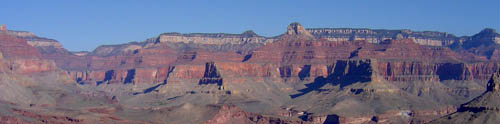






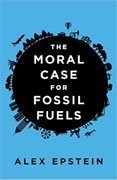





























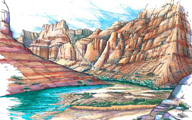

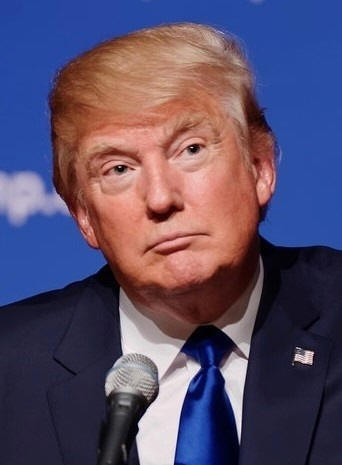

 say
Carly Fiorina? Get them to sign on with Trump's agenda and the
Donald can go back to making more billions. And, if they
disappoint, he would crush them during the next election cycle.
say
Carly Fiorina? Get them to sign on with Trump's agenda and the
Donald can go back to making more billions. And, if they
disappoint, he would crush them during the next election cycle. October;
the 29th, which this year falls on a Saturday!
October;
the 29th, which this year falls on a Saturday!
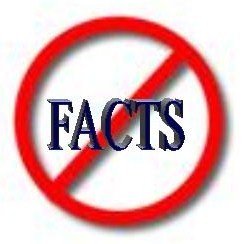
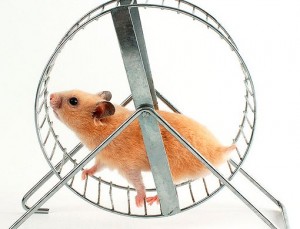 graduation
rates) that poorly represent consumer value. Of course, if we
left this all to the private sector,
we wouldn't need to measure any of
this!!
graduation
rates) that poorly represent consumer value. Of course, if we
left this all to the private sector,
we wouldn't need to measure any of
this!!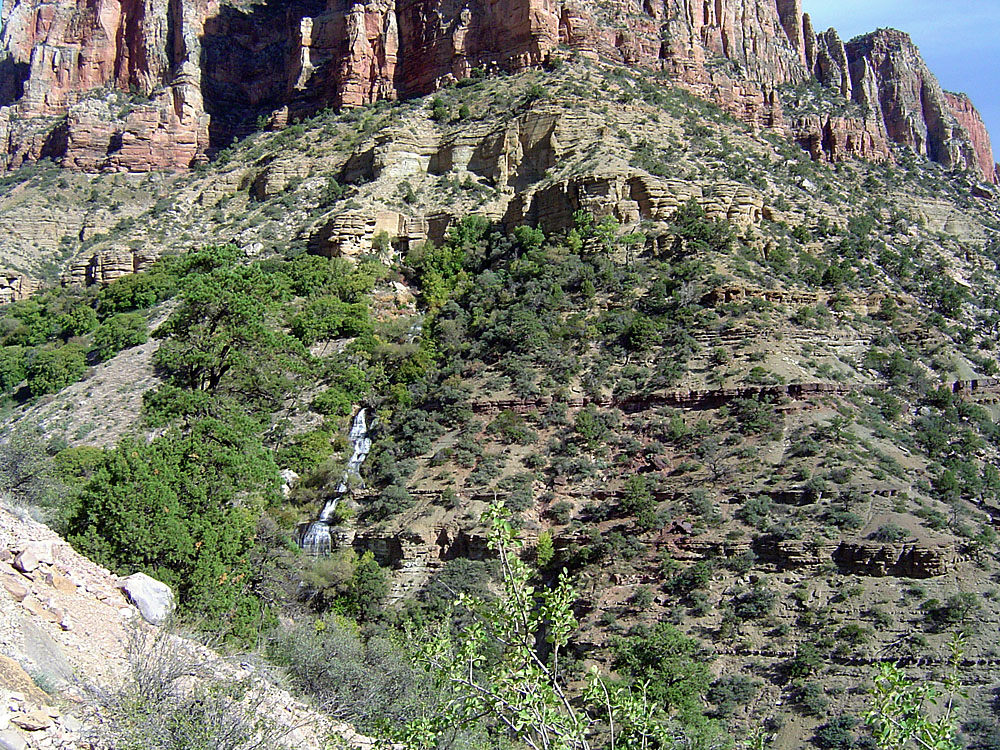
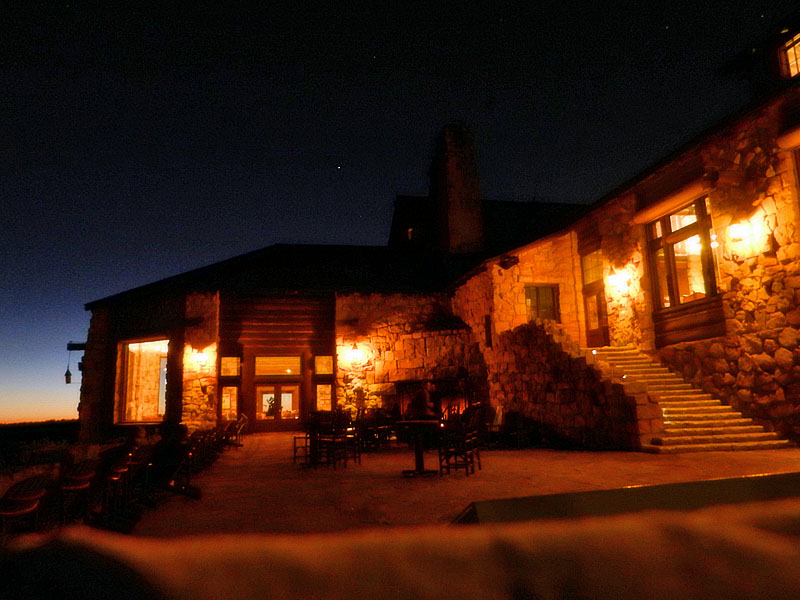
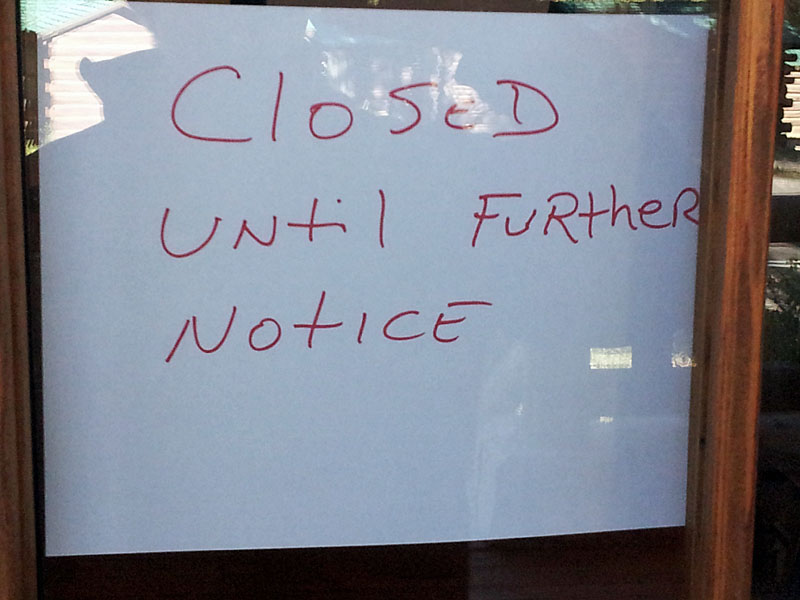
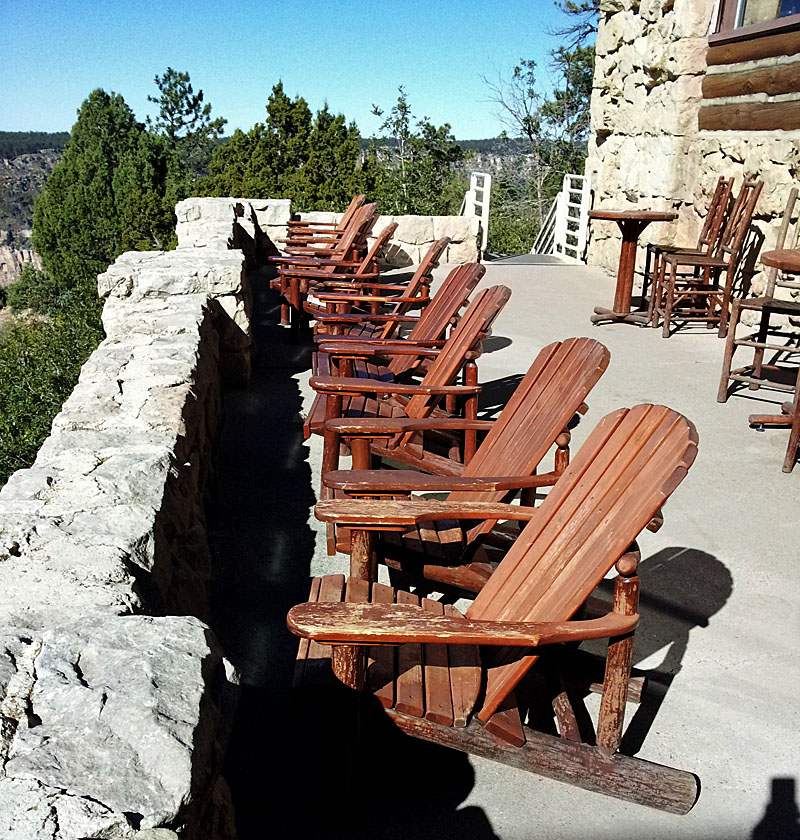
 Which finally brings me to the point of my story. This past
Sunday,
Which finally brings me to the point of my story. This past
Sunday,
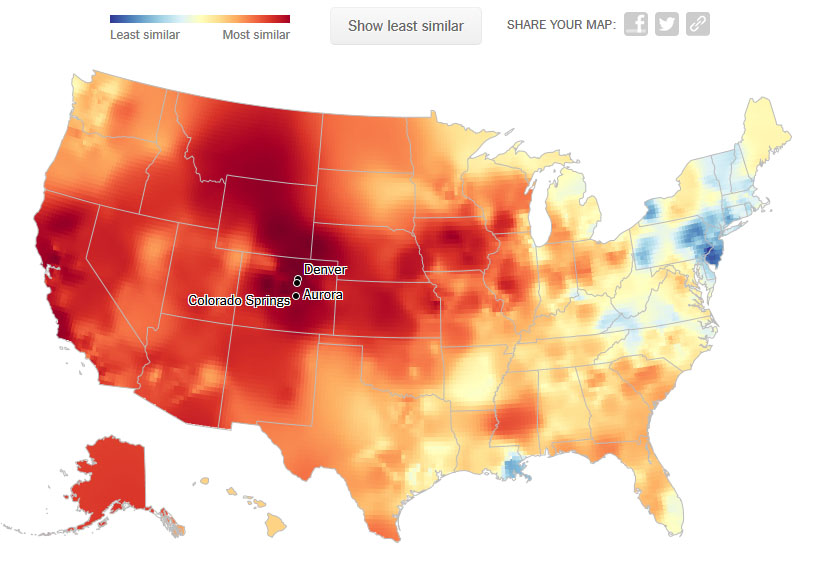

 OK, OK, so here’s
the plan – let all the illegal immigrants in the U.S. stay here
(and more are welcome to come) if they move to Detroit! We can
give them some property and let them work hard to turn that awful
OK, OK, so here’s
the plan – let all the illegal immigrants in the U.S. stay here
(and more are welcome to come) if they move to Detroit! We can
give them some property and let them work hard to turn that awful

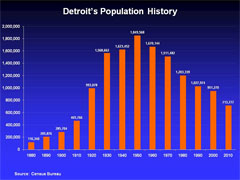

 Nonsense,
of course. The Supremes ruled that the 9 states that had been
required to get federal approval before changing voting laws (and
redistricting) no longer needed to do so, unless the Congress comes
up with
Nonsense,
of course. The Supremes ruled that the 9 states that had been
required to get federal approval before changing voting laws (and
redistricting) no longer needed to do so, unless the Congress comes
up with

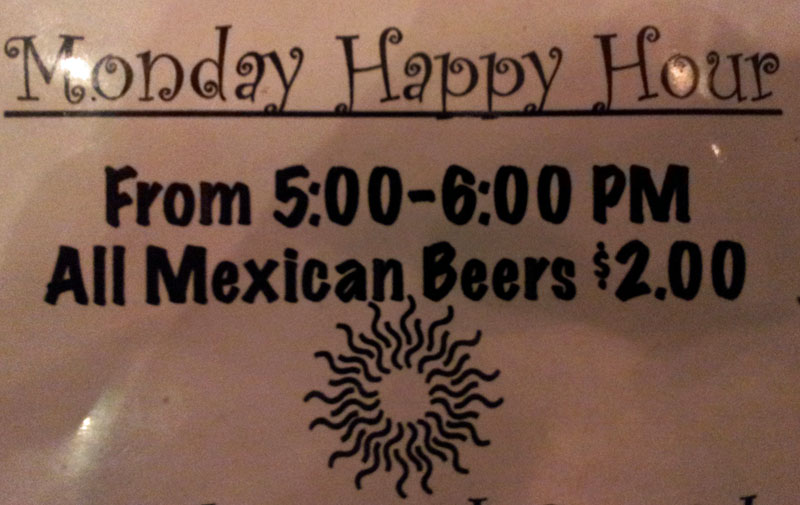
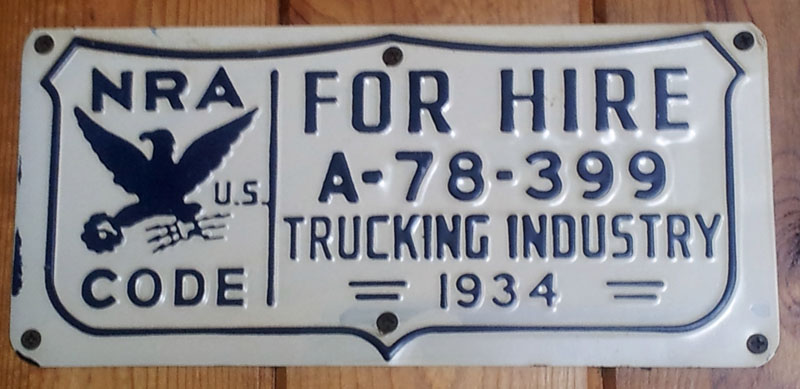
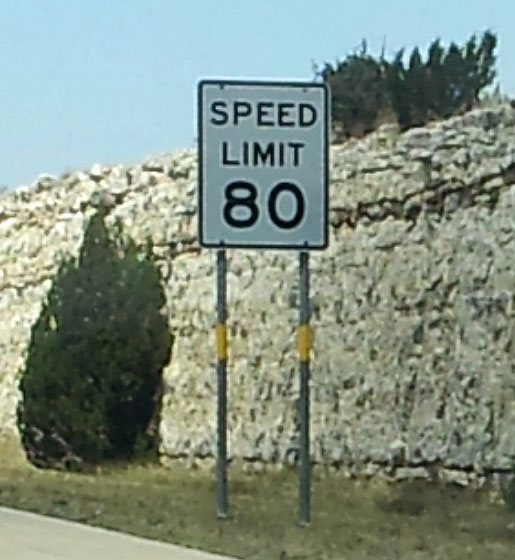
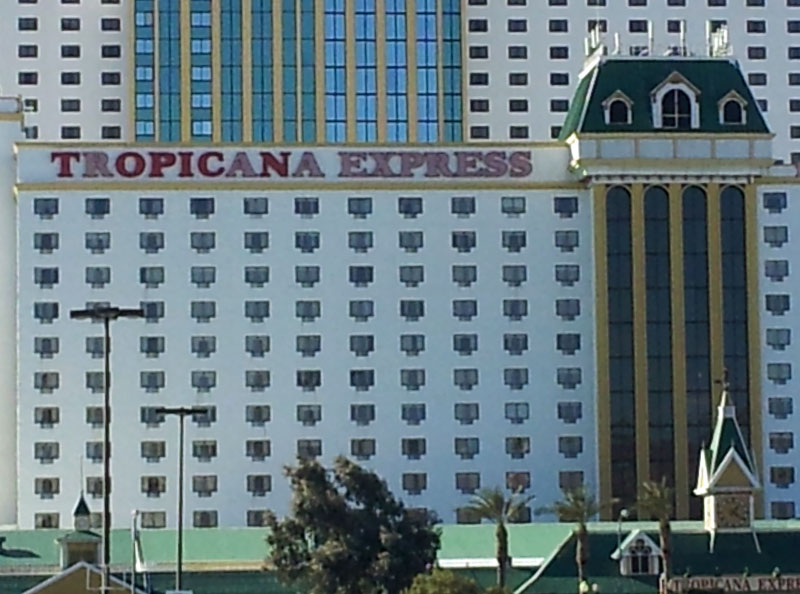
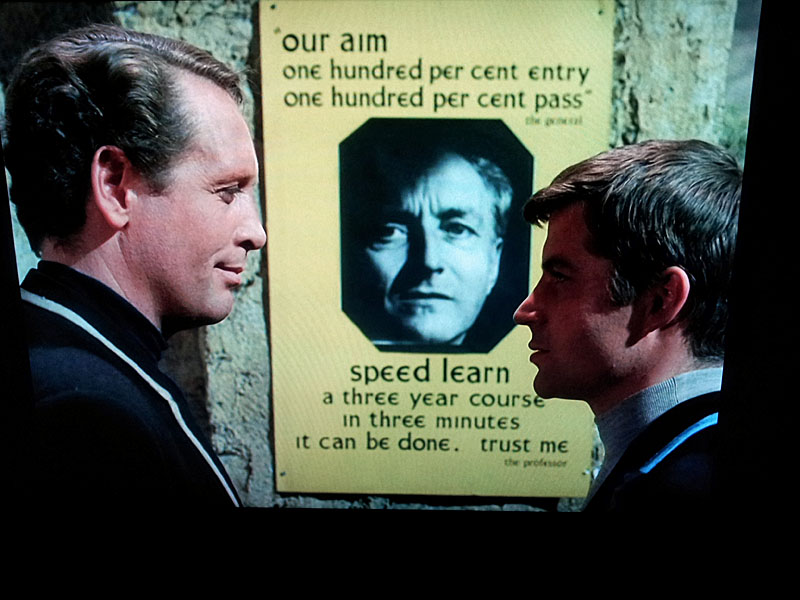


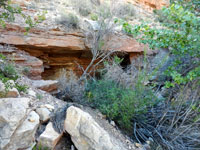
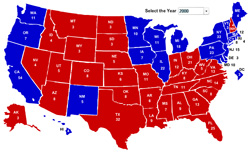
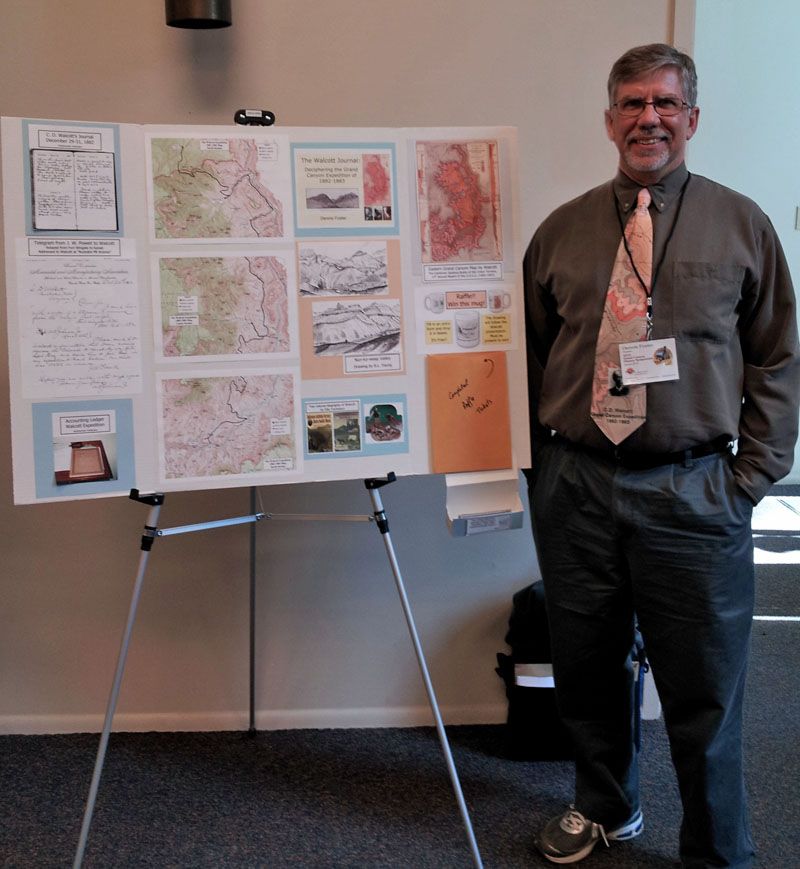
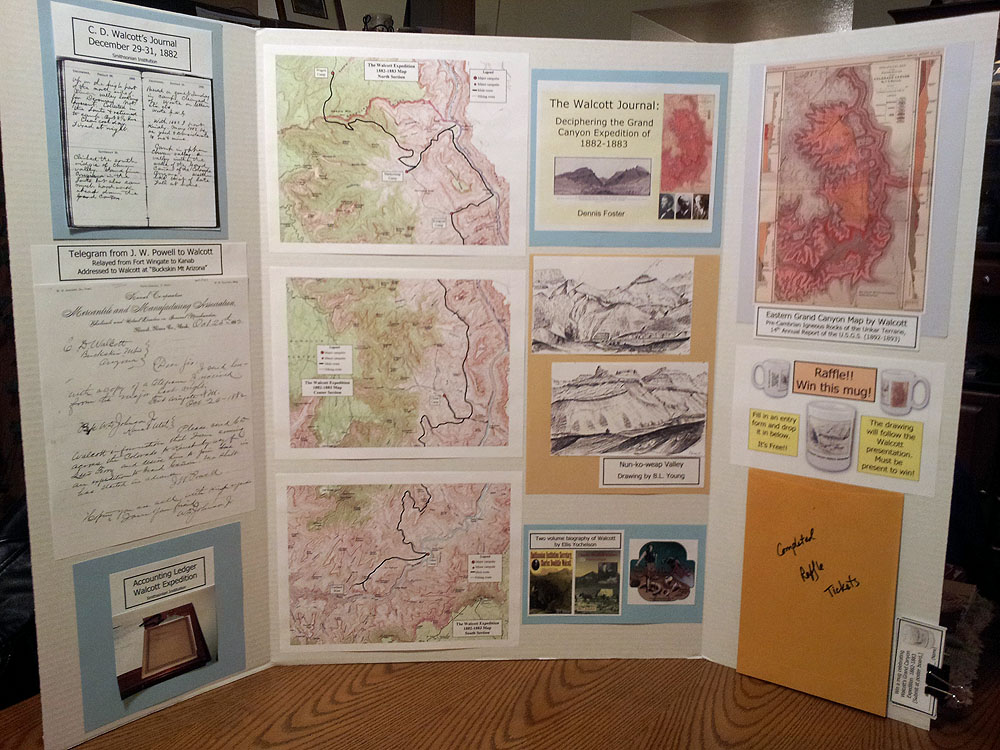
 has
improved over the last ten days or so. We've had temps in the
50s in Flagstaff and I have been jumping back into some serious
efforts to get into shape. A few days earlier than this hike I
went up to the top of Mt. Elden, here in Flagstaff, which is just a
tick under 9,300 feet in elevation (from 7,000 foot Flagstaff).
It felt good and the trail was fine. So, I decided to do a hike
down the Bright Angel trail. I knew that the trail would be icy,
and I was not disappointed. But, I also knew that it would be a
nice warm day down in the canyon and that there wouldn't be too many
folks on the trail.
has
improved over the last ten days or so. We've had temps in the
50s in Flagstaff and I have been jumping back into some serious
efforts to get into shape. A few days earlier than this hike I
went up to the top of Mt. Elden, here in Flagstaff, which is just a
tick under 9,300 feet in elevation (from 7,000 foot Flagstaff).
It felt good and the trail was fine. So, I decided to do a hike
down the Bright Angel trail. I knew that the trail would be icy,
and I was not disappointed. But, I also knew that it would be a
nice warm day down in the canyon and that there wouldn't be too many
folks on the trail.
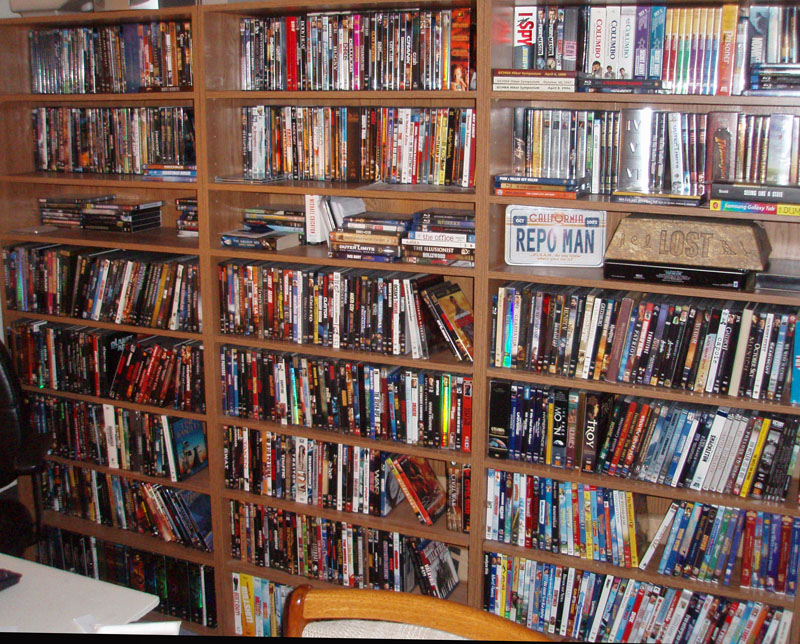
 and
they were aired in letterbox. Now, I did watch the whole series
a couple of times, but not the Sci Fi version. Of course now I
own the DVDs (and have watched them all the way through at least
twice).
and
they were aired in letterbox. Now, I did watch the whole series
a couple of times, but not the Sci Fi version. Of course now I
own the DVDs (and have watched them all the way through at least
twice).
 already get sucked into watching a movie on my satellite service even
though I own a copy! Just last night - an hour of
already get sucked into watching a movie on my satellite service even
though I own a copy! Just last night - an hour of 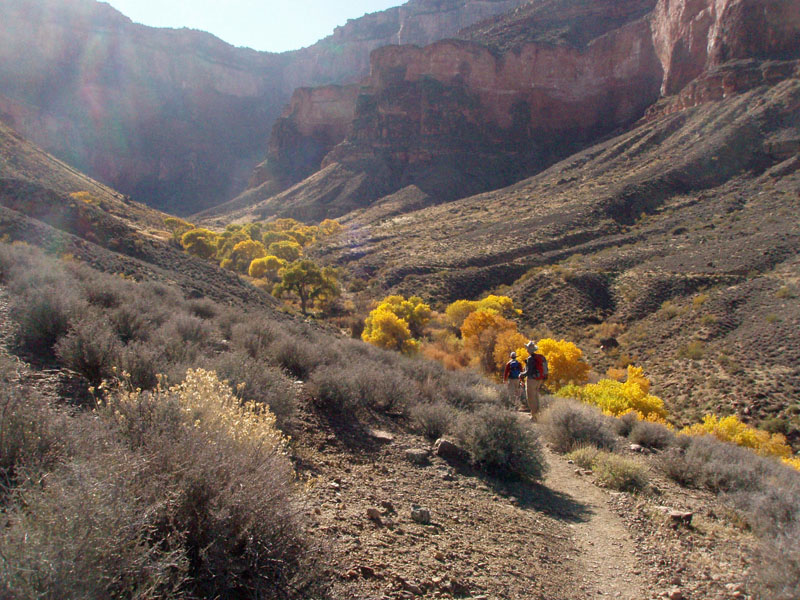
 dial
up modem and laptop with Windows 95! I spent a couple of days
learning how it works and then drove up to Denver and spent a couple
of days with him going over features (he really likes to do on-line
banking). OK, insofar as it goes. But, when I ask him
about it, and he tries to explain what happens when he makes certain
selections, I had trouble following him, even though its Android
system is quite similar to my smart phone. So, I got one for me,
but I don't need the 3G so I just got the WiFi model. Turns out
to be a bit of a mistake. Some operating differences, and, as I
have come to find out, some connection problems. Apparently,
when my wireless router has to make some IP changes, the Samsung won't
figure that out and it gets hung up trying to connect. From what
I have read on the web, I might have to do a factory reset, or I might
have to find some special software that will allow me to detect and
delete the cached file that the Samsung is storing the IP address in,
or something else. Anyway, after reading about this in three, or
four, on-line forums, I went to the Samsung site to see if there was
info out there. Nothing!!?! So, I decided to fill out an
e-mail from their help section. It required me to identify the
type of item, make, and model number. But, when I chose mobile
device and wifi tablet, it wouldn't give me a choice for model number
nor let me enter one. Consequently, it wouldn't take my
e-mail!!! Aargh!!! So, I chose a Sprint smart phone
instead and in my message I wrote that "This is not what I
have!!!! But, you won't let me choose what I have!!!" and
so on. We'll see. Seems like I should be able to do a work
around, but maybe a pain in the . . . Samsung!
dial
up modem and laptop with Windows 95! I spent a couple of days
learning how it works and then drove up to Denver and spent a couple
of days with him going over features (he really likes to do on-line
banking). OK, insofar as it goes. But, when I ask him
about it, and he tries to explain what happens when he makes certain
selections, I had trouble following him, even though its Android
system is quite similar to my smart phone. So, I got one for me,
but I don't need the 3G so I just got the WiFi model. Turns out
to be a bit of a mistake. Some operating differences, and, as I
have come to find out, some connection problems. Apparently,
when my wireless router has to make some IP changes, the Samsung won't
figure that out and it gets hung up trying to connect. From what
I have read on the web, I might have to do a factory reset, or I might
have to find some special software that will allow me to detect and
delete the cached file that the Samsung is storing the IP address in,
or something else. Anyway, after reading about this in three, or
four, on-line forums, I went to the Samsung site to see if there was
info out there. Nothing!!?! So, I decided to fill out an
e-mail from their help section. It required me to identify the
type of item, make, and model number. But, when I chose mobile
device and wifi tablet, it wouldn't give me a choice for model number
nor let me enter one. Consequently, it wouldn't take my
e-mail!!! Aargh!!! So, I chose a Sprint smart phone
instead and in my message I wrote that "This is not what I
have!!!! But, you won't let me choose what I have!!!" and
so on. We'll see. Seems like I should be able to do a work
around, but maybe a pain in the . . . Samsung!
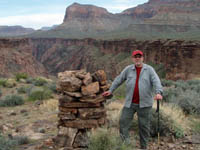
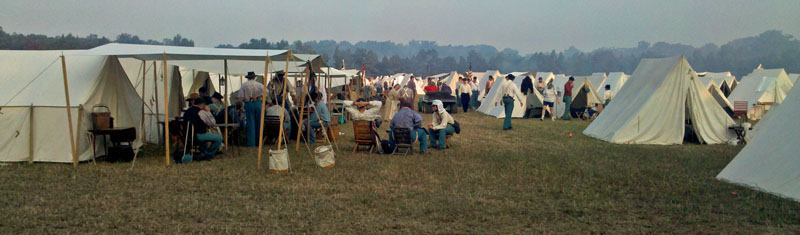
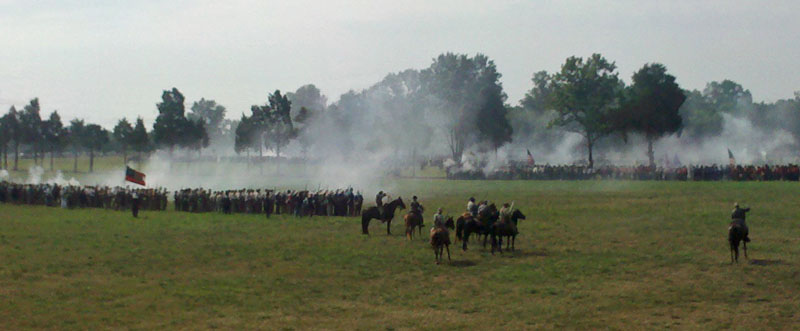
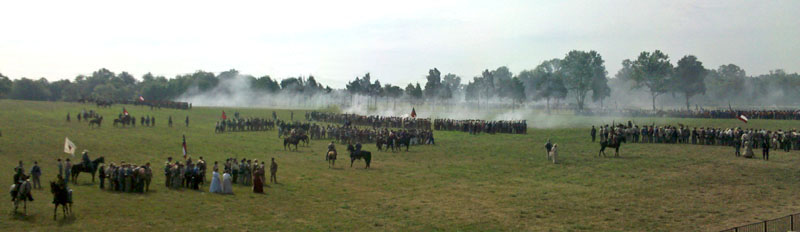
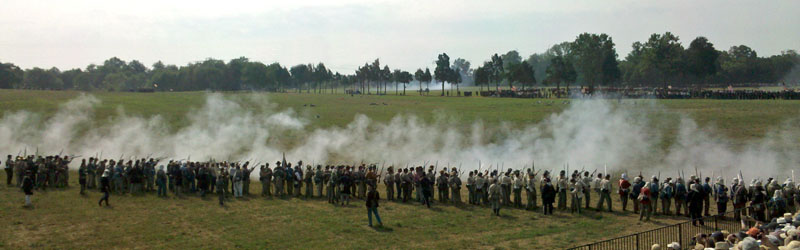
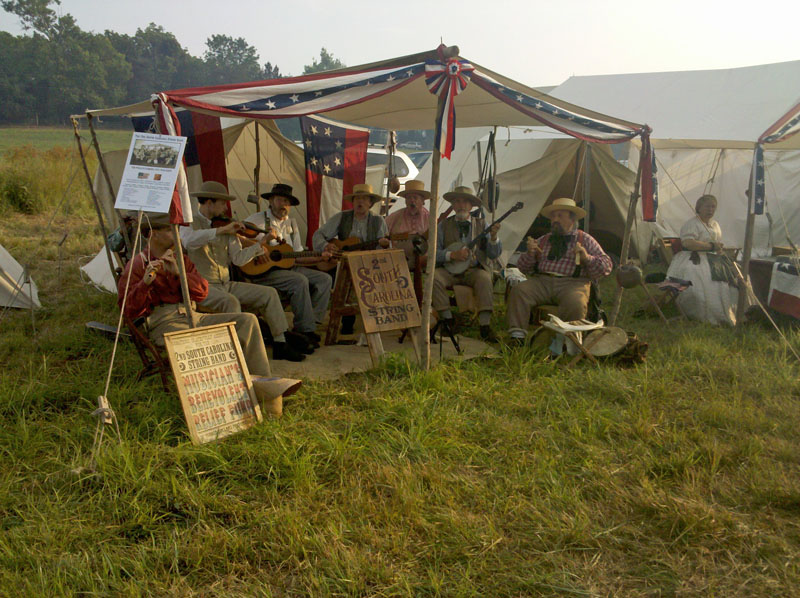
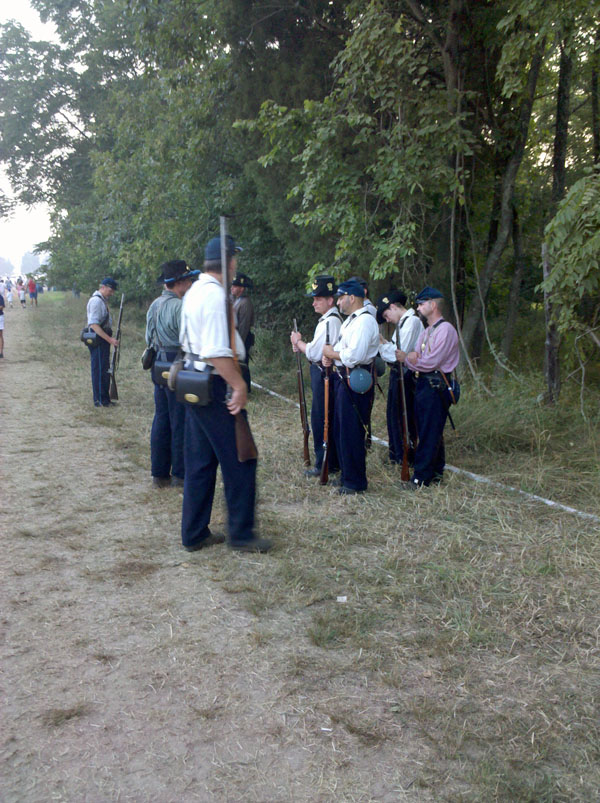

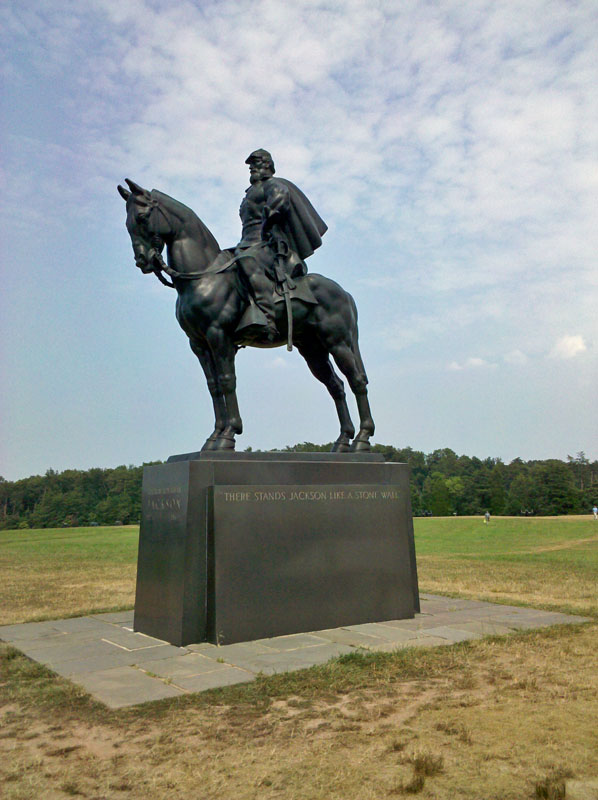

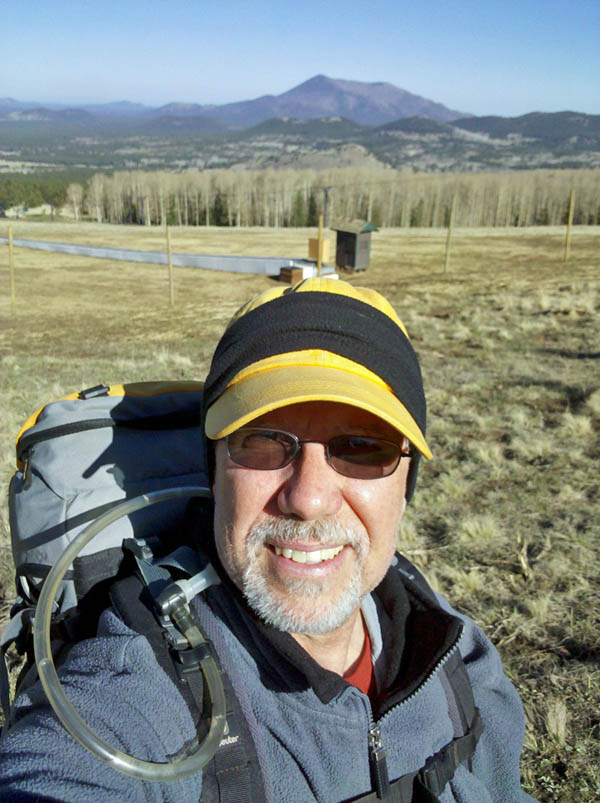
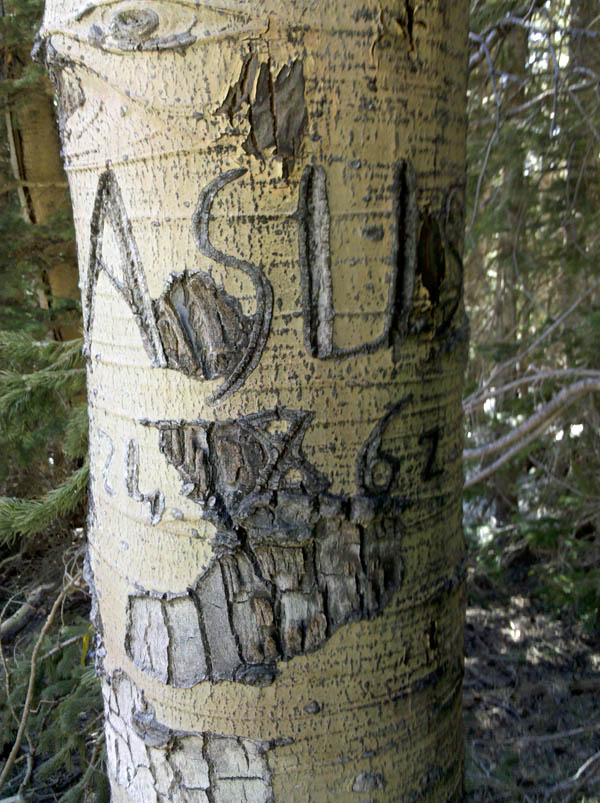
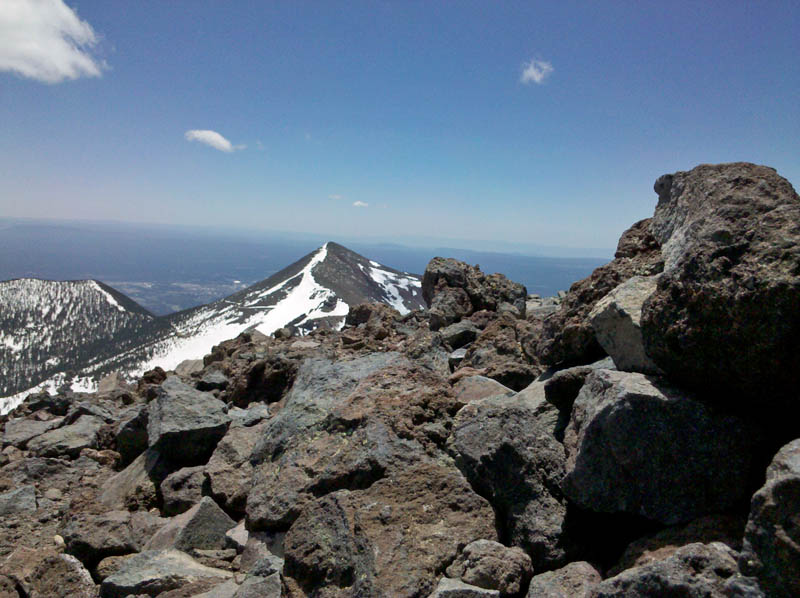
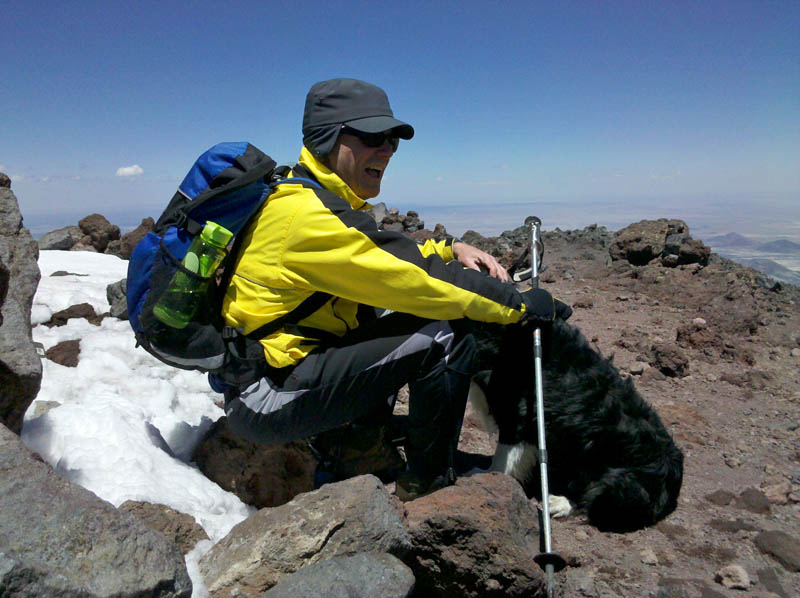
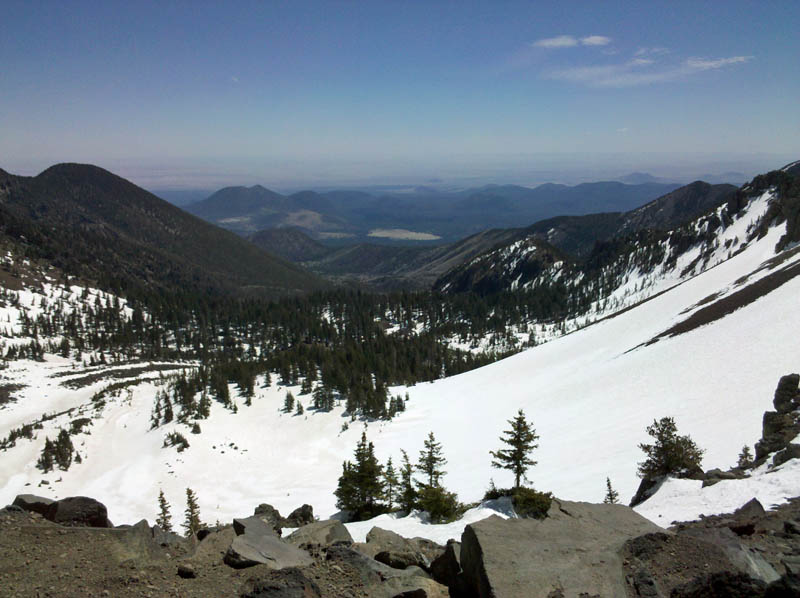
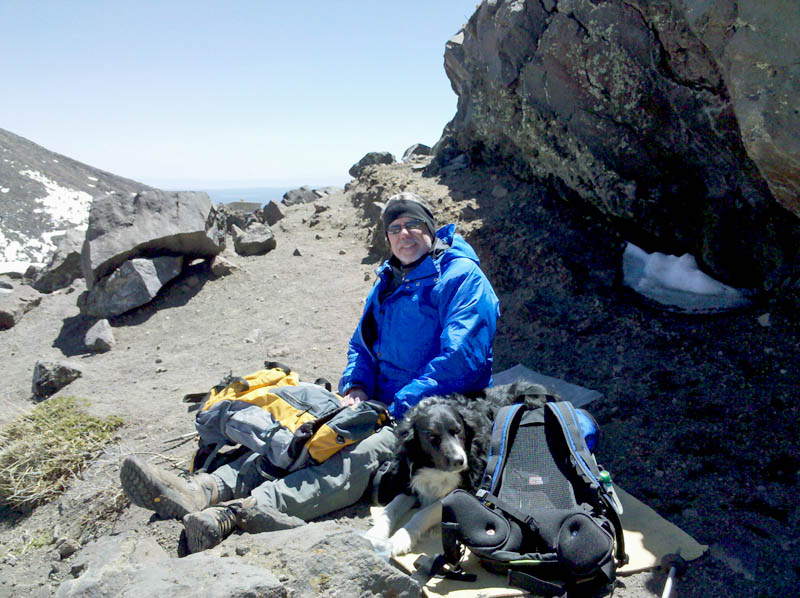
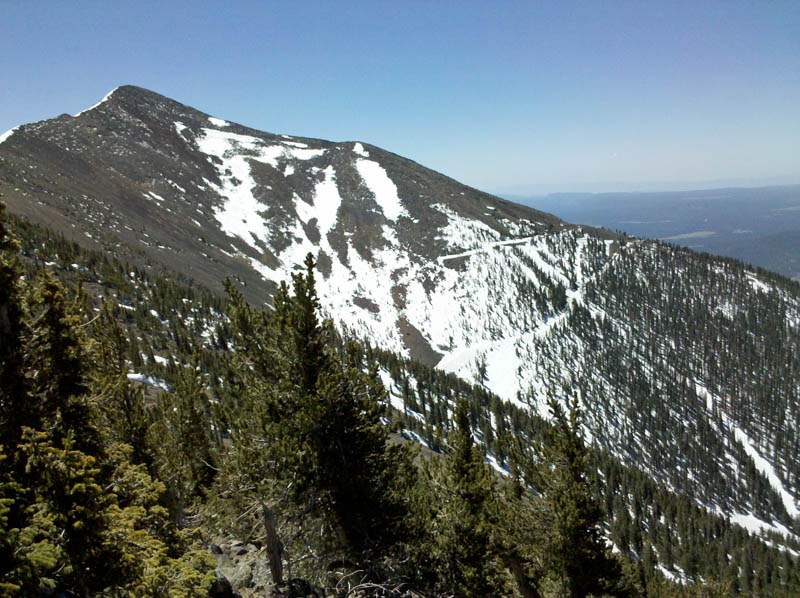
 seek
out fantastic hiking opportunities elsewhere in the canyon out of
earshot of these helicopters. But, not necessarily out of
earshot of all helicopters. Pictured to the right is a park
service helicopter flying way outside of these zones which we
encountered on our recent hike through "the gems." It
was searching for an ultralight vehicle and its pilot that went
missing a couple of days before our hike began. We saw it fly up
and down the canyon once, or twice, each of the first three days of
our hike. [Go see a
seek
out fantastic hiking opportunities elsewhere in the canyon out of
earshot of these helicopters. But, not necessarily out of
earshot of all helicopters. Pictured to the right is a park
service helicopter flying way outside of these zones which we
encountered on our recent hike through "the gems." It
was searching for an ultralight vehicle and its pilot that went
missing a couple of days before our hike began. We saw it fly up
and down the canyon once, or twice, each of the first three days of
our hike. [Go see a 
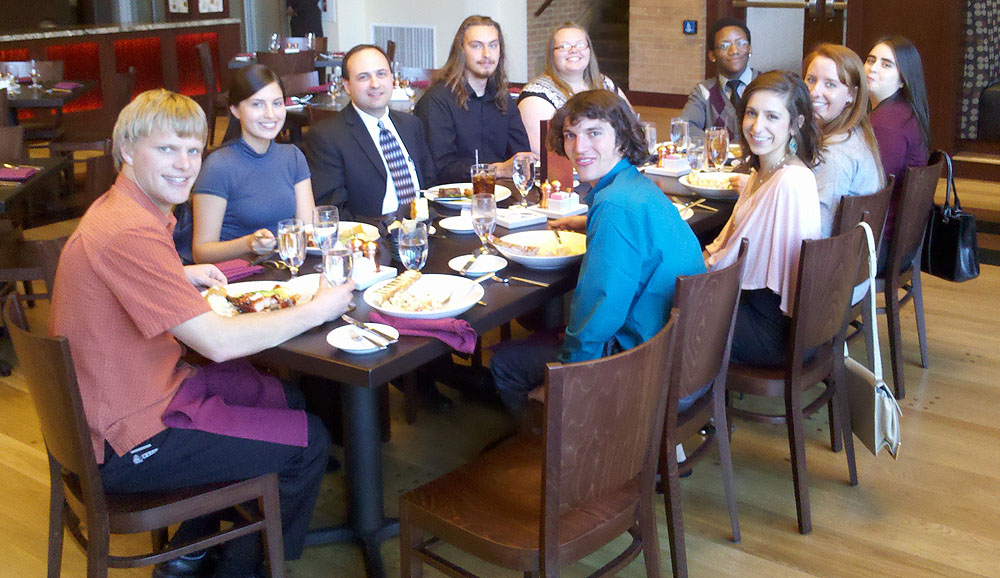
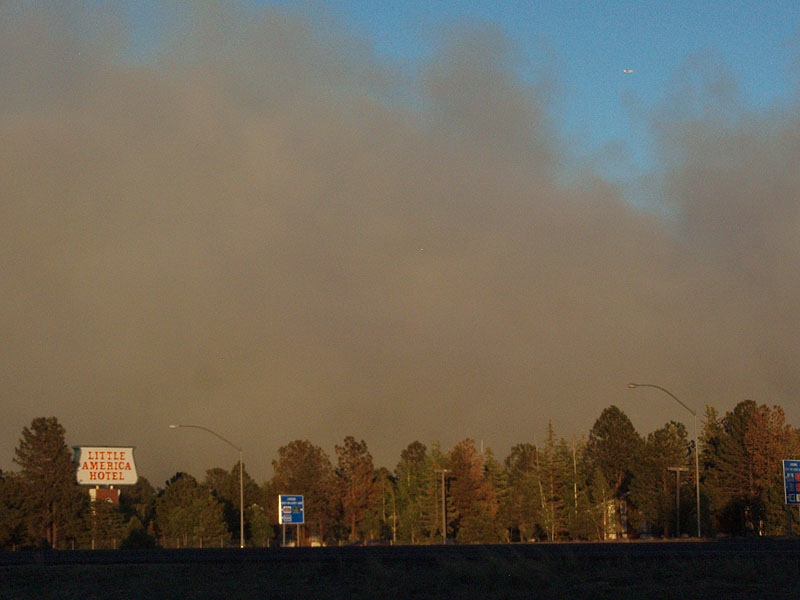
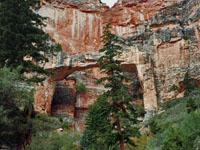 participating in the
fourth
participating in the
fourth 
 Well, it's not a perfect world! It was a
nice small, intimate, venue and we pretty much took over the place for
a couple of hours. I had some kind of iced dark chocolate mocha
something-or-other, with whipped cream, and it was fabulous.
Well, it's not a perfect world! It was a
nice small, intimate, venue and we pretty much took over the place for
a couple of hours. I had some kind of iced dark chocolate mocha
something-or-other, with whipped cream, and it was fabulous.
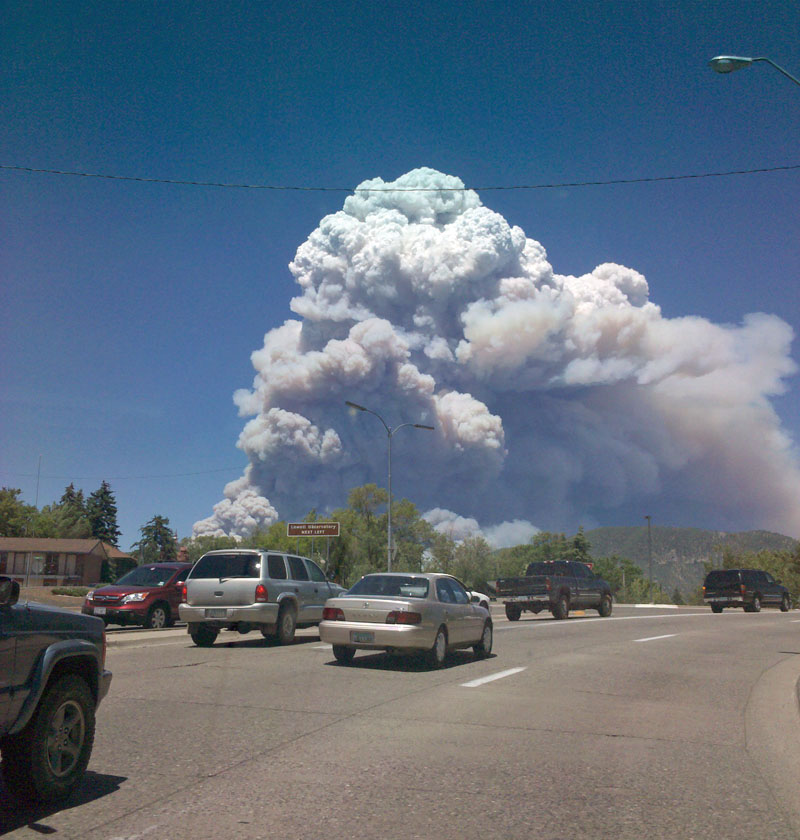
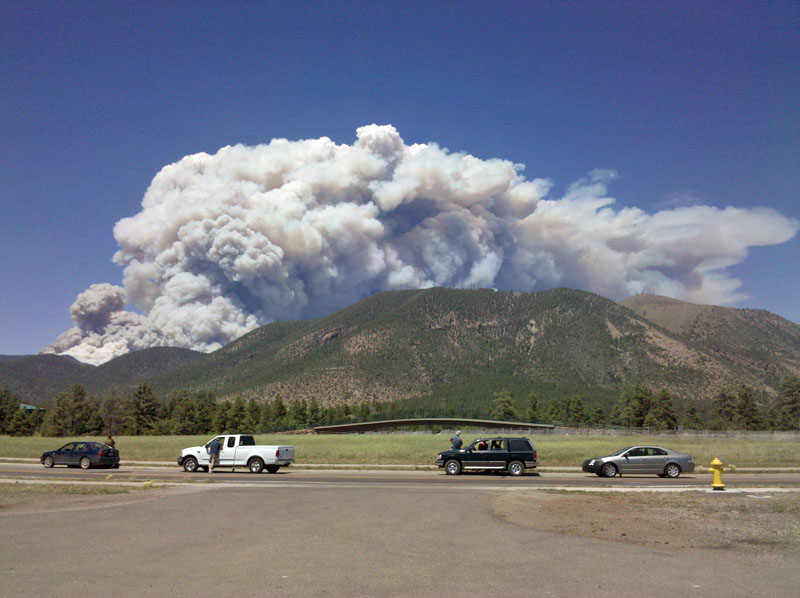

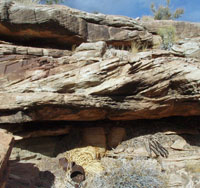
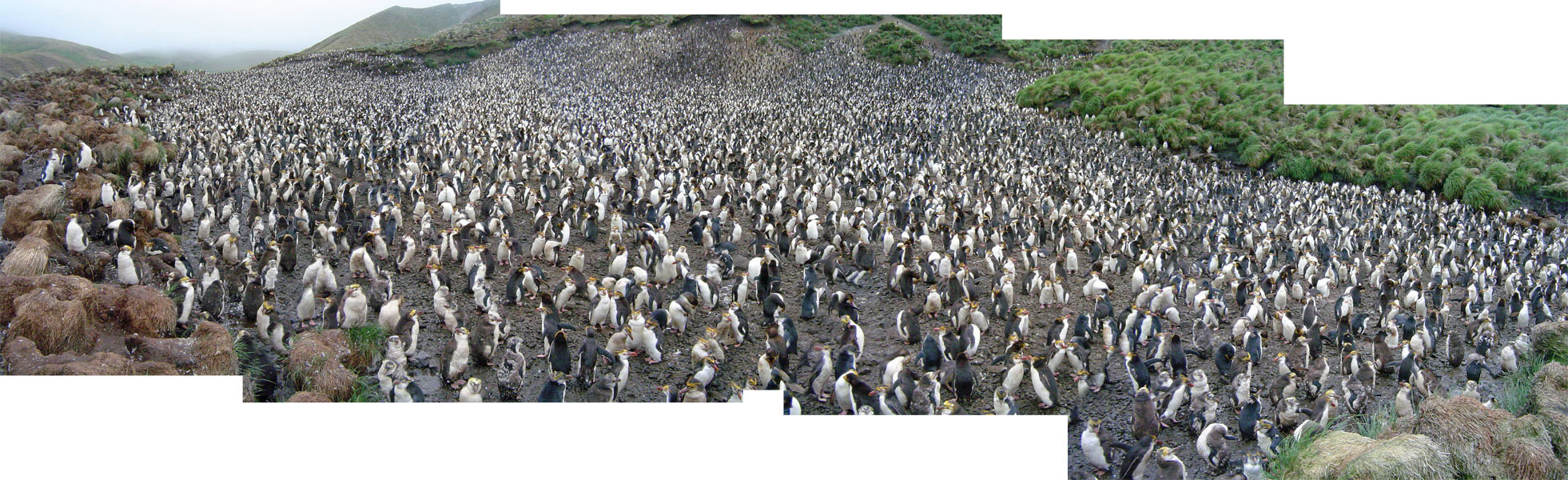
 President
without really having any serious interest in governing in a manner
that leaves us better off after his term(s) in office than we were
before he started. He jets off to Copenhagen to make an Olympics
pitch. He travels around the world speechifying on what is wrong
with America. He takes his family on a vacation to the Grand
Canyon and Martha's Vineyard. He seems mesmerized by the spectacle
of the presidency and not so intrigued by its hope and promise.
President
without really having any serious interest in governing in a manner
that leaves us better off after his term(s) in office than we were
before he started. He jets off to Copenhagen to make an Olympics
pitch. He travels around the world speechifying on what is wrong
with America. He takes his family on a vacation to the Grand
Canyon and Martha's Vineyard. He seems mesmerized by the spectacle
of the presidency and not so intrigued by its hope and promise.
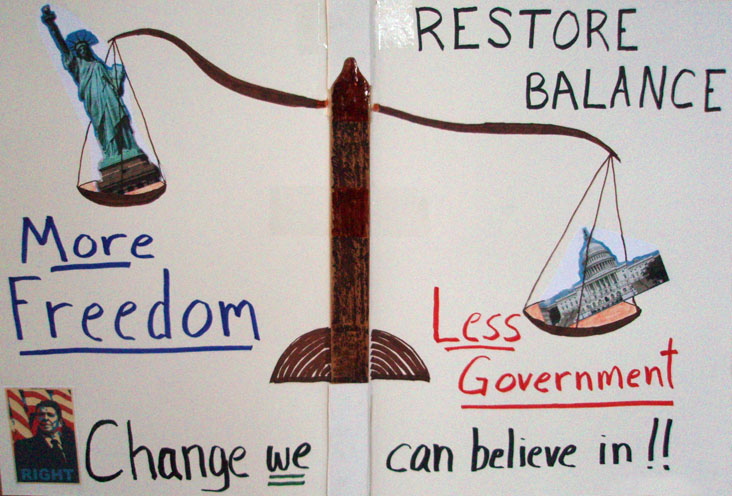
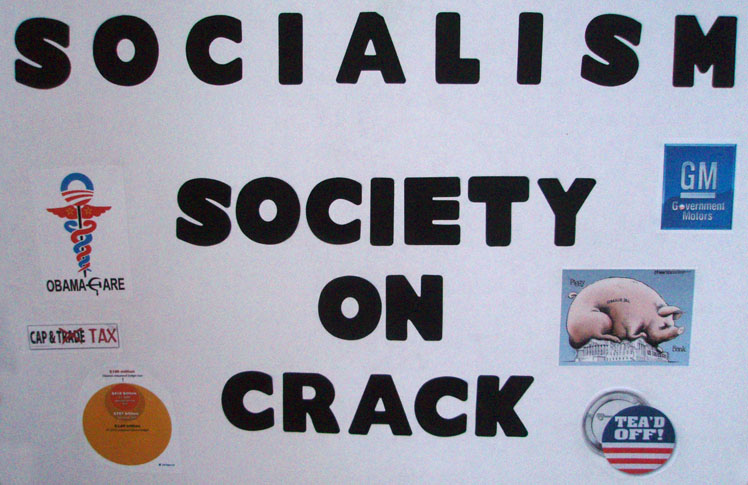
 part
of my sign showing though those closer to the camera. The two
sides of my sign are shown to the left and right, above. Cara
Lynn also made a sign (see below) as did a colleague of mine who
retired a few years ago - LOL to the right.
part
of my sign showing though those closer to the camera. The two
sides of my sign are shown to the left and right, above. Cara
Lynn also made a sign (see below) as did a colleague of mine who
retired a few years ago - LOL to the right.
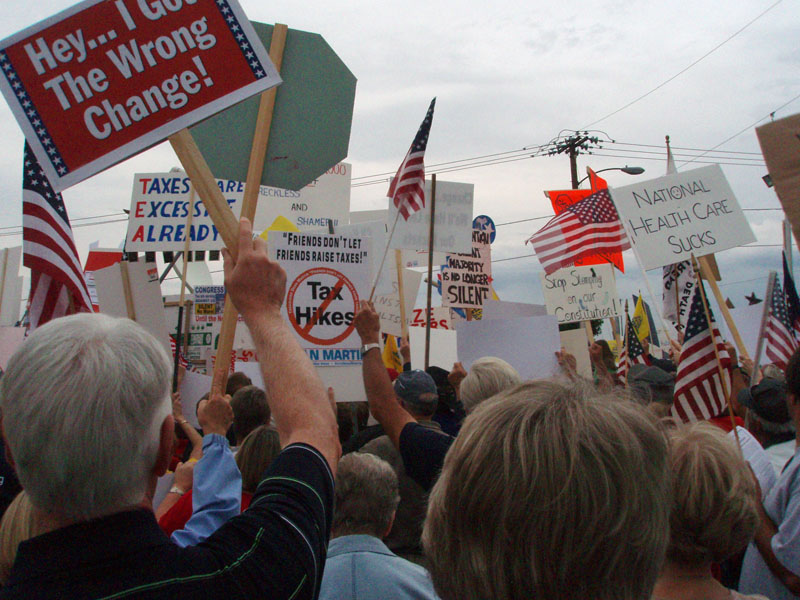
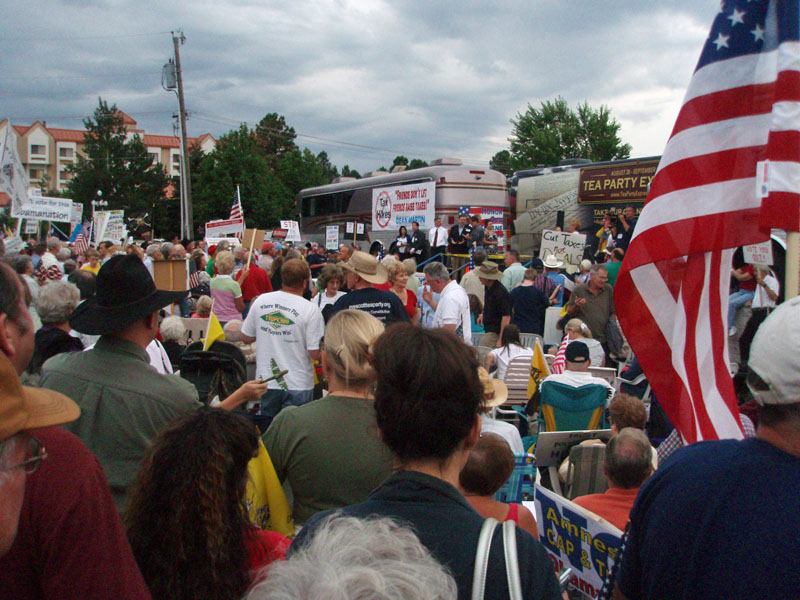
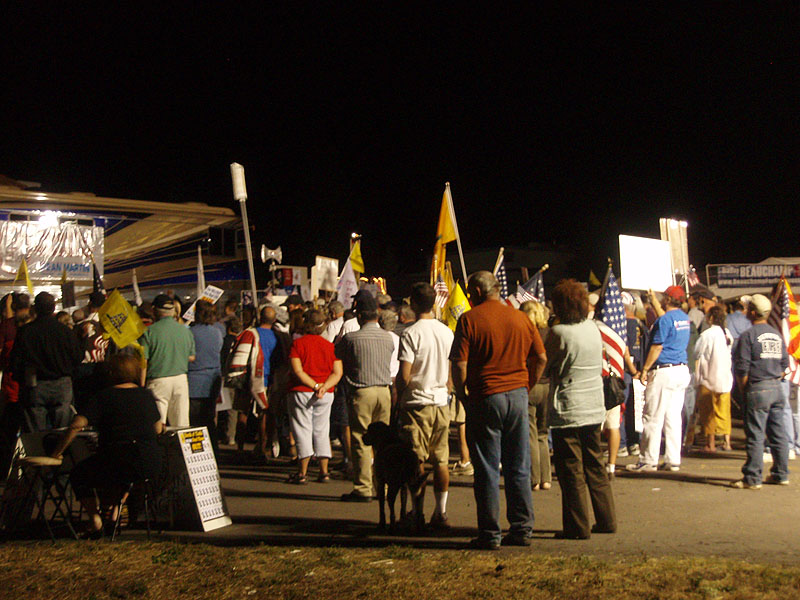
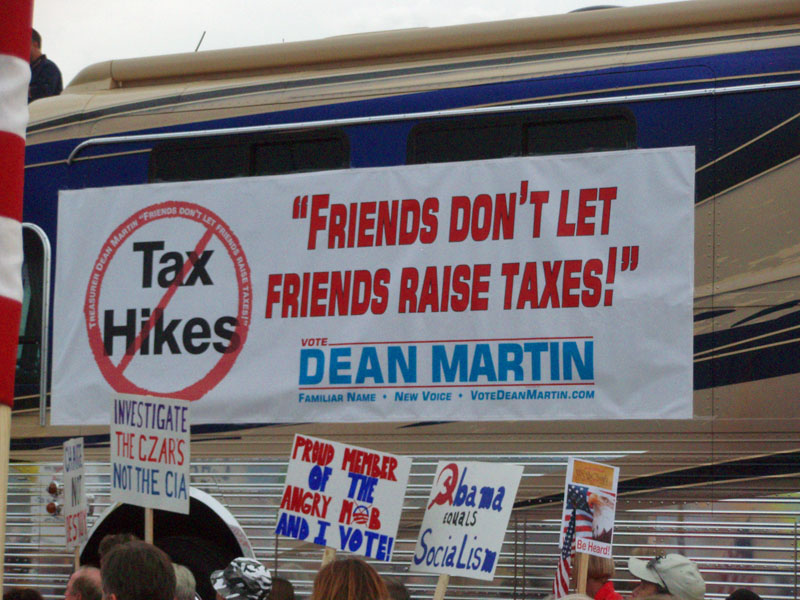
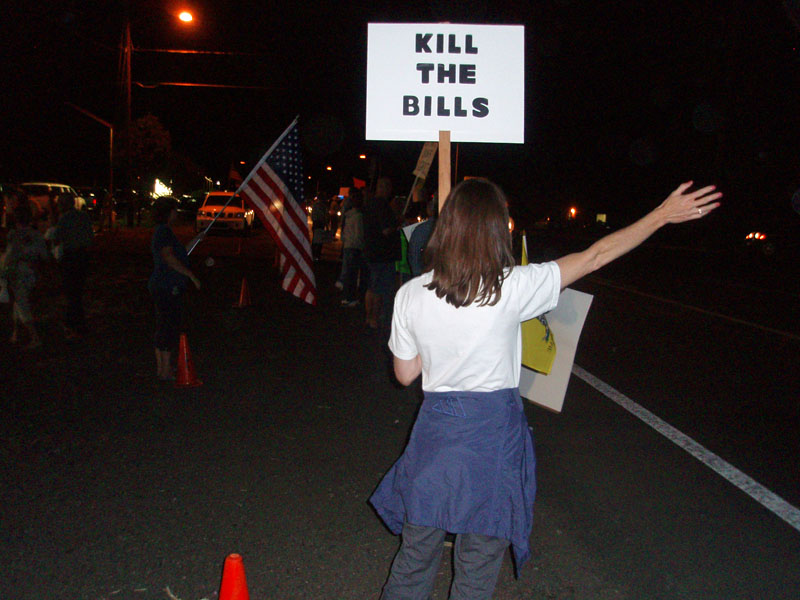
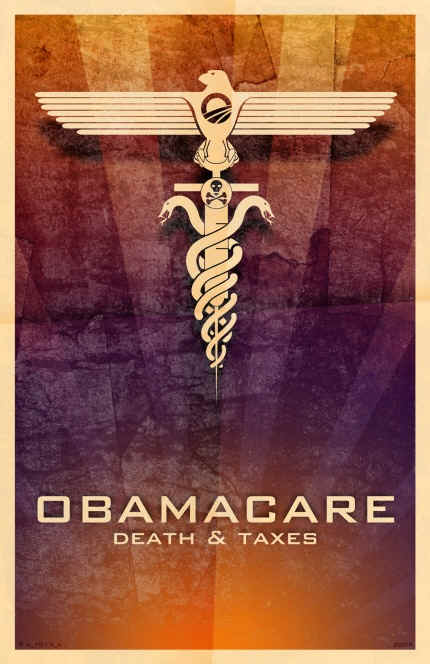
 now,
and focus on a local matter that has me especially irritated:
on-campus parking at Northern Arizona University. Last year I
paid $60 for a permit in an unpaved lot on the edge of campus.
This "yellow" permit was good only in that one lot, Monday
through Friday, from 7:30 a.m. until 4:30 p.m.
now,
and focus on a local matter that has me especially irritated:
on-campus parking at Northern Arizona University. Last year I
paid $60 for a permit in an unpaved lot on the edge of campus.
This "yellow" permit was good only in that one lot, Monday
through Friday, from 7:30 a.m. until 4:30 p.m.
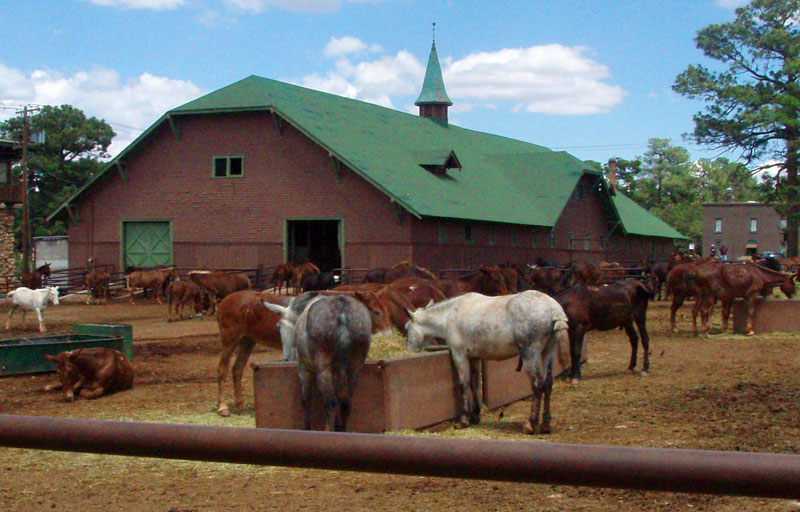



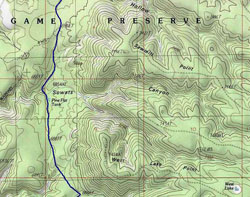 and
estimating our position by noting when we would meet up with
intersecting roads. Remarkably effective, although there are
more side roads than are shown on the old map! Well, the dilemma
here is that maps are oriented with north at the top and we were
driving south. I have almost always kept the map in its printed
orientation and made mental notes that roads on "map left"
were going to show up on my right, and vice versa. Yeah, that
gets confusing. But, on my recent spring break hike, I noticed
that
and
estimating our position by noting when we would meet up with
intersecting roads. Remarkably effective, although there are
more side roads than are shown on the old map! Well, the dilemma
here is that maps are oriented with north at the top and we were
driving south. I have almost always kept the map in its printed
orientation and made mental notes that roads on "map left"
were going to show up on my right, and vice versa. Yeah, that
gets confusing. But, on my recent spring break hike, I noticed
that 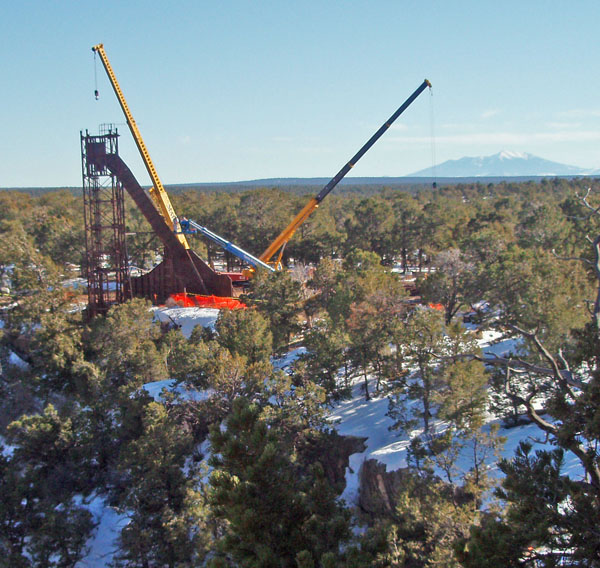
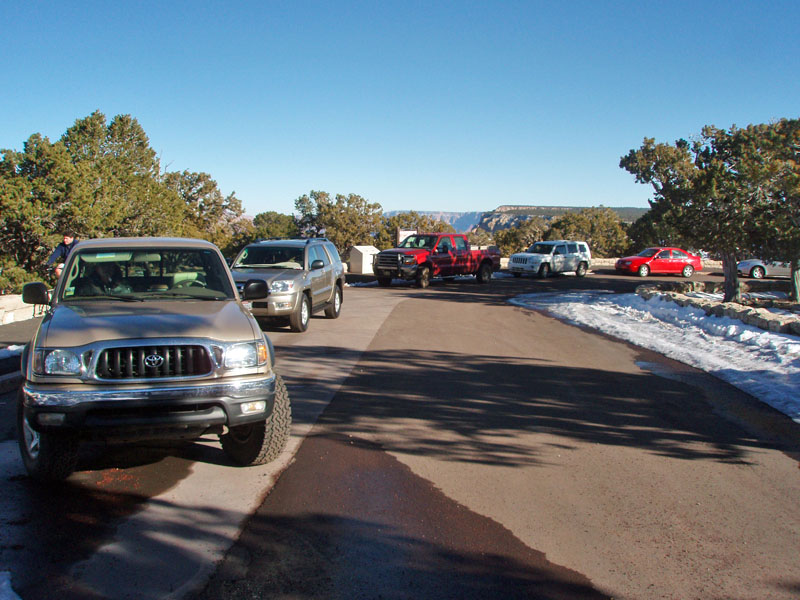
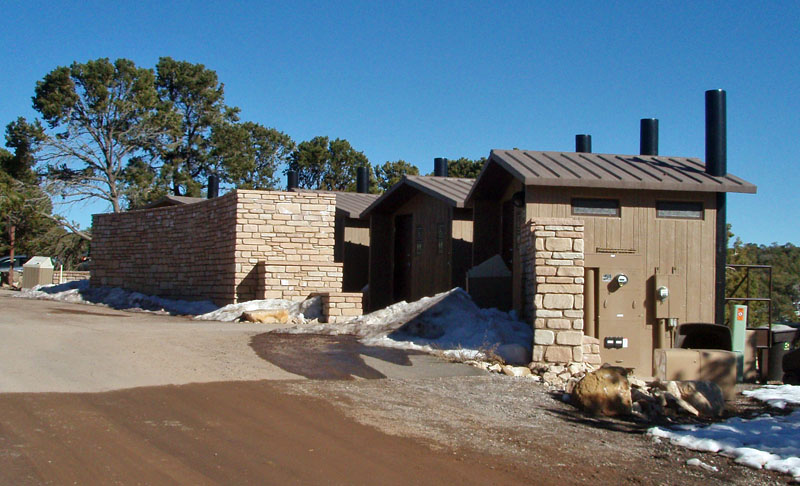
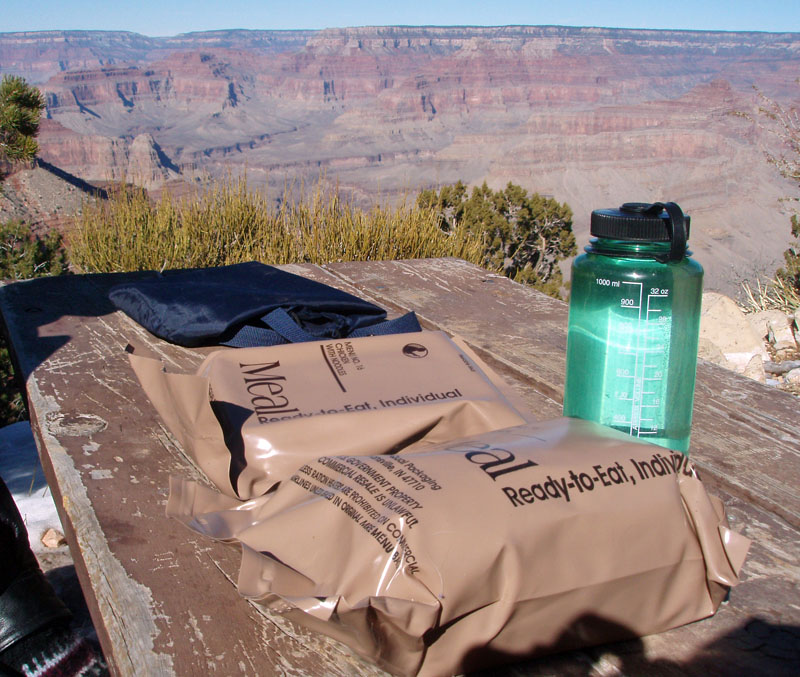


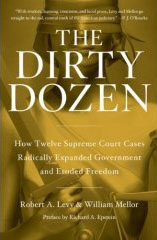
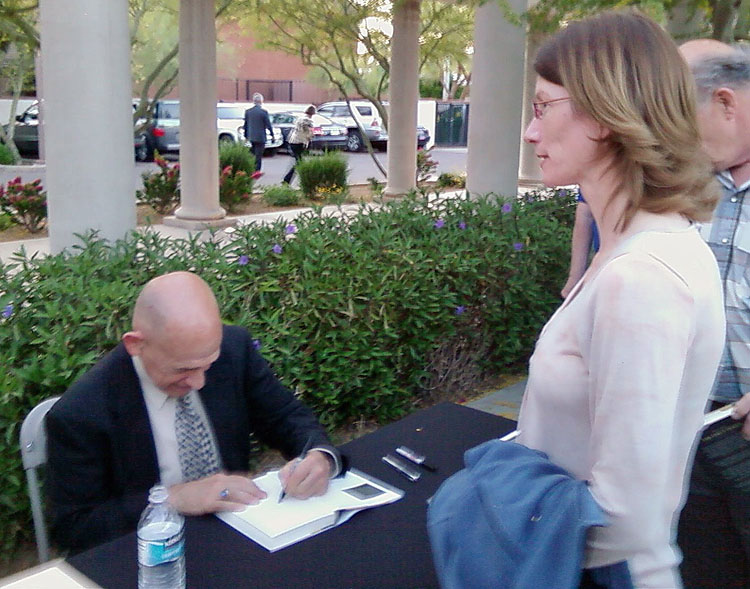
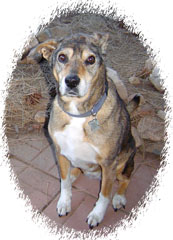
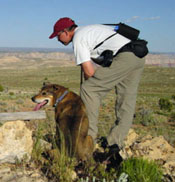 some
days afterwards.
some
days afterwards.