|
Friday,
December 23, 2011
 On
Storage
- As
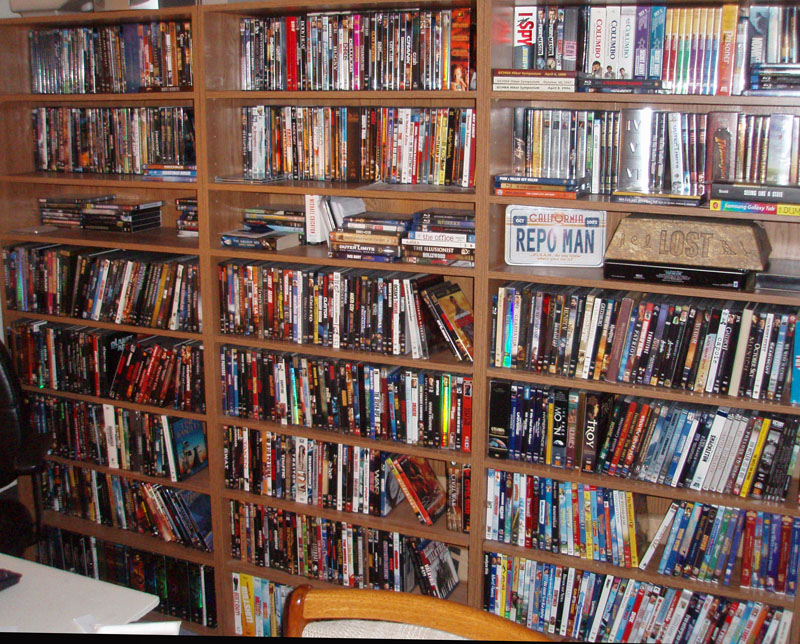
I gaze over my rather extensive collection of DVDs, I keep thinking
about the future of storage. I know, it doesn't seem very
interesting, but it is to me. [So is how aluminum is On
Storage
- As
I gaze over my rather extensive collection of DVDs, I keep thinking
about the future of storage. I know, it doesn't seem very
interesting, but it is to me. [So is how aluminum is  made,
but that will have to wait for a later time.] I can remember the
days before we could tape TV shows and there was no such thing as a
movie rental business. I can still remember wanting to watch a
new show that was called "Star Truck." But, I missed
seeing it because it was either on too late or it didn't command a
sufficient vote to allow watching on our small black and white
TV. It was only years later, when I saw reruns of this show,
that I realized it's title was "Star Trek"! But, with
just four channels (plus or minus), shows appearing as reruns wasn't
all that common. So, if you missed something, you just missed
it. Then, along came video tape. made,
but that will have to wait for a later time.] I can remember the
days before we could tape TV shows and there was no such thing as a
movie rental business. I can still remember wanting to watch a
new show that was called "Star Truck." But, I missed
seeing it because it was either on too late or it didn't command a
sufficient vote to allow watching on our small black and white
TV. It was only years later, when I saw reruns of this show,
that I realized it's title was "Star Trek"! But, with
just four channels (plus or minus), shows appearing as reruns wasn't
all that common. So, if you missed something, you just missed
it. Then, along came video tape.
I missed the Betamax
wave, thank goodness. [I also pretty much missed 8-track tapes,
too.] But, eventually a VHS player/recorder was cheap enough to
buy, as was the tape. Now, you could actually tape shows, and
buy (or, rent) copies of movies. And, thus began my video
collection. I taped mostly movies and mostly I never watched
them! Well, in economics we talk about something called a
"reservation price," which is what you'd pay just on the off
chance you might want to "consume" some good. So it
was with these movies. I didn't do much insofar as TV shows goes
except for the Babylon
5 series. I taped the original airing (at the slowest speed;
6 episodes to a tape!), and then I taped the reruns on TNT when they
picked up the fifth season. Then I taped them all again when the
shows went to the Sci Fi channel  and
they were aired in letterbox. Now, I did watch the whole series
a couple of times, but not the Sci Fi version. Of course now I
own the DVDs (and have watched them all the way through at least
twice). and
they were aired in letterbox. Now, I did watch the whole series
a couple of times, but not the Sci Fi version. Of course now I
own the DVDs (and have watched them all the way through at least
twice).
The advent of the Laserdisc
interested me a lot, but was way too expensive for my tastes. I
can remember another student in grad school musing about being able to
buy a multi-disc set of Lawrence
of Arabia. I am pretty sure that was before the restored
movie was re-released to theaters in 1989 (which I saw twice within a
week). And, during a film festival on campus one year that
featured movies by Orson Welles, I caught a session with Roger
Ebert who was using a Laserdisc to go through Citizen
Kane practically frame by frame. Too cool, but still too
pricey.
So, I was quite enthusiastic about the DVD revolution and started to
build quite a library of movies. When blu-ray came along (I
decided to give HD DVD a pass) I was leery of replacing my DVDs.
So far I haven't really done that, with a few exceptions. The
blu-ray player does a good job on DVDs - in fact, if you couldn't play
a DVD on the blu-ray I am sure I would not have moved that way.
Now, I pretty much only buy blu-ray discs to add to my DVD
collection. [If you click on the picture of my videos, above,
you'll see a larger image and can see my copy of the Lost
series on blu-ray next to my DVD copy of Repo
Man.]
But, I wonder why. It seems to me (and, probably everyone else),
that the whole "on-demand" market is just going to get
better and better. Why not just pay $1 every time you want to
see your favorite movie rather than pay $20 to own a copy. I do
like the extra features on the discs, and the on-demand services will
have to find a way to include that if I am going to switch sooner
rather than later. Still, it makes me think that my lifelong
quest to obtain these movies has been for naught. As it is, I
already get sucked into watching a movie on my satellite service even
though I own a copy! Just last night  - an hour of Battle:
Los Angeles. I suspect the current generation doesn't feel
as compelled
to acquire and store movies, books, and music. My book
collection is also too large, although I am loathe to give up any of
my really old Grand Canyon tomes. And, while my music collection
isn't that large, there was a time when I had lots of vinyl, and even
45s before that. Now, you just skip out to iTunes
or Google Books and find
everything you could want. Maybe in another 20 years, you won't
find home libraries, or video and music collections. Everyone
will just have electronic access and our days of personal storage will
be over. Sort of like in Fahrenheit
451, but in a nice way. Insert smiley face here. - an hour of Battle:
Los Angeles. I suspect the current generation doesn't feel
as compelled
to acquire and store movies, books, and music. My book
collection is also too large, although I am loathe to give up any of
my really old Grand Canyon tomes. And, while my music collection
isn't that large, there was a time when I had lots of vinyl, and even
45s before that. Now, you just skip out to iTunes
or Google Books and find
everything you could want. Maybe in another 20 years, you won't
find home libraries, or video and music collections. Everyone
will just have electronic access and our days of personal storage will
be over. Sort of like in Fahrenheit
451, but in a nice way. Insert smiley face here.
|
|
Tuesday,
December 27, 2011
Why
Do We Read?
- I
was having an interesting conversation with someone about how we just
don't remember the things we read. Especially, the books, et
al., that we read for pleasure. I can often say whether a book
was good or not, but can't ever recall any specifics to back up those
opinions. So, what was the point? Good question.
Yet, I have always liked to read and still do so. I have lots of
books, and plenty of them I will never read despite my best
intentions. Very few have I read more than once. The short
stories of Philip
K. Dick come to mind, and I have read parts of the Lord
of the Rings more than once (but, I've seen the 3 movies more than
that!). But, those are exceptions to the general rule.
However, I
have a hard time giving them up. I always look at them and think
that I might read them again. But, why? Well, because I
don't remember any of the details. And, therein lies the dilemma
I am wrestling with - why do we read?
Years ago I read John Kenneth Galbraith's autobiography, A
Life in Our Times, which I really liked. But, why?
Well, I remember it as being well-written (which is true of his books
anyway) and full of details about being raised in Canada and ending up
at Harvard and working for the price control agency during WWII, as
well as doing a study of the value of our strategic bombing during
WWII (or, was that in another book?) and working for the Kennedy
administration. But, I clearly don't recall any but the barest
of details - the kind you could write out in a paragraph not unlike
the one you are reading! I do remember one specific comment of
his that has stuck with me for years (yes, I read it a long time
ago). Once he finished reading a book he would sit down and
write up a page, or two, of comments and notes about it so that he
wouldn't forget what he had read! To this day, I do the same
with nonfiction books. In fact, I can't read something of
substance without a pen and pencil, pad of paper and sticky notes at
the ready. Consequently, it takes me a long time to read these
books, but I have notes to refer to so that I can recall what I
learned.
For books I use in my teaching that is not the case. Forgetting
what I read, that is. I read them over and over, if not in their
entirety, then at least major sections/chapters. I take
voluminous notes and often have put together PowerPoint slide shows to
draw out the details for my students. Of course, what my
students do is read them once and don't take notes and forget what
they've read pretty much as soon as they put the book down. But,
that's not really their fault, is it? And, clearly, our
educational establishment would never think to require the level of
effort necessary to insure that students actually understood what they
have read. But, that is the topic for another blog.
As I noted in my previous blog (On
Storage), I have a lot of DVDs. And, I watch them.
Frequently and repetitively in some cases. And, I am sure that I
remember more from a movie (even one I have only seen once) then I
have from the most recent novel I have read. And, that got me to
thinking about whether we could have a world without a written
language, or perhaps only one we use infrequently.
For example, the signs on the highway almost always have a picture of
an airplane when the airport exit is coming up. I suppose we
could say that signs posting numbers don't count anyway (speed limits,
highway numbers, etc.). But, in the far off future, we may be
doing everything by voice anyway . . .
|
Ed stepped
into his car, a new 2075 Phantom. It started up and Ed
detailed his itinerary for the day. "First stop is
at Barton's, my lawyer. Then, I want to go to the
archives at the USGS. After that, lunch at Maroney's."
The afternoon itinerary didn't matter. The computer
voice in the car acknowledged Ed's destinations and asked if
he had any special requirements for the trip other than speed,
which he answered, "No."
As the car
entered the street, Ed flipped through some news channels on
the state-of-the-art entertainment system he had specially
installed. After a few moments he decided to order up a
refined news summary. "Give me a five minute
summary of current financial news that affects the North
American Union going back 24 hours." He leaned back
and listened to the report. At the end, he said,
"Two more minutes on the current unemployment rate data
and implications. Add to that one minute on how the
Democrats and Republicans are likely to interpret this
situation." And, so it went as he traveled to his
lawyer's office to leave a DNA scan on a recording of his
updated will. Since lawyers had to now require all
parties to a dispute or contract to view the contents spoken
to them, a lot of the "party of the first part" rigamarole
was eliminated and - no surprise - people actually understood
what they were agreeing to.
|
Well, that illustrates the idea. It just seems to me that
written content will become increasingly obsolete. Funny thing
for me to claim, since I like to write! So, from books-on-tape,
to pictures on the McDonald's cash register, I can easily imagine that
the written word will get scarcer and scarcer. When we can just
verbalize our requests for information and get it back in a spoken, or
visual, manner, what will be left to write? And, will we still
read?
|
|
Tuesday,
December 27, 2011
Advice
for Ron Paul
- The Iowa caucuses are just a few days away. Earlier for
this election year than in years past. In fact, I participated
in the caucuses in 1976, when I was in my senior year at Drake
University. Great fun, but clearly they were held while school
was in session. Anyway, the expectation is that Ron Paul will
win, or finish a 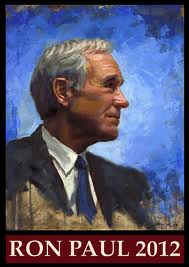 close
second. He has spent a great deal of time, energy and effort in
this state. The question is, what will he do with his showing to
ratchet up to the next level. Most pundits keep saying that he
is maxed out at about 20% approval among voters and if he doesn't
change his style, I would agree. close
second. He has spent a great deal of time, energy and effort in
this state. The question is, what will he do with his showing to
ratchet up to the next level. Most pundits keep saying that he
is maxed out at about 20% approval among voters and if he doesn't
change his style, I would agree.
But, unlike most pundits, I like Ron Paul. It takes a while and
you really have to listen to his message carefully, but if you do, you
may find he is the most sensible candidate in the race. Yet, his
opponents have hijacked the narrative on him as a crazy person.
That is not only unfair, it is just laying the groundwork for what the
Dems would say should Paul win the nomination. But, I don't
think he can win the nomination, but can change his tack to further
his cause. To wit . . .
 Demote foreign
policy as a campaign issue. The
hullabaloo mostly comes from Ron Paul's foreign policy. So, why
not just refuse to go down that road? Indeed, there is virtually
nothing in his Plan
to Restore America that deals with foreign policy.
Acknowledge that fundamental international relationships are not
likely to change under a Ron Paul term (or, two). Maybe
something like getting rid of half the military installations around
the world would be enough. If absolutely nothing changes in the
foreign policy arena, but enormous advance is made on the domestic
front, it wouldn't bother me. It's still much better than what
we're likely to get. Maybe even an acceptable foreign policy
wonk for VP would help in this regard - I saw a news bit on Condi
Rice that made me think this could be the right choice!
Demote foreign
policy as a campaign issue. The
hullabaloo mostly comes from Ron Paul's foreign policy. So, why
not just refuse to go down that road? Indeed, there is virtually
nothing in his Plan
to Restore America that deals with foreign policy.
Acknowledge that fundamental international relationships are not
likely to change under a Ron Paul term (or, two). Maybe
something like getting rid of half the military installations around
the world would be enough. If absolutely nothing changes in the
foreign policy arena, but enormous advance is made on the domestic
front, it wouldn't bother me. It's still much better than what
we're likely to get. Maybe even an acceptable foreign policy
wonk for VP would help in this regard - I saw a news bit on Condi
Rice that made me think this could be the right choice!
Focus on
specific domestic issues. The
next step should be a shortened explicit wish list for domestic
policies that are practicable in a first term. Once outlined, it
can become the point of discussion, argument and debate. List
the 2 specific cabinet offices to get rid of - Energy and Education
probably, although Commerce, Agriculture, Labor and Transportation are
also on my list. Tout the fact that you're leaving Homeland
Security in for now. When it comes to the Fed, the call for an
audit is a good start, but it probably best not to push the envelope
on his proposal to End
the Fed. Simplify his tax reduction proposals and get them
out front and center. Finally, he has a specific list of
regulations that should be eliminated. He should focus on his
plan for regulatory reform that will reduce the regulatory bias that
is present in government anyway.
Angle for the
Convention. The
GOP Convention is probably
the last stop on the Ron Paul train. I think that he should use
his voter support to leverage a prime time spot at the convention,
where he can lay out a modest agenda for President Romney to follow
after he beats Obama - End those departments, cut taxes, keep
federal spending to no more than X% of GDP, place a sunset on all
regulations, etc. This is the best way to insure that the agenda
doesn't die with the end of his campaign. Getting a Marco
Rubio on the ticket as veep may also insure that the cause has
some longevity.
|